News

6/27–8/30: summertime… @ jenkins johnson gallery

Exhibition view, Summertime... at Jenkins Johnson Gallery,

Exhibition view, Summertime… at Jenkins Johnson Gallery. Two of my ribbon texts are on view alongside lovely ribbon-based wall works by Vadis Turner.

June 27–August 30, 2013
Summertime…

Jenkins Johnson Gallery
521 W. 26th Street, 5th Floor, New York, NY 10001
Summer gallery hours: Mon–Fri, 10am–6pm

Works by Shawn Huckins, Vadis Turner, and Christine Wong Yap. The exhibition features works of varying media and content, though all embody the dedication to contemporary art and mastering their media that Jenkins Johnson Gallery strives to propagate.

Christine Wong Yap, hope for good, allow for even better, 2012, ribbon, thread, pins, 51.5 × 47 in / 1.3 × 1.2 m

Christine Wong Yap, hope for good, allow for even better, 2012, ribbon, thread, pins, 51.5 × 47 in / 1.3 × 1.2 m

Standard
Artists

Notes on Things, from Manchester UK

The Living Room, Lee Mingwei’s show at the Chinese Arts Centre (through July 27) sounds fascinating.

The NYC-based artist arranged a vibrantly wallpapered space for local collectors to use for display and discussion of objects. It seems that they’ve found quite an interesting and diverse range of hosts to participate.

You can learn more on the TheLivingRoomProject.co.uk. The questions posed,

“Why do we collect?”

and

“What do our collections say about us?”

however, seem harder to grasp via the site; perhaps it is more discernible for those who attend the events in person.

On the site, there’s a video of an audio recording of Lee’s artist’s talk—an overview of past projects. As an audio recording, there aren’t any images, but I found it worthwhile because of the open-ended, conceptual and participatory nature of his work does not demand images as much as more formal artworks would. The audio-video shed light on his practice overall, but I wanted to hear more about the above two questions. The researcher in me wants to inquire about the projects’ outcomes, and the artist in me shudders at the thought.

More things examined in Manchester and viewable at:
PrizedPossessions.co.uk

Standard
Art Competition Odds

art competition odds: 2014 Triangle Residency

The Triangle Arts Association (Brooklyn, NY) received over 600 applications for five residencies awarded.

///////////////////////////////////////////////////////////////////////////
///////////////////////////////////////////////////////////////////////////
///////////////////////////////////////////////////////////////////////////
///////////////////////////////////////////////////////////////////////////
///////////////////////////////////////////////////////////////////////////
///////////////////////////////////////////////////////////////////////////
///////////////////////////////////////////////////////////////////////////
///////////////////////////////////////////////////////////////////////////+

 or about 1:120, or 0.83%

See all Art Competition Odds.

Standard
Art Competition Odds

art competition odds: Kala Art Institute’s 2013 Fellowship Award

The Kala Art Institute’s 2013 Fellowship Award received 274 applications for nine Fellowships and six Honorable Mentions awarded.

///////////////////////////////////////////////////////////////////////////
///////////////////////////////////////////////////////////////////////////
///////////////////////////////////////////////////////////////////////////
/////////////////////////////////////////////////

Fellows comprise about 1:30, or 3% of applicants.

Fellows and Honorable Mentions comprise 1:18 or 5% of applicants.

See all Art Competition Odds.

Standard
Research

notes on things: politically incorrect maps

This week’s Ethicist column (“Map or Menace?” by Chuck Klosterman, New York Times, July 5, 2013) offers an interesting opportunity to consider the neutrality of objects, via a vintage map of Germany in 1937 for possible display in a living room.

I would argue that the artifact itself should be neutral, yet its display is freighted with associations that are not. How much meaning is imparted by the artifact, and how much by its display?

Consider the paradox:

There’s no ethical responsibility to avoid offending people who manufacture personal meanings.

I appreciate that Klosterman acknowledges that meanings are superimposed by viewers upon objects here, echoing artist Haim Steinbach’s The Object Lesson course centered on show-and-tells of the same objects every week (The Artist’s Institute describes how students learned that “analysis hinged on their own projections and desires”).

Yet:

If you deliberately present an image that is prone to misinterpretation, you have to accept the consequences.

…perhaps presenting an opportunity to map an overlap between the home’s “symbolic ecology” (as described by psychologist Mihaly Csikszentmihalyi) and group social relations. The symbolic ecology reminds residents of who they are, what they’ve accomplished, and what they aspire to do, yet it also conveys these identities to visitors. What we own and display tells others about who we are, even from within the safety of our own domestic museums of the self.

Standard
Meta-Practice

Straight talk about why you shouldn’t apply

Things to think about, artists. The Roswell AIR program application page includes this note:

A word of caution:

Artists considering applying to the RAiR Program should think carefully about what is actually involved in a year-long residency.

Do not apply if:


1) You will have a number of exhibitions opening during the period of your residency.  Roswell is a long way from most places. Transportation to and from Roswell can be costly and time consuming.  Organizing exhibitions and shipping work can be difficult and expensive from Roswell.  Extended absences from the studio breaks up the creative process and undermines the rationale for the residency.

2) You find the idea of the residency a flattering notion.  The purpose of the residency is to provide time to immerse yourself in the creative process and not just to add another line to your resume.  Artists should actually need studio time to focus on their work.  Otherwise you might be supplanting an artist just as deserving, who could use the residency year productively.

3) Your spouse or partner is not committed to the residency.  The residency is located on the outskirts of a town of 50,000 people.  There are few  employment opportunities.  A year can be a long time in some career areas.  While the Roswell area has some decent schools, no special or ‘outstanding’ private schooling is available in this part of rural New Mexico. In addition there can be considerable challenges returning to one’s pre-residency life.

4) You have unusual heath issues or heavy debt.  Our goal is to support the artists’ creative process over a period of time.  We can not, however, solve all of the artists’ life problems.

5) You are uncomfortable living alone or often find yourself at odds with your neighbors or colleagues.  The residency is small.  As few as five other artists might share the residency with you at one time.  For some artists, but not all, this is an ideal situation.

6) If you have no means transportation.  While the residency itself is essentially self contained, the facility is three miles from the nearest retailers.  In the past some residents have managed with only a bicycle but keep in mind that this is the American West and conditions vary considerably.  A drivers license and an automobile are generally considered essential to everyday living.  Additionally, numerous destinations of interest can only be accessed by car.

7) You can not live without your dog for a whole year.

For many artists, recognizing the difference between tackling bigger challenges (good) and biting off more than you (and possibly your spouse or dog) can chew (bad) is an ongoing skill, but an important one for the sake of the community of AIRs and residency programs. Residencies should be a balance of productive activity and restoration; artists should be able to contend with the site, schedule, isolation, and community structure, and tap into the self-discipline it takes to stay productive.

I’ve seen cases where an artist accepted overlapping opportunities, and people were rightly scandalized that a beautiful studio sat empty and mostly unused while the artist took the stipend and hightailed it to the opposite coast. An ethical action is declining.

As much as artists want to take advantage of opportunities as they come our way, we should also sympathize with our fellows who are runners-up. To restate in RAiR’s statement:

you might be supplanting an artist just as deserving, who could use the residency year productively.

Standard
Travelogue

Tides Institute and Museum of Art StudioWorks residency wrap-up

Just completed my first printmaking residency: I spent the month of June in Eastport, ME, making prints in the Tides Institute and Museum of Arts’ new StudioWorks building on the main street in the historic downtown.

image

The Studioworks building is a historic preservation effort by the Tides Institute, assisted by talented masons. The renovation work is proceeding. For really cool photos of the process of turning a historic building into a working printshop, check out the Tides Institute’s Facebook page.

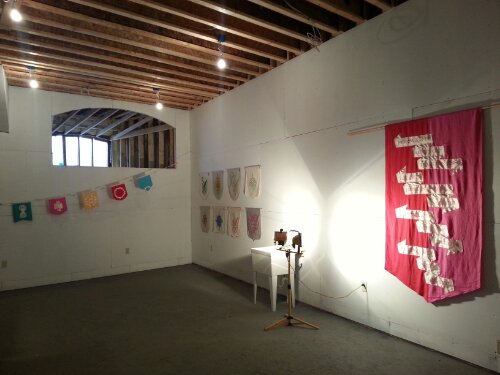
It’s been a productive experience: I’m coming away with three projects involving woodcut and letterpress printmaking, banners, and semaphore flags. Some projects are nearly finished, others are series with initial pieces completed and more ready for production.
image

Finished projects on display in the Open Studio. Supported by the STUDIOWORKS/Tides Institute & Museum of Art, a private not-for-profit organization.

Eastport on a Nat Geo map.

Eastport on a Nat Geo map.

Eastport: Neighborliness in Abundance

It was quite an  adjustment, coming from the metropolis of NYC and adapting to small town life, where everyone knows each other and many are quite curious to meet new people such as myself.  In the city, anonymity feels safe and efficient. In Eastport, the standards of common courtesy are exceptionally high. For example, drivers will often wave to pedestrians. It’s baffling at first. Did they mistake me for a friend of theirs, I’d wonder. Did they wave because I was walking in their way?

To me, Eastporters’ investment in welcoming and learning about every individual living alongside them, if only for a summer month, is practically astounding. The weave of the social fabric was so tight. Many years ago, I made paintings that I thought were about the psychology of public space. But I see now that they were specifically about urban space, and isolation and distrust.

Eastport is technically a city, though it feels like a small town. In every direction from the house where I stayed there were people who made my welfare their concern. Most of all they wanted to know that I enjoyed my time in Eastport. The pride in their town was very clear.

The pace of Eastport made it possible for me to get a lot of work done; the distractions were few (though that will change this week with the Fourth of July). The past few weeks were restorative for me. It was quiet and very  easy to spend the day and evenings working, then wind down and get a good night’s rest. Very sociable artists might find the town’s night life in adequately lively, those who can tolerate a lot of studio time will find it perfect.

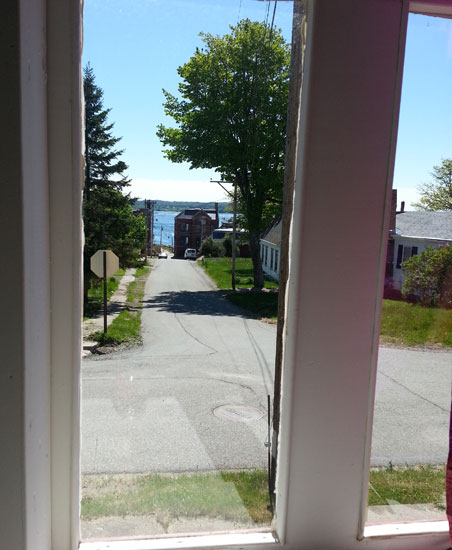
I stayed in an old Veteran's Hall, where I also did a lot of sewing. This was a great space for working—spacious, quiet, and light-filled, as the StudioWorks building is being renovated.

I stayed in an old Veteran’s Hall, where I also did a lot of sewing. This was a great second space for working—spacious, quiet, and light-filled—as the StudioWorks building’s renovations are underway.
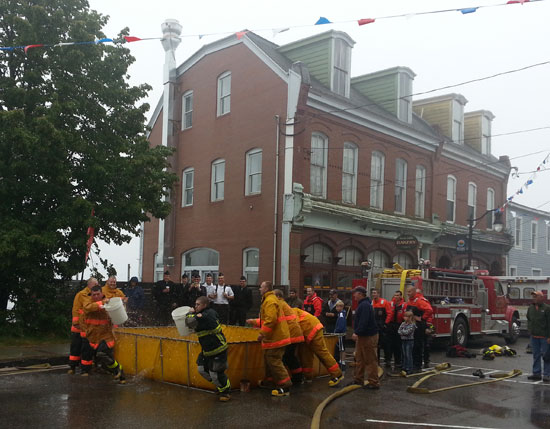
The Fireman's Muster is an annual tradition; part of Eastport's Fourth of July festivities.

Eastport’s Fourth of July festivities are the largest in the state of Maine. I got to catch part of Eastport’s Fourth of July festivities, such as the Fireman’s Muster. Independence Day seems to kick off the busy summer season. Even in the four weeks of June, I could sense the town emerging from the winter and spring.

I enjoyed meeting many amazing, friendly people. The town’s demographic skews grey, but there are some very sweet and funny young parents with creative interests in the arts as well as local food. I attended some fantastic potlucks with great homemade eats, lively conversation and smart folks.
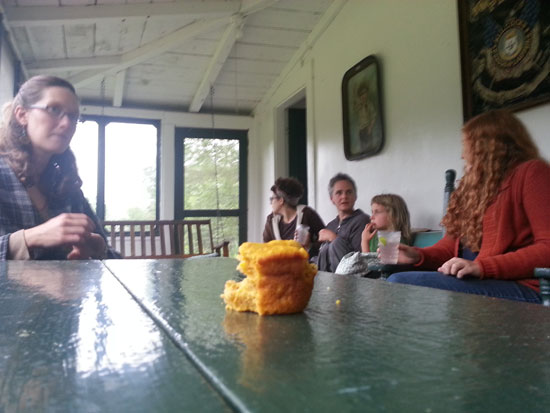
Butternut squash muffin, fellows from near and far, on Marit's family's camp porch. This would be after the swimming, and before the fireworks.

Butternut squash muffin, fellows from near and far, on Marit’s family’s camp porch. This would be after the swimming, and before the fireworks.
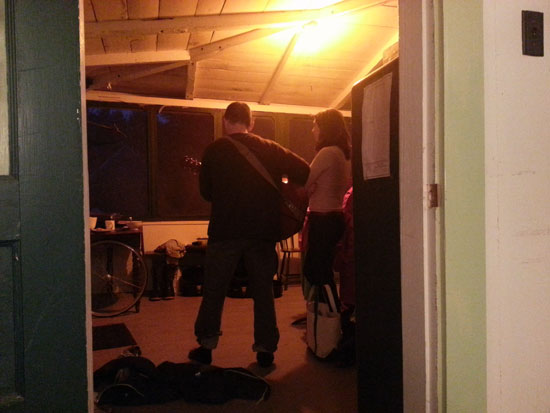
Porchlight song.

Porchlight songs.

Artists thinking about applying will be happy to hear that Kristin McKinlay, who coordinates the residency, is good humored, accommodating, and also a working artist. See her embroidered wall works at her site.

I also really enjoyed meeting Anna Hepler. Via conversations and a studio visit with her and her husband Jon,  I felt a great support and intellectual camaraderie. Both accomplished in their fields, they close to relocate to Eastport as a home base for being citizens of the world (with their two young children in tow; very inspiring!). Luckily, the Eastport Gallery invited Anna to do a talk this month, so I had the chance to learn more about her work and the development of her thinking. (Future residents can enjoy a talk by Kristin!)

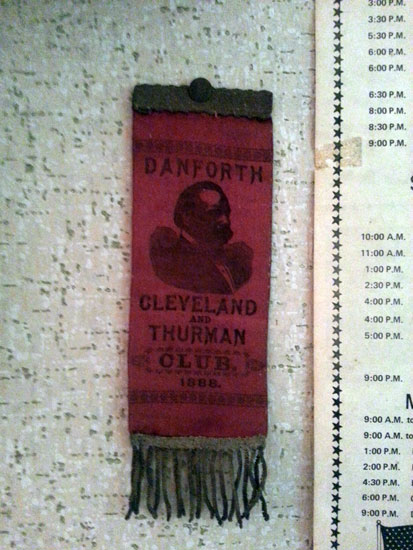
The area is has so much history, much of it persists into the present in the form of amazing artifacts.
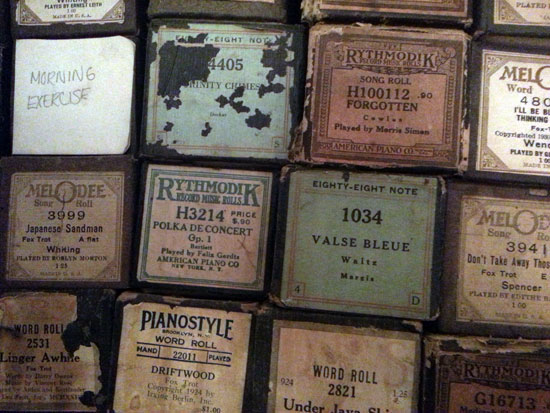
Boxes containing player-piano tunes.
Boxes containing player-piano tunes.

1888 campaign ribbon at Marit's.

1888 campaign ribbon at Marit’s.

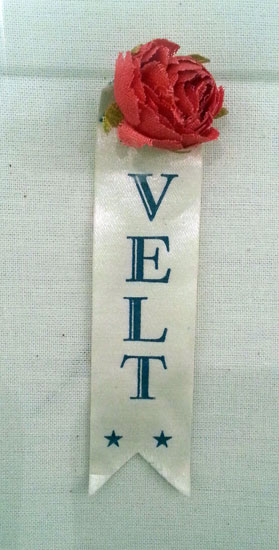
A sweet "rose-velt" campaign item from FDR's Rosevelt-Campobello Park on neighboring Campobello Island in Canada.

A sweet “rose-velt” campaign item from FDR’s Rosevelt-Campobello Park on neighboring Campobello Island in Canada.

For those artists influenced by landscape and light, or people who savor them, Eastport is amazing.

Artists can watch the tides go in and out, just past the Tides Institute, from their breakfast nook.

Artist-in-residence at the GAR building can watch the tides go in and out, just past the Tides Institute, from their breakfast nook.
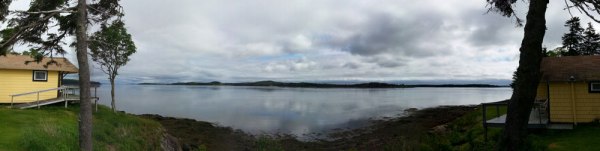
The view from Harris Point, a nice walk from downtown.

The view from Harris Point, a nice walk from downtown.

A school of fish, perhaps herring, plashing in the bay.

A school of fish, perhaps herring, plashing in the bay.

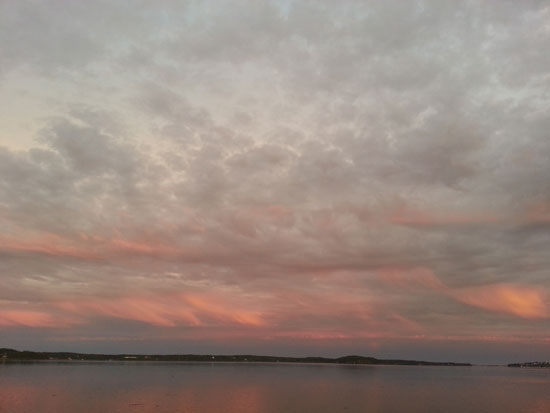
Looking out towards Campobello Island at sunset.

Looking out towards Campobello Island at sunset.

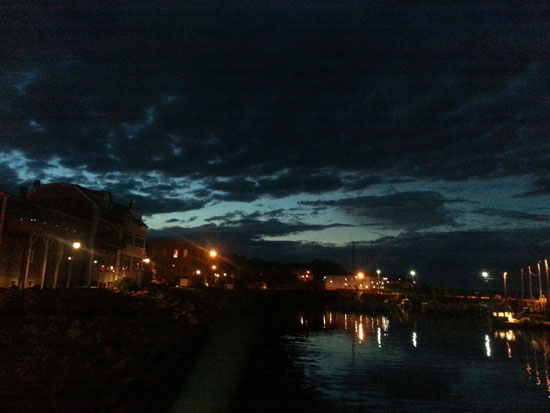
Twilight over Eastport.

Twilight over Eastport.

Standard
Travelogue

Process photos

A story in photos on the making of letterpress labels for a set of semaphore flags representing the VIA Character Strengths and Virtues.

image

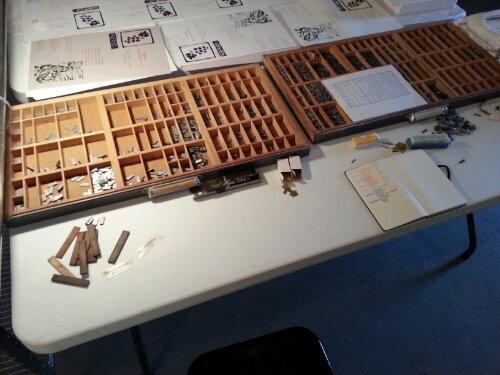
California Job Cases of lead type.

image

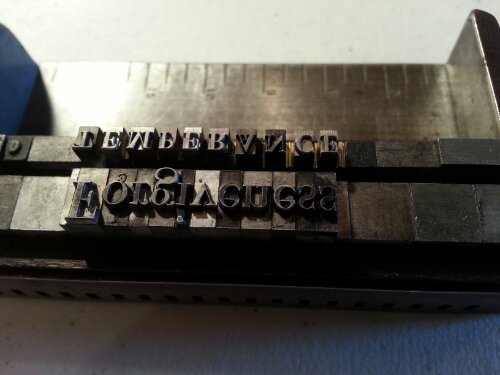
Setting type in the composing stick, which for an Indistrial Age metal contraption, is amazingly ergonomic.

image

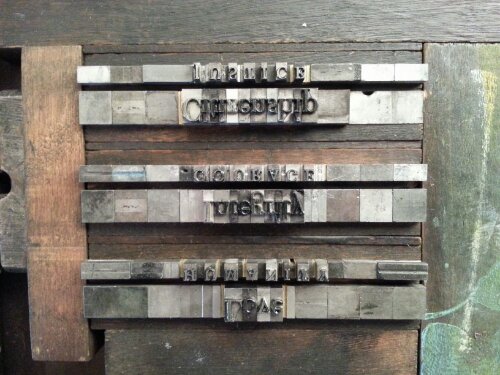
The type locked up with wooden furniture and ingenious locking quoins.

image

The printed labels.

image

Label assembly. There are 24 character strengths in all.

image

Labels are sewn onto cotton twill tape that forms the hoist end of each flag.

image

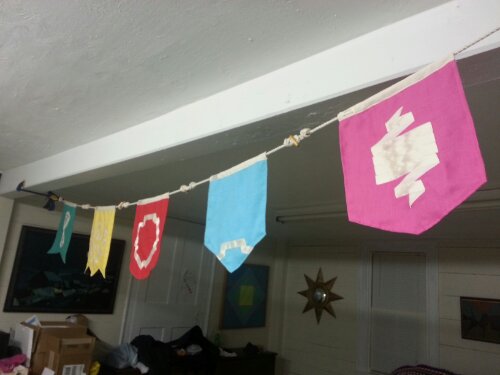
Each flag is sewn from linen and features an interpretive, abstract icon appliqued in ribbon.

image

The first five prototype flags.

image

The semaphores alongside other projects at the Open Studio

Standard