Art & Development

Thinking on the job

Labor’s on the brain lately, thanks to Ben Davis’ 9.5 Theses on Art and Class and Martha Rosler’s Culture Class.

Funny thing: Reading about labor makes you start thinking about labor—including while you’re at work, for better or worse. Here are a few paradoxes of labor as an art handler/art installer:

1. “Hurry up and wait.” Art laborers’ time is expensive yet expendable. Waste is part of the process of productivity.

2. Exhibition-making is a combination of office work and gallery work; the contrast between salaried/white-collar and hourly/blue-collar workers’ valuations of time, modes of employment, and precariousness is telling.

3. Help others help you with clear directions. Experience and decisiveness are not co-developed skills.

4. If the risk of confidence in excess is egocentrism, safeguard with humility and gratitude.

5. The more powerful you are, the more tardy you can be.

always in a rush but seldom on time

Ben McGrath, “New York Time,” New Yorker, Nov. 4, 2013 
Standard
Art Competition Odds

art competition odds: the Headlands Center for the Arts’ Alumni New Works Award

The Headlands’ Center for the Arts’ Alumni New Works Award received 74 applications from Headlands Alumni for 6 awards.

//////////////////////////////////////////////////////////////////////////

Award recipients comprise about 1:12.3, or 8.1% of applicants.

See all Art Competition Odds.

Standard
Research

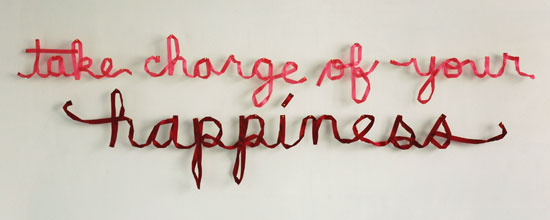
sometimes it takes work to be happy

Christine Wong Yap, take charge of your happiness, 2011, ~83 × 24 × 1 in / 211 × 61 × 2.5 cm.

Christine Wong Yap, take charge of your happiness, 2011, ~83 × 24 × 1 in / 211 × 61 × 2.5 cm.

Happiness is a vague term that belies the complexity of psychological wellbeing.

I was reminded of this fact by a few things this week. These things may help to explain what I wanted to express with the work, take charge of your happiness: it takes continual attention, intention, action, and time to cultivate the myriad elements that contribute to wellbeing.

1.

Make it concrete.

This week, someone asked me what I thought about the brief article, “A Fine-Arts Degree May Be a Better Choice Than You Think,” by Daniel Grant in the Wall Street Journal (November 10, 2013). The author summed up three studies or sources that reported that artists are “happy” or “happier” than the general population.

I think the points are interesting but felt that the research warranted further elaboration. I thought: What is meant by happiness? Though the term is often used diffusely, it can be understood with more precision, and indeed, such clarity is helpful for increasing one’s own wellbeing.

What I mean by happiness is outlined a bit in the next item.

2.

Recognizing my own unhappiness.

This week, I skipped the gym and did desk work for four days in a row—personally, this amounts to a recipe for psychological disaster. I even walked five miles to work one day, but it wasn’t enough to release the endorphins that bring emotional balance. Add a few triggers and the result was pointless irritability and misanthropic anger.

I hit the gym until all my muscles were fatigued and my mind was clear. It showed me, once again, how I’m more relaxed, generous, optimistic, and compassionate after a good workout. My sense of well-being is increased. These are major components of happiness. But obviously, it takes intention to get to the gym in the first place.

So, reminder to self (it bears repeating): Working out is as much for psychological as physical wellbeing.

Add to that the fact that I’m starting to miss working out outdoors, and it’s not even winter yet. So an immediate action step is to look into bicycle clubs!

Less of this. (Charlie Brown by the inimitable Charles Schultz.)

Less of this. (Charlie Brown by the inimitable Charles Schultz.)

More of this. (by Charles Schultz)

More of this. (by Charles Schultz)

3.

Be physically involved in doing what you love.

I’ve been writing applications to grants and residencies as part of my strategic goals. It became a habit too successfully, to where I had to remind myself that I’m on track to my goals and can focus my efforts on the studio for a few weeks.

Once in the studio, I popped on a podcast of Grayson Perry’s Reith lecture, and he validated the importance of play and of losing yourself in the activity. (All the lectures are great, I highly recommend them!) He didn’t use the word flow, but I think he meant it.

4.

Make a plan.

I feel like I’ve been working on my VIA Semaphore flag project forever. I’ve sewed 13 flags in three months (it’s an edition of three, so I could say I’ve sewed 36 flags, but whatever).

Christine Wong Yap, flag for gratitude from the VIA semaphore project (tentatively titled), 2013, linen, 12.5x12" each, edition of three from a set of 24.

Christine Wong Yap, flag for gratitude from the VIA semaphore project (tentatively titled), 2013, linen, 12.5×12″ each, edition of three from a set of 24. See more on my Facebook Page album.

<NERD ALERT> Since I’m a huge adopter of Creative Capital‘s strategic planning advice for artists, I do weekly check-ins. I also moved my to do list onto a calendar; fewer tasks fall through the cracks, and I’m more aware about procrastination.

In this week’s check-in, I put the production of the remaining 11 flags into a calendar. It’ll take six weeks if I add nothing else to my schedule. This is familiar—I’ve done six-week plans in gearing up for road races. Instead of focusing on my slow progress or the seeming interminableness, I’m excited about enjoying the momentum and how much I’ll accomplish.

5.

It’s OK.

I really like this spark chart from pro runner Lauren Fleshman’s website. It documents her life’s highs and lows. It’s awesome because it shows how even major athletes have setbacks and personal detours, too. But the ultimate message is to bounce back, and be resilient.

Lauren's Life: Highs and Lows, from AskLaurenFleshman.com.

Lauren’s Life: Highs and Lows, from AskLaurenFleshman.com.

Having been sidelined from running by a knee injury, it’s also reassuring to know that Fleshman has overcome her own.

This chart also reminds me of Phil Zimbardo & John Boyd’s book, The Time Paradox, which urges readers to have a healthy time perspective: to ensure the past also houses happy memories and achievements, to utilize and savor the present, and to look forward to the future. Sometimes the past seems like a large closet overstuffed with regrets and humiliations, but as Fleshman, Zimbardo and Boyd point out, there’s lots to remember fondly too.

6.

Remember gratitude.

Keeping a gratitude journal is a proven way to increase your subjective wellbeing. There are apps for gratitude journaling now.

The University of Melbourne is seeking participants for a new gratitude survey.

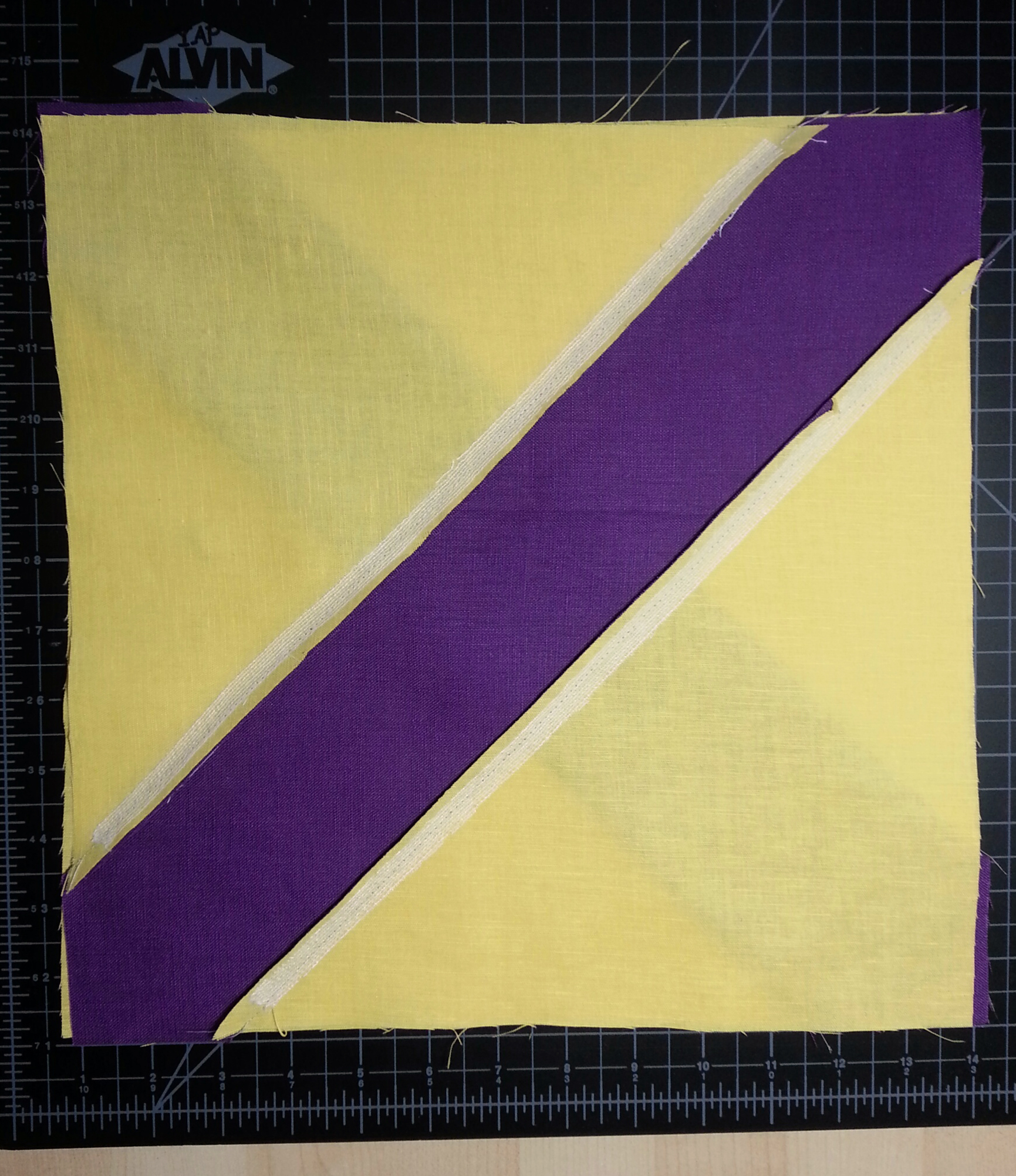
Sewing on the bias (the stretchy direction) is hard! Fusible interfacing makes it easier.

Sewing on the bias (the stretchy direction) is hard! Fusible interfacing makes it easier.

What I’m grateful for this week:

7.

Give.

It feels good and it’s the right thing to do.

UNICEF, the Humanitarian Coalition, and Doctors without Borders are good. The Asia Society’s post on how to help is especially thorough.

Standard
Sights

Get excited: This week in NYC

Loads of thought-provoking art events in NYC are coming up! These all appeal to things I’m excited about lately—horizontal networks, feminism, activism and more:

Tonight! Tuesday, November 12
PANEL: Who Cares About Collaboration?

Eyebeam
540 W 21st St, NYC
7-9pm, Free

Speakers include Joe McKay (UCB/Headlands!), Sarah Perks (the awesome Cornerhouse of Manchester), and folks from The White Building (a cool London art space).

Friday, November 15
EXHIBITION OPENING: A Necessary Shift
Elizabeth Foundation for the Arts Projects Space 

323 W 39th Street, 2nd floor, NYC
6–8pm

Reception for the exhibition and event series for EFA’s Arts-Workers-as-Artists program, including Hatuey Ramos-Fermín and Elizabeth Hamby, whose excellent Boogie Down Rides event brightened up my weekend.

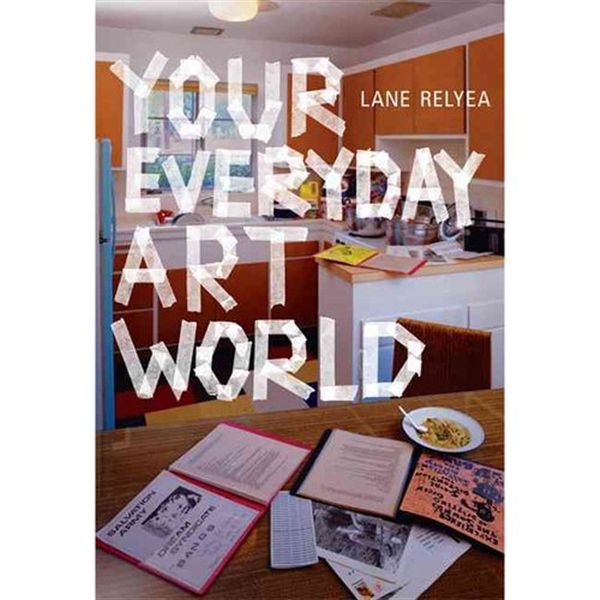
Lane Relyea, Your Everyday Art World

Lane Relyea, Your Everyday Art World

Saturday, November 16
CONVERSATION: Katy Siegel with Lane Relyea, author of Your Everyday Art World
Regina Rex
1717 Troutman Ave #329, Queens
6pm
About the

new networked, participatory art world

Get there early to check out:

EXHIBITION: Ornament and Crime
Ortega y Gasset Projects
1717 Troutman Ave #327, Queens
Gallery hours are 1-6 Saturdays and Sunadays. Exhibition on through Dec 8.

Group show curated by undercover super hero Lauren F. Adams, featuring projects by Stephanie SyjucoDavid MabbSusanne Slavick, and Stacy Lynn Waddell.

Monday, November 18
PRESENTATION: Guerilla Girls Broadband
Interference Archive
131 8th Street #4, Brooklyn
7:30pm
Talking about their latest project, MapAbortion, on access to reproductive health.

(I’m also really excited about Interference Archive’s forthcoming exhibition, Serve the People: The Asian American Movement in New York, opening December 5. IA’s core collective includes the indefatigable Josh MacPhee, and book- club-mate Blithe Riley!)

Standard
Art Competition Odds

art competition odds: Bronx Museum of the Arts’ 2014 AIM Program

The Bronx Museum of the Arts’ Artists in the Marketplace program received over 700 applications for 36 participants.

///////////////////////////////////////////////////////////////////////////
///////////////////////////////////////////////////////////////////////////
///////////////////////////////////////////////////////////////////////////
///////////////////////////////////////////////////////////////////////////
///////////////////////////////////////////////////////////////////////////
///////////////////////////////////////////////////////////////////////////
///////////////////////////////////////////////////////////////////////////
///////////////////////////////////////////////////////////////////////////
///////////////////////////////////////////////////////////////////////////
/////////////////////////+

Participants comprise about 1:19.4, or 5% of applicants.

See all Art Competition Odds.

Standard
Citizenship, Meta-Practice, Values

Just say no

Stop asking artists to work for free.

And artists, just say no to working for free.

That’s what Tim Kreider called for in “Slaves of the Internet, Unite!,” a funny, bitterly-laughing-because-it’s-true, op-ed on NYT (Oct. 26, 2013). (Recent grads and emerging artists are the most guilty.) Krieder included a form letter:

Here, for public use, is my very own template for a response to people who offer to let me write something for them for nothing:

Thanks very much for your compliments on my [writing/illustration/whatever thing you do]. I’m flattered by your invitation to [do whatever it is they want you to do for nothing]. But [thing you do] is work, it takes time, it’s how I make my living, and in this economy I can’t afford to do it for free. I’m sorry to decline, but thanks again, sincerely, for your kind words about my work.

“In this economy” implies the recession, and that working for free might be OK in abundant times. But in this capitalist economy, where artists have no protections, I don’t think we can’t really afford it, recession or none.

The Graphic Arts Guild has been preaching to freelance illustrators and graphic designers to ask for decent compensation for the good of their fields, and it’s about time for fine artists and freelance writers to take up the mantle.

W.A.G.E. has been agitating for artists to get paid for our labor—such as exhibiting our work. I’ve added my name to the list of supporters, and you can too.

Their latest project is W.A.G.E. Certification, in which non-profits in NYC can sign up to be certified as organizations that equitably pay artists’ fees. I love the idea; nationwide requirements like CARCC would be ideal, but short of that, this model, sort of like a Better Business Bureau of art nonprofits, is a huge step forward.

I hope it spreads like wildfire around the country.

I hope foundations take it up as a grant requirement to nonprofits.

Basically, W.A.G.E. Certification requirements stop organizations from asking artists to work for free:

1. Artist Fees must be paid.

2. The Artist Fee is separate from, and must not be used to cover travel, lodging, installation, shipping or any other expenses associated with production.

Though W.A.G.E. Certification is currently in progress, it’s already helped me think through certain artist’s opportunities.

For example, a Brooklyn art nonprofit has a current call for a fellowship program. Successful applicants will receive a solo exhibition along with the requirement to stage a public program. No funds are promised.

In fact, not only will artists not receive an artist’s fee, nor any production expense reimbursements, applicants are required to submit a budget and a plan for external funding for the public program. So in addition to unpaid exhibition labor, Fellows will undertake fundraising and project management labor, too.

The organization’s only monetary outlay, according to the application, is the printing of postcards. That’s like, what, $75 to $300, a pittance compared to artist’s expenses incurred in a solo show. I could easily spend $1-3k on materials alone, whereas the greatest financial burden is incurred by the time it takes to conceptualize, prototype, procure, produce, pack/crate, transport, install, and de-install a show.

(Think about this: I work as an art installer at a nonprofit gallery. They pay me to handle artworks. This other nonprofit gallery would have me take time off from a paid job to do the same exact labor, but will not pay because the artwork is by a different artist: me.)

This nonprofit receives support from state, city, and borough funding agencies, as well as corporations and foundations. Yet not one of those dollars will go directly to individual artist Fellows who will take on the lion’s share of creating a gallery exhibition and public event. In exchange for a venue and access to the organization’s audience, Fellows arguably take responsibility for a fraction of the gallery’s annual programming, not for a fraction of its annual budget, but zero compensation.

Sometimes interactions that should be little to no work still amount to working for free.

I recently contributed images to a nonprofit organization’s printed curriculum, which, despite their good intentions and my attempts at self-protection, still ended up backfiring.

They didn’t have money for reproduction rights (always suspect to me, as publication budgets usually account for design and printing). 

I did it as a favor to friend, though I asked for a contract. (Again, artists, get the GAG handbook if you haven’t already!) The organization’s lawyer drafted one that specified artworks, and I submitted images with full caption information.

The publication included images that I didn’t permit them to use, as well as incomplete and incorrect captions (which would have duly credited the art organizations that did support me with actual money). I sent the organization a list of ways they overstepped their own agreement. They were sincerely apologetic and pulled the curriculum to revise it, which I appreciate.

Zero compensation is bad enough; further time and frustration expended is worse.

Kreider should be paid well for his skill. I admire his ability to write about this topic humorously. To me, arguing such an obvious point makes me smack my forehead in exasperation.

Organizations can be very ironic in how they characterize their own labor. An artist’s residency program posted this recently on re-title.com:

We are tired of artists not getting the support and time they need to move forward with their artistic careers. So, we want to offer artists a space to rest, experiment, and create – and to do so with ease.

The note of frustration is pretty hilarious, because what this organization does—charge about $850 USD after tax for a one month rental of a bedroom and semi-private studio—doesn’t qualify as artists “getting the support and time they need” to me.

For that amount, you could rent a small studio in Brooklyn, the second most expensive urban area to live in the US, after Manhattan.

What I am really after is the normalcy of transactions. Artists provide a service and undertake labor. Nonprofits who purport to support artists should then funnel their funds to artists. It’s pretty simple.

I was once hired by a nonprofit to design an appeal letter for their direct mail campaign soliciting cash donations. I finished the job and sent an invoice for my services, extending a nonprofit discount to them.

A week later, I receive an envelope in the mail. Expecting a check, I opened it, only to find the very appeal letter I designed.

“Oh!” I thought. “You’ve got it turned around. I don’t pay you. YOU pay ME.”

I need to bring that clarity and certainty as a designer to my approach towards opportunities as an artist.

Despite this rant, I am glad that nonprofits exist. They’re part of a legacy of social change and transformation in this country that I’m very proud of. Lots of amazing and ethical arts nonprofits exist and support countless artists. Nonprofits are spaces in which alternative futures can be played out in the present… until the time when better alternatives will become more viable.

Standard
Citizenship, Meta-Practice, Values

Points of reference: Income inequality, empathy, artists, and capital

There’s something in the air…. Articles have been popping up about the intersection of the tech sector and extreme wealth, and status and the empathy gap, just as my artist friends in the Bay Area are reeling about news of galleries closing and venerable artists being evicted. To consider income inequality, class, and how artists got into the position we’re in in relation to the high-powered wealth-corrupted “art world,” I’ve been thinking specifically about capitalism.

Here are some points of reference, of which I’m still trying to make sense:

INCOME INEQUALITY:

In New York, Bill de Blasio‘s NYC mayoral campaign.

This past weekend’s Creative Time Summit. I didn’t go, but will watch some of the videos, esp Rebecca Solnit’s keynote on gentrification in SF, and My Brooklyn’s mapping- and data-driven anti-gentrification efforts.

“Will Work for Inspiration,” David Byrne’s op-ed for Creative Time Reports, includes this bit on preserving NYC for all:

I don’t believe that crime, danger and poverty make for good art. That’s bullshit. But I also don’t believe that the drop in crime means the city has to be more exclusively for those who have money. Increases in the quality of life should be for all, not just a few.

THE EMPATHY GAP:

The title says it all: “Rich People Just Care Less” is an op-ed by psychologist Daniel Goleman posted in NY Times (October 6, 2013):

A growing body of recent research shows that people with the most social power pay scant attention to those with little such power. …

Income inequality is at its highest level in a century. This widening gulf between the haves and have-less troubles me, but not for the obvious reasons. Apart from the financial inequities, I fear the expansion of an entirely different gap, caused by the inability to see oneself in a less advantaged person’s shoes. Reducing the economic gap may be impossible without also addressing the gap in empathy.

Over at the Greater Good Science Center, Jason Marsh posted “Why Inequality Is Bad for the One Percent” last year (September 25, 2012), and though it opens with then-presidential candidate Mitt Romney, it’s furnishes more background to Goleman’s op-ed…

…in a 2010 study published in Psychological Science, researchers found that people of higher socioeconomic status (SES) were worse at reading other people’s emotions—a skill known as “empathic accuracy,” a basic part of empathy.

… inequality may be self-perpetuating: The lack of compassion the rich feel might make them less likely to out look for the less fortunate, thereby increasing the gap between rich and poor—and the worse this gap gets, the research suggests, the less inclined the rich may be to do anything about it.

… insularity is an enemy of empathy.

CREATIVITY:

In trying to get a foothold in NYC as an artist, it’s nice to hear David Byrne acknowledge the difficulty:

As one gets a little older, those hardships [of surviving in NY in the 1970s] aren’t so romantic – they’re just hard. The trade-off begins to look like a real pain in the ass if one has been here for years and years and is barely eking out a living. The idea of making an ongoing creative life – whether as a writer, an artist, a filmmaker or a musician – is difficult unless one gets a foothold on the ladder, as I was lucky enough to do. I say “lucky” because I have no illusions that talent is enough; there are plenty of talented folks out there who never get the break they deserve.

ART META-PRACTICE:

Maria Popova recently posted “Happy Birthday, Brain Pickings: 7 Things I Learned in 7 Years of Reading, Writing, and Living” on Brain Pickings:

Do nothing for prestige or status or money or approval alone. As Paul Graham observed, “prestige is like a powerful magnet that warps even your beliefs about what you enjoy. It causes you to work not on what you like, but what you’d like to like.” Those extrinsic motivators are fine and can feel life-affirming in the moment, but they ultimately don’t make it thrilling to get up in the morning and gratifying to go to sleep at night — and, in fact, they can often distract and detract from the things that do offer those deeper rewards.

Jerry Saltz, who seems perpetually in a pickle about being an art world insider while trying to critique the art world’s narrow halls of power, did have this worthwhile critique to share, in “Saltz on the Trouble With Mega-Galleries” in NY Mag:

The artist is a brand, and the brand supersedes the art. The scale and pace of these places often turn artists into happy little factories with herds of busy assistants turning out reams of weak work. It’s the new Capitalist Realism.

Andrea Fraser’s “1% Art” came out last year in Adbusters, but only recently crossed my path. It’s really good, so I’ve quoted it at length:

A broad-based shift in art discourse may help precipitate a long overdue splitting off of the market-dominated subfield of galleries, auction houses, and art fairs. If a turn away from the art market means that public museums contract and ultra-wealthy collectors create their own privately controlled institutions, so be it. … It is time we began evaluating whether artworks fulfill, or fail to fulfill, political or critical claims at the level of their social and economic conditions. We must insist that what art works are economically determines what they mean socially and also artistically.

If we, as curators, critics, art historians and artists, withdraw our cultural capital from these markets, we have the potential to create a new art field where radical forms of autonomy can develop: not as secessionist “alternatives’ that exist only in the grandiose enactments and magical thinking of artists and theorists, but as fully institutionalized structures, which, with the “properly social magic of institutions,’ will be able to produce, reproduce and reward noncommercial values.”

Fraser’s post made me ask myself, “What am I doing?” If I resent how much Saltz bags on others for writing too much about the 1% art world and mega-galleries, when they and he should write about the 99%, shouldn’t I focus my efforts in the 99% as well? What does that mean for me as an artist, in relation to other artists and institutions? What does that mean for me as an art worker—an installer and assistant?

Ben Davis, 9.5 Theses on Art and Class (Haymarket Books).

Ben Davis, 9.5 Theses on Art and Class (Haymarket Books).

Finally, I read Ben Davis’ 9.5 Theses on Art and Class (Haymarket Books) in an informal book club. The book was provocative, but I’ve really enjoyed exchanging ideas with bright artists, curators and art historians in our little self-organized book club. (You can participate in a virtual book club hosted on Temporary Art Review, thus far here and here.)

Our final meeting yesterday, ended with a fascinating discussion about how our future selves might look back on this contemporary moment in art history from a post-capitalist perspective. How will we historicize this Capitalist art? What will it be like to be distanced from such narrow conditions of production?

What if artists are at the center, not the power players that Davis spends so many chapters discussing? What if I went on a 1% Art World diet, ignoring the art stars, yacht parties, the market, celebrity gossip, and auction records, how much time would I have for thinking about materials and processes?

What might a post-capitalist art world look like? What kinds of structures and institutions will artists work within? How do I turn my attention towards those alternative futures now?

Standard
Impressions

A Surprisingly Visual and Aesthetic Science Festival

Despite only mild curiosity about medical history and an easily grossed-out constitution, I was consistently enthralled at yesterday’s Festival of Medical History at the New York Academy of Medicine (NYAM).

The festival’s organizers—which included art writer Lawrence Weschler—suffused the conference with programming that could have easily been presented at visual criticism symposia. Though it’s ostensibly a science-oriented festival, I loved the integration of aesthetics. Here are my highlights:

Competitive Slide Slam: Images of the Cosmos vs. Images of the Brain

Filmmaker/editor Michael Benson jocularly presented photos of the universe (see some here, click on ‘Prints’), which neuroscientist Carl Schoonover tried to match or top with images of the brain (see some here, click on ‘Portraits of the Mind’). Both speakers offered insightful factoids emphasizing immensity—either the space’s grandness or the brain’s complexity. It was entertaining, playful, visually stunning, and expansive.

The compositions where surprisingly similar, yet aesthetically divergent. The images of the cosmos exuded high resolution and definition, while the images of the brain were either painterly or graphic, with subjective use of color. It raised questions about the selectivity of image-processing. What drives the desire to bring distant galaxies into crystal clear focus? What does it mean when color is cleaved from visual reality, making some gases visible to the human eye, or differentiating microscopic parts of the brain in fantastical neon colors?

Both speakers limned the question of what constitutes consciousness. Benson’s images could be tools in the search for extra-terrestrial life, while Schoonover showed a video of active brain cells in a Petri dish, reaching out to build connections.

(Bonus: Check out the transcendent Cat’s Eye Nebula on the Hubble site.)

Spaces to Read, Research and Work

NYAM’s building on Fifth Ave is grand, with lots of beautiful, symbolic architectural features. We visited its rare books library (open to the public by appointment), which housed a display of Renaissance-era books with fantastic wood engravings and etchings, and 19th- and 20th-century ephemera—always a typographic treat.

Conservation lab at the New York Academy of Medicine.

Conservation lab at the New York Academy of Medicine.

The conservation lab, however, was exactly my kind of dreamy: a spacious, light-filled, dust-free, and organized workspace. Everything had its place, from fabric yardage in a gridded shelving system, to boards in flat racks, to a few real-bone folders on display. The workbenches—laminate tops, ergonomic heights, on casters—made me miss the clean room in the old CCA Printshop, and fantasize about a dream studio with an enclosed clean/storage room.

A drill press was fitted into a corner next both a hand vacuum and a dust-collection machine: a Virgo’s paradise.

(Side note: The three conservators were female; one mentioned how traditionally, women sewed bindings. In my experience, contemporary book binding and book arts seem practiced by women more often than men. Why is that? The fact that sewing is involved can’t be determinate, even today, can it? Or is there something about temperament, and the quietude of books? Or both?)

Modes of Display

Amy Herzog‘s talk about dioramas was fantastic. I hope she publishes an essay, it was one of the most well-crafted visual criticism presentations I’ve heard, connecting the reflection of the self in daguerreotypes, Daguerre’s coining of the term diorama, and the recognition of self through encounters with the other and a confrontation with death. Here’s the synopsis:

Momento Mori: Reflections on Death and the Art of the Tableau

This talk surveys a spectrum of artistic and museological dioramas, waxworks, and post-mortem photographic practices, and the hermetic, frozen worlds each offer to the viewer. There is something profoundly fetishistic, and mildly necrophilic, at the heart of the diorama, an apparent desire to encapsulate and reanimate those items on display. This paradoxical tension between preservation and regeneration seems germane to the 19th-century imaginary in general, the moment at which many of the visual practices I will discuss came into being. And while the diorama in particular is driven by a certain pedagogical directive, my talk will suggest that their lessons are more ambiguous than their creators likely imagined, and offer uncanny insights into our contemporary condition.

(Weird bonus! Learn about a book of Walter Potter’s bizarre anthropomorphized kitten taxidermy or see pics on The Daily Mail.)

Early 20th-c. Obsession with Rays via Fritz Kahn’s Fantastical Illustrations

As employee of the US National Library of Medicine, and therefore, the federal government, Michael Sappol‘s talk was at risk of cancelation. In a brilliant sidestep of the government shutdown, someone else read Sappol’s written remarks.

Sappol wrote that rays, beams, and waves became an obsession and a base metaphor of modernity in the 1920s-1940s. Kahn was a physician who lived from 1888-1968 (what a spectacular period in which to live!). Using commercial illustrators, he used pipes and rooms to create body-as-factory illustrations, and then adopted lines to signal electricity within and outside of the body, like flow charts a with spare diagrammatic language for engineers.

Fritz Kahn (author), Der Mensch als Industriepalast (Man as Industrial Palace)  Stuttgart, 1926. Chromolithograph. // Source: National Library of Medicine.

Fritz Kahn (author), Der Mensch als Industriepalast (Man as Industrial Palace) Stuttgart, 1926. Chromolithograph. // Source: National Library of Medicine.

I love Sappol’s ideas of developing an iconography of “occult forces” invisible to the human eye; of “electricity, magnetism, mesmerism;” connecting light and radios and radiology for images of “radiant modernity;” and the merging of German mechanist tradition with Kahn’s Romantic leanings. Indeed, some of the radiant images reminded me of Charles Burchfield’s visionary paintings, like Radiant Spring.

 Fritz Kahn (author), Das Leben des Menschen... (The Life of Man). Vol. 5  Stuttgart, 1931. Relief halftone. // Source: National Library of Medicine.

Fritz Kahn (author), Das Leben des Menschen… (The Life of Man). Vol. 5 Stuttgart, 1931. Relief halftone. // Source: National Library of Medicine.

Kahn’s pictures are immediately appealing, and Sappol explains why: they harmonize the discordant in modern life via the flow of life and energy.

Learn more about Kahn and his work at Fritz-Kahn.com.

Or set yourself a Google alert for Sappol’s book (currently in production), How to Get Modern with Scientific Illustration: Fritz Kahn, Pictured Knowledge and the Visual Rhetoric of Modernity.

Get excited: NYAM plans to make the festival an inaugural event. I hope they keep it free, open to the public, and strongly integrated with art and aesthetics!

Thanks for bringing the festival to my attention, M and New York Today, NYT’s fantastic picks list (also a great reference for ultra-concise yet warm writing, to which I will aspire, however wordily I fail).

Standard