Art & Development, Travelogue

Woodstock Byrdcliffe: Get excited and make stuff

View from Mount Guardian, Catskills, NY.

View from Mount Guardian, Catskills, NY.

I’m in the Catskills for a short residency at the Woodstock Byrdcliffe Guild. I’m so honored to be here. The land is beautiful, serene, and full of wildlife. I’m giddy; it’s such a contrast from New York City and yet it so strongly recalls the Sierras in California. The colony was founded by British Industrialists seeking to build a utopian Arts and Crafts creative community. The initial attempt didn’t last long, but the Guild lives on as a series of amazing historic buildings housing 17 residents in visual arts, media arts, creative writing, and music composition.

I’ve been here just about a week, and am pretty much settled in my quaint room and a detached studio with high ceilings and skylights. I’m two-thirds through with Mihaly Csikszentmihalyi’s Flow; I started some new drawings and sculptures, and even dreamed up a staged photograph. The setting is literally invigorating—I’ve run further than I have ever before.

Inspired by a tradition I experienced as an Affiliate Artist at the Headlands Center for the Arts, I initiated a residents’ mutual presentation series. It’s basically a slide slam/listening party/clip screening/reading event, made possible with shared laptops and digital projectors and healthy doses of participation and positive intentions. I enjoyed everyone’s presentations tonight. I suspect my readers would be keen to learn more about Julie Perini’s videos. I also really liked Jane Corrigan’s paintings about sentimental landscape images. My highest hope for the series is that some parallels emerge and enliven our discourse, and it appears that some already have.

The only quandry I have now is that the event is gaining interest and we may need to add another night to accommodate fellow artists on the mountain. Seeing a little initiative returned with such participation is very gratifying.

Residencies are like slices of heaven, so that artists can envision making more of “regular” life more like residencies—to inject the space and time to create, think, breathe, stretch, learn, explore, and exchange into life more often and for longer periods.

Standard
Community, Travelogue

Travelogue: Portland, OR and San Francisco Bay Area, CA

Just came back from a trip to the West Coast to see family, friends, and art. Here are my cultural highlights…

Portland, OR

My old college buddy Victor Maldonado, who’s now a professor at the Pacific Northwest College of Art and seems to know everybody in the PDX art scene, was kind enough to take me around to galleries in the Pearl District. The scene is small but some spaces, like Elizabeth Leach Gallery, are clearly top-notch. The gallery owners were friendly and their storefront spaces seemed welcoming. Good times.

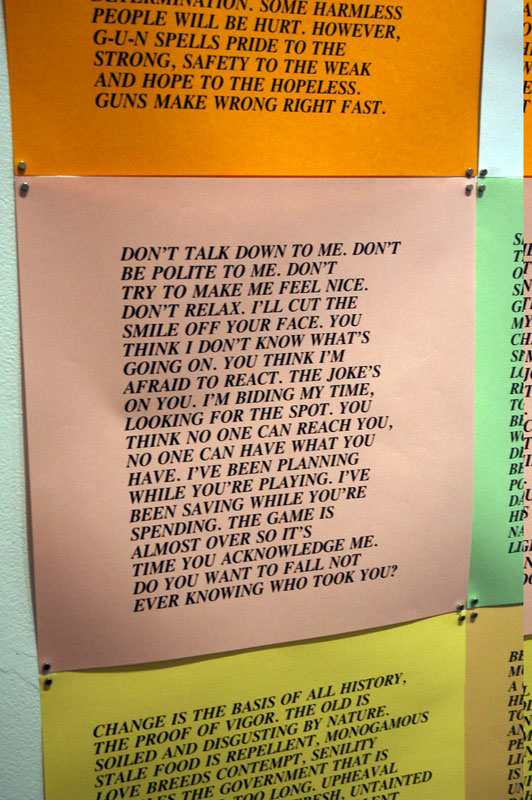
Jenny Holzer's tough-talking texts at the Printed Matter show at the Pacific Northwest College of Art's Feldman Gallery.

Jenny Holzer's tough-talking texts at the Printed Matter show at the Pacific Northwest College of Art's Feldman Gallery.

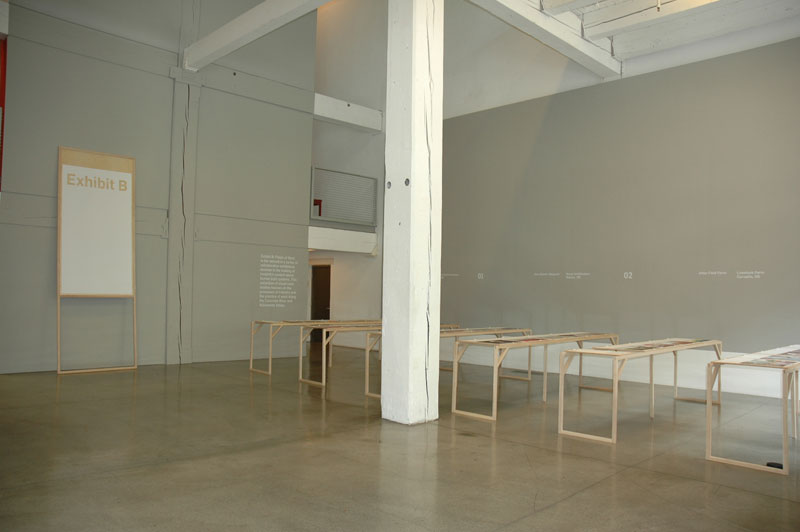
Gorgeous exhibition space in Weiden+Kennedy's foyer.

Gorgeous exhibition space in Weiden+Kennedy's foyer. Neat show examining work, including a publication with a prose poem by Victor Maldonado, an old college buddy.

I liked these photo-based color abstractions by Thomas Campbell in the Pearl Room at Powell's Books.

I liked these photo-based color abstractions by Thomas Campbell in the Pearl Room at Powell's Books.

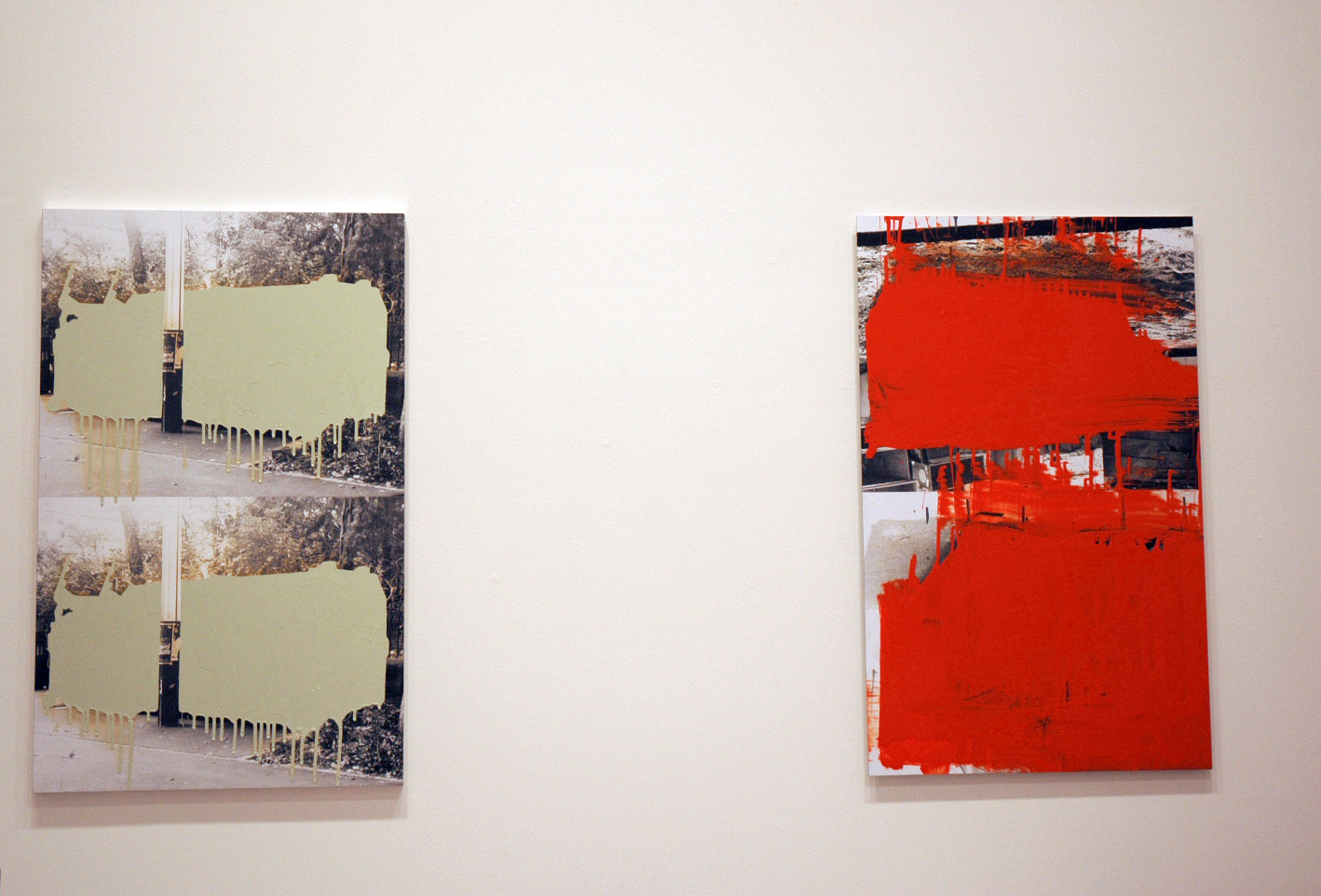
Nice painted-out photos by John Beech at Elizabeth Leach Gallery. A beautiful space to boot; so happy for Ryan Pierce, who's represented by them.

Nice painted-out photos by John Beech at Elizabeth Leach Gallery. A beautiful space to boot; so happy for Ryan Pierce, who's represented by them.

James Minden's etched/scribed black plexiglas works; three perspectives on the same work.

James Minden's etched/scribed black plexiglas works; three perspectives on the same work. At Augen Gallery.

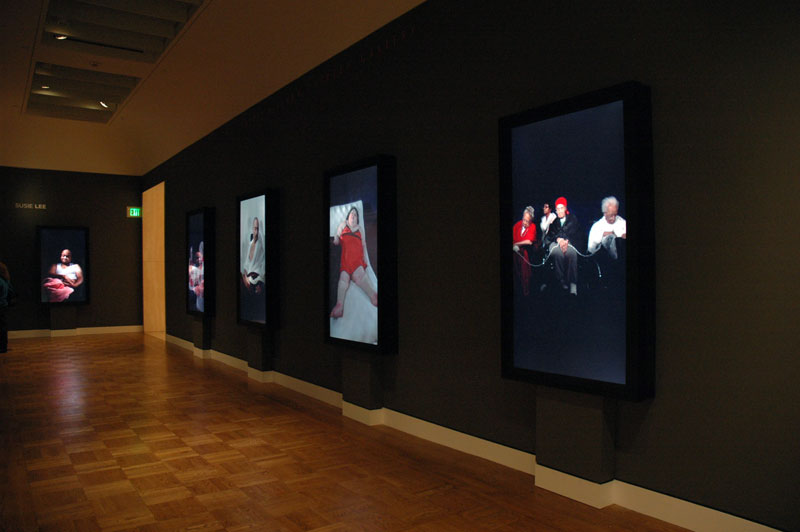
Hall of video portraits. Susie Lee. Portland Art Museum.

Hall of video portraits. Susie Lee. Portland Art Museum.

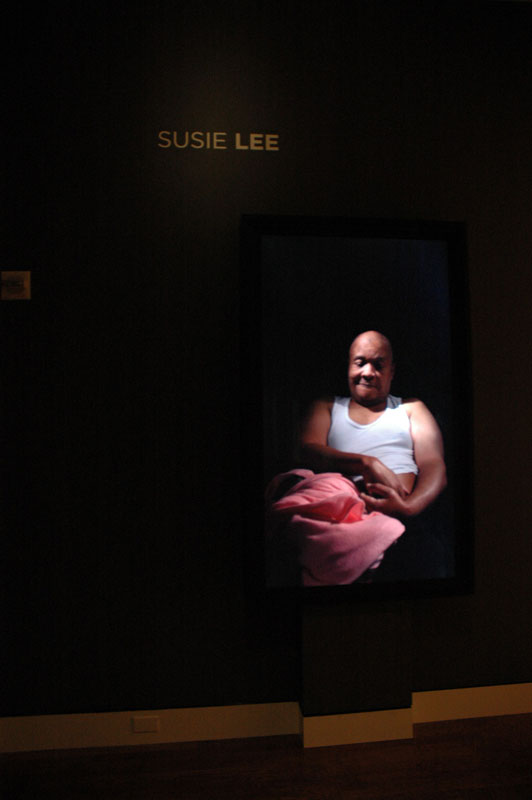
Video portrait by Susie Lee.

Video portrait by Susie Lee.

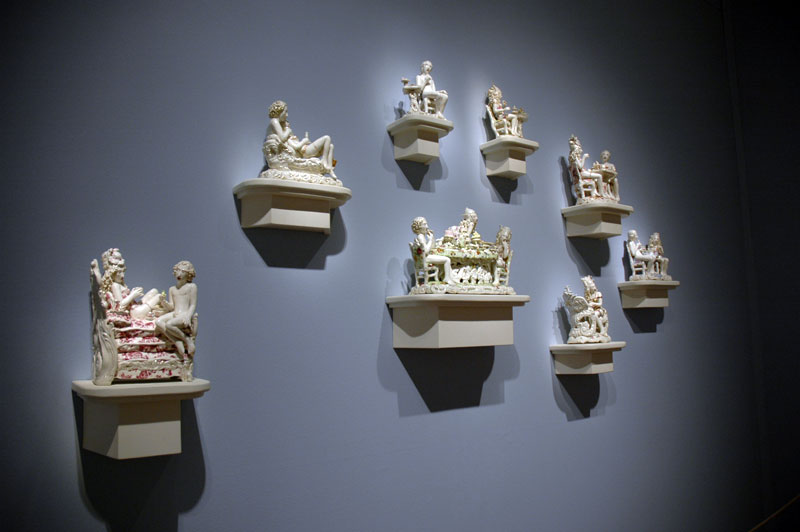
Erotic Victorian figurines by Chris Anteman, also in the Contemporary Northwest Art Awards show.

Erotic Victorian figurines by Chris Anteman, also in the Contemporary Northwest Art Awards show.

This work reminded me very much of the work of Bay Area ceramicist Erik Scollon.

This work reminded me very much of the work of Bay Area ceramicist Erik Scollon.

No photos but worth mentioning… The Museum of Contemporary Craft has at least two CCA connections, currently exhibiting an audio-weaving project by alumna Christy Matson and hosting a talk by faculty Deborah Valoma on July 9. Nice exhibition signage and web design to boot…. I also enjoyed my visit to Blue Sky Gallery, the home for the Oregon Center for Photographic Arts, and would encourage my photography friends to look them up.

I would have liked to check out some of the artist-run spaces in Central Eastside and the galleries at the surrounding colleges, but those will have to wait until a future visit.

San Francisco Bay Area, CA

I got to see lots of art, friends, and art by friends in San Francisco. Staying in the West Bay, I wasn’t able to make it to the East Bay enough. But I got to see ambitious projects by friends at familiar spaces (Stephanie Syjuco at Catherine Clark Gallery), new spaces for familiar galleries (such as Frey Norris Modern and Contemporary in the SOMA or Steven Wolf Fine Arts in the exciting destination arts district emerging around Southern Exposure), edgier galleries that may not be around forever, and spaces I just never made it to before (Di Rosa Preserve in Napa, CA, and SFMOMA’s top floor).

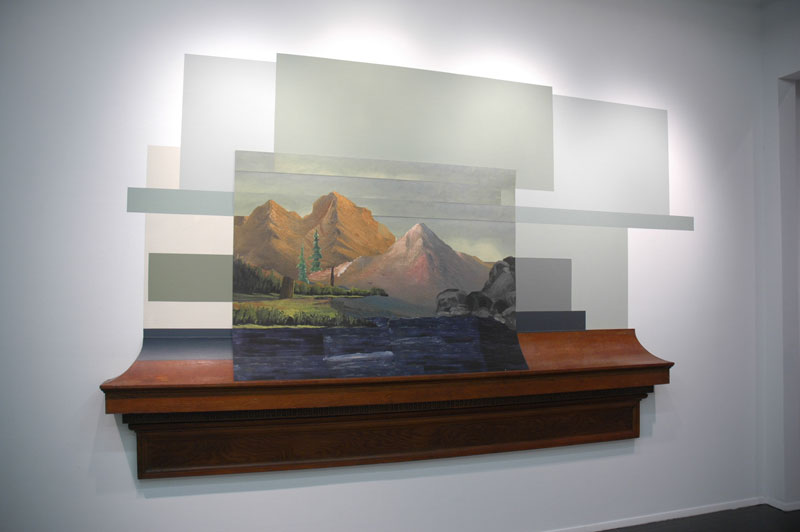
Casteneda/Reiman's landscape illusions and installations at Baer/Ridgeway, San Francisco.

Casteneda/Reiman's landscape illusions and installations at Baer/Ridgeway, San Francisco.

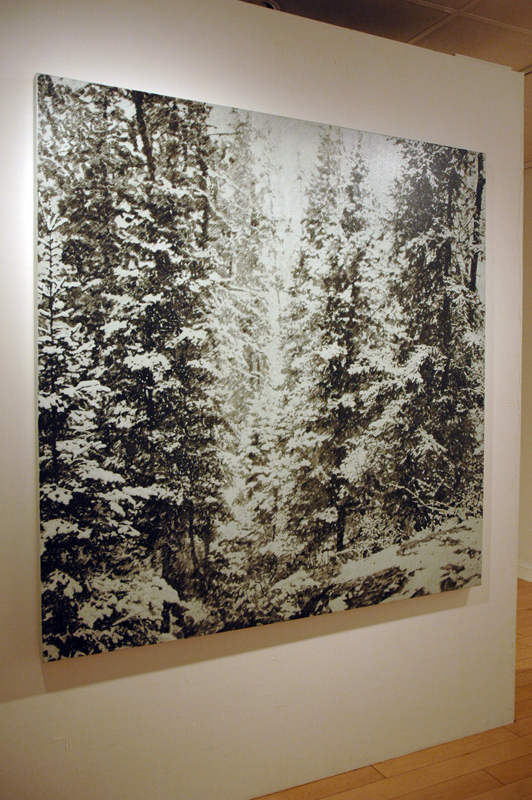
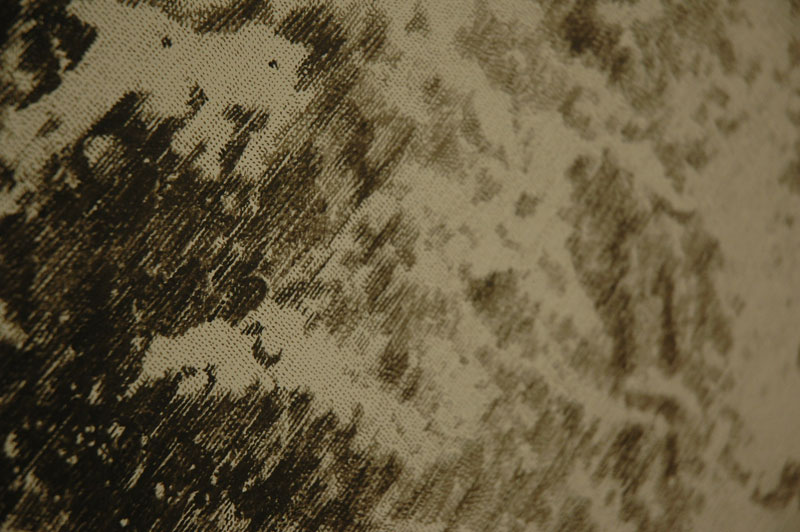
Steven Barich's meticulous graphite and charcoal works at Branch Gallery, Oakland.

Steven Barich's meticulous graphite and charcoal works at Branch Gallery, Oakland. Branch is a cool little space in that part of downtown that seems cooler than ever.

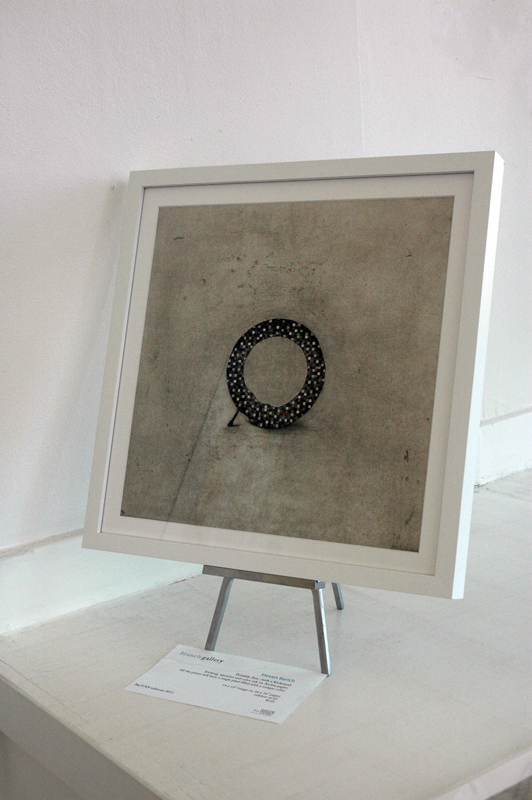
An aquatint with hand painting by Barich. Priced very affordably, as are all the works in the show. In my correspondence with the artist, I considered doing another information graphic comparing Bay Area art prices to those of other cities (haven't got the time or resources at the moment to take this on, sorry!)..

An aquatint with hand painting by Barich. Priced very affordably, as are all the works in the show. In my correspondence with the artist, I considered doing another information graphic comparing Bay Area art prices to those of other cities (haven't got the time or resources at the moment to take this on, sorry!).

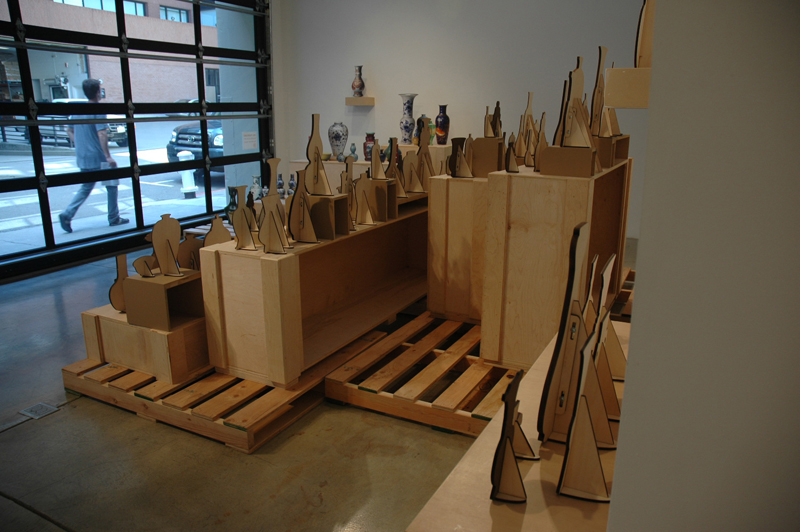
Stephanie is super meticulous about the presentation of her work. I love the open backs of these crates and the industrial feel of the lasercut stands. The blurred out postcards are especially wily.

Stephanie is super meticulous about the presentation of her work. I love the open backs of these crates and the industrial feel of the lasercut stands. The blurred out postcards are especially wily. Knowing that the artist once worked at the Asian Art Museum, not far from Catherine Clark Gallery, makes the show quite cheeky.

Stephanie Syjuco's very finely tuned solo exhibition at Catherine Clark Gallery stages downloaded books and houseplants (!) in the back room.

Stephanie Syjuco's very finely tuned solo exhibition at Catherine Clark Gallery stages downloaded books and houseplants (!) in the back room.

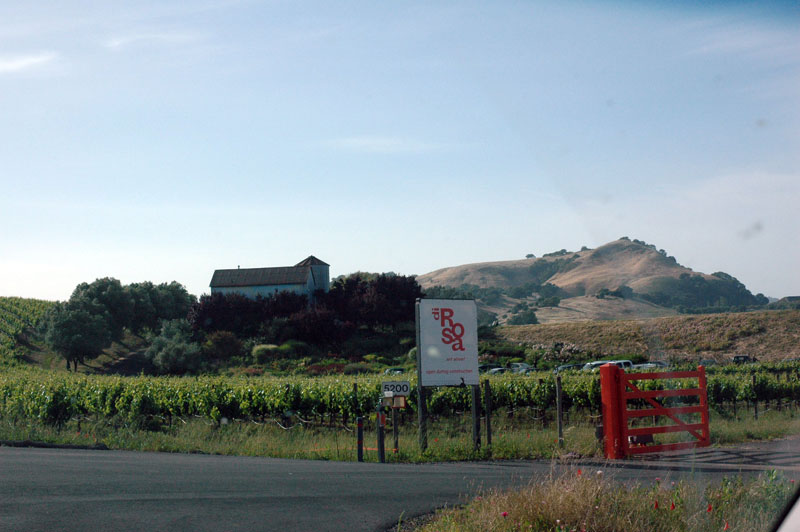
Di Rosa Preserve, Napa, CA.

Di Rosa Preserve, Napa, CA.

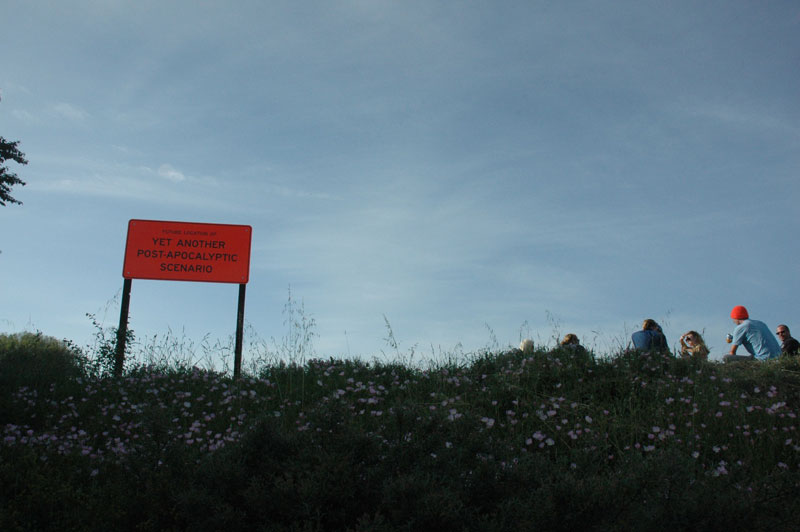
Usually you can find an art opening when hipsters are lounging out front. Here, they're accompanied by Discenza's sign.

Usually you can find an art opening when hipsters are lounging out front. Here, they're accompanied by Discenza's sign.

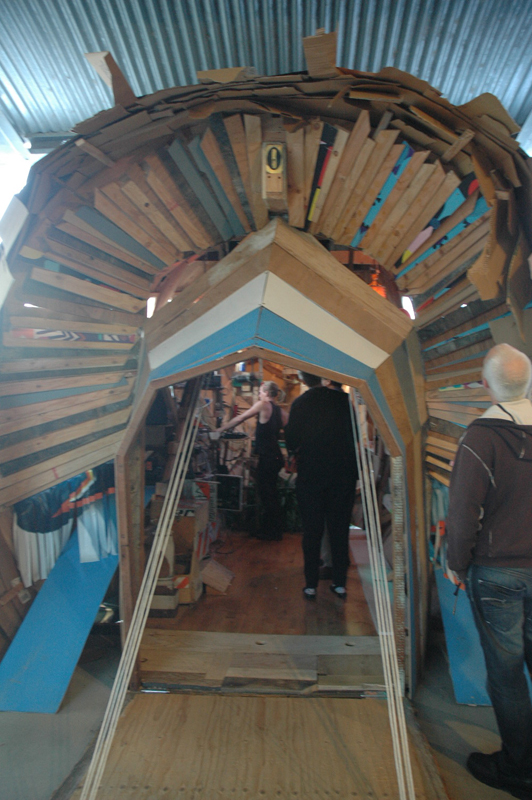
Front of Inka Hoots' plane/shanty. Funny after building a shanty for Art in General just a week an a half ago.

Front of Inka Hoots' plane/shanty. Funny after building a shanty for Art in General just a week an a half ago.

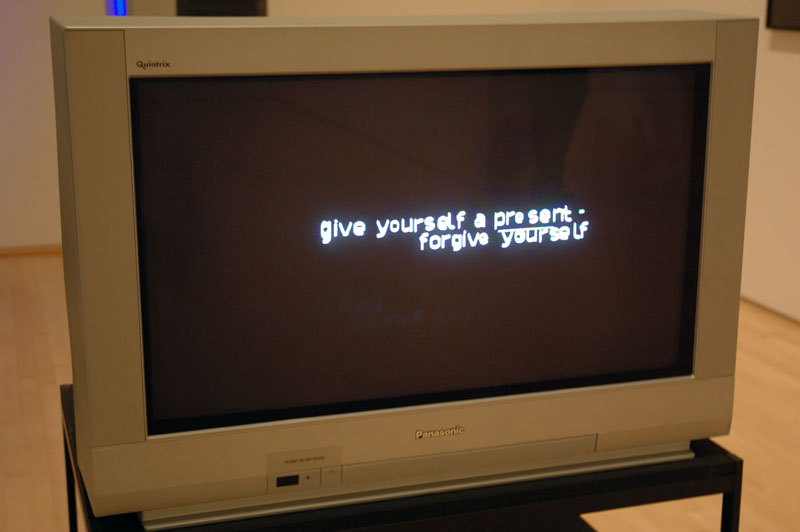
Wall vinyl by Anthony Discenza. I like this writing-based practice; there's something distant and cynical while also engaged and a somewhat enraged.

Wall vinyl by Anthony Discenza. I like this writing-based practice; there's something distant and cynical while also engaged and a somewhat enraged.

Video installation by HalfLifers (Torsten Z. Burns and Anthony Discenza) at Zombie-Proof House at di Rosa Preserve. Short scenes where the artists portray zombies engaged in mundane tasks are interspersed with behind-the-scenes-like shots. Very appealing.

Video installation by HalfLifers (Torsten Z. Burns and Anthony Discenza) at Zombie-Proof House at di Rosa Preserve. Short scenes where the artists portray zombies engaged in mundane tasks are interspersed with behind-the-scenes-like shots. Very appealing.

Masterful photos, beautiful prints, nicely installed, very sad show. If the models' eyes are shown, they are downcast; expressions are grim; all but one are women, often nude, all very pale and probably underweight. This is going to seem like a very facile critique, but why do men still make work photographing nude, disempowered women? Is it because photography's connection to advertising allows for greater moral latitude or complicity with exploitative images?

Masterful photos, beautiful prints, nicely installed, very sad show. If the models' eyes are shown, they are downcast; expressions are grim; all but one are women, often nude, all very pale and probably underweight. This is going to seem like a very facile critique, but why do men still make work photographing nude, disempowered women? Is it because photography's inherent connection to advertising allows for greater moral latitude or complicity with exploitative images? Fraenkel, by the way, usually has great shows, and this fall's line-up is really exciting.

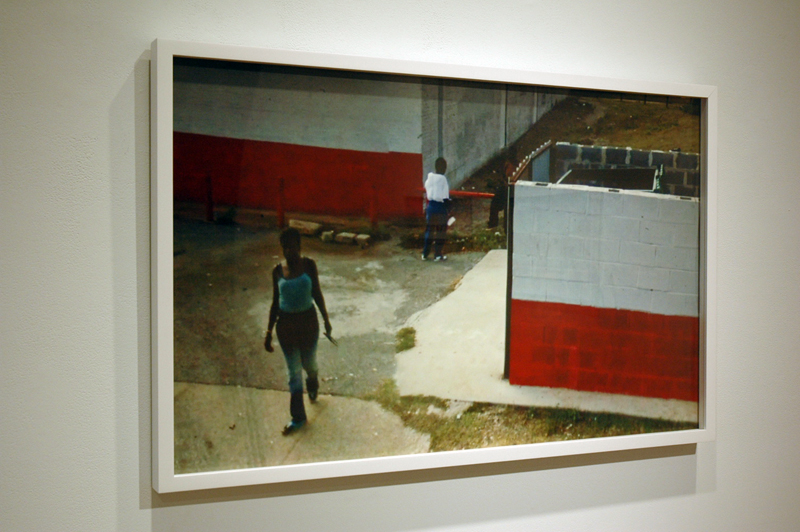
At Stephen Wirtz Gallery, Doug Rickard's photos pulled from Google Street View, primarily featuring dark-skinned people in dilapidated environs, made me a little sick too. I am all for art projects that appropriate Google Street View, but something about the selection of these images, and their presentation as nice, re-photographed photos, seems exploitative. I saw the Google van when it came down my street. I felt curious and powerless to escape its cameras. In these moments, the subjects are no more or less powerless in their relationship to the Google camera, but putting a magnifying glass to them for further inspection, and grouping them among other scenes of impoverishment, seems further, and unnecessarily, disempowering.

At Stephen Wirtz Gallery, Doug Rickard's photos pulled from Google Street View, primarily featuring dark-skinned people in dilapidated environs, made me a little sick too. I am all for art projects that appropriate Google Street View, but something about the selection of these images, and their presentation as nice, re-photographed photos, seems exploitative. I saw the Google van when it came down my street. I felt curious and powerless to escape its cameras. In these moments, the subjects are no more or less powerless in their relationship to the Google camera, but putting a magnifying glass to them for further inspection, and grouping them among other scenes of impoverishment, seems further, and unnecessarily, disempowering.

I liked a few different works in the group show at Haines Gallery in San Francisco. I'd loved an image of a camera obscura installation by Abelardo Morell, so it was nice to see this photo, though I'd rather experience the installation still.

I liked a few different works in the group show at Haines Gallery in San Francisco. I'd loved an image of a camera obscura installation by Abelardo Morell, so it was nice to see this photo, though I'd rather experience the installation still.

Small signs of protest against Ai Weiwei's detainment.

Small signs of protest against Ai Weiwei's detainment. Anytime people use Chinese take-out boxes, I cringe a little, but I appreciate the sentiment. This project appeared next to Christian L. Frock's Seed the Embassy materials..

Binh Danh's super cool daguerrotypes were also on view, for you to examine closely, at Haines.

Binh Danh's super cool daguerrotypes were also on view, for you to examine closely, at Haines.

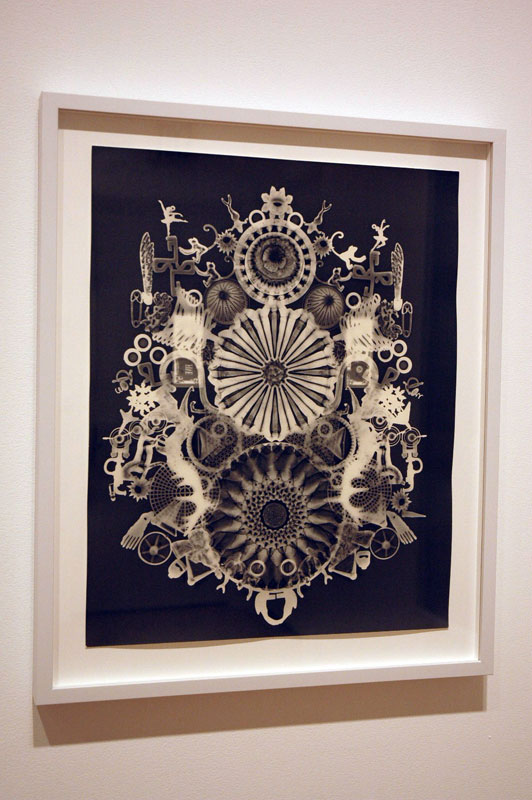
These photograms by Wendy Small are quite nice. I overheard another visitor dismiss them as "decorative." Yes, they'd fit in as a cheeky Victorian element in someone's otherwise modern home, but still, the images are pretty neat.

These photograms by Wendy Small are quite nice. I overheard another visitor dismiss them as "decorative." Yes, they'd fit in as a cheeky Victorian element in someone's otherwise modern home, but still, the images are pretty neat.

Painting by James Chronister in Chromanticism at NOMA Gallery, curated by Liz Wing.

Painting by James Chronister in Chromanticism at NOMA Gallery, curated by Liz Wing.

Chronister detail.

Chronister detail.

These abstract geometric drawings on newsprint by Richard Kent Howie are sort of childish, but it was neat to see work that's ostensibly about color in such a limited palette. Also at NOMA Gallery.

These abstract geometric drawings on newsprint by Richard Kent Howie are sort of childish, but it was neat to see work that's ostensibly about color in such a limited palette. Also at NOMA Gallery.

Richard Kent Howie detail.

Richard Kent Howie detail.

Great video by David Claerbout at SFMOMA. Comprised of multiple shots of the same scene in an Asian high-rise apartment courtyard. The number and fineness of the images transition from believable to surreally plasticine. The video is called, Sections of a Happy Moment.

Great video by David Claerbout at SFMOMA. Comprised of multiple shots of the same scene in an Asian high-rise apartment courtyard. The number and fineness of the images transition from believable to surreally plasticine. The video is called, Sections of a Happy Moment.

Eija Liisa-Ahtila's message to viewers of her video installation at SFMOMA.

Eija Liisa-Ahtila's message to viewers of her video installation at SFMOMA.

2009 mica mural by Rosana Castrillo Diaz. That's a material I should work with.

2009 mica mural by Rosana Castrillo Diaz. That's a material I should work with.

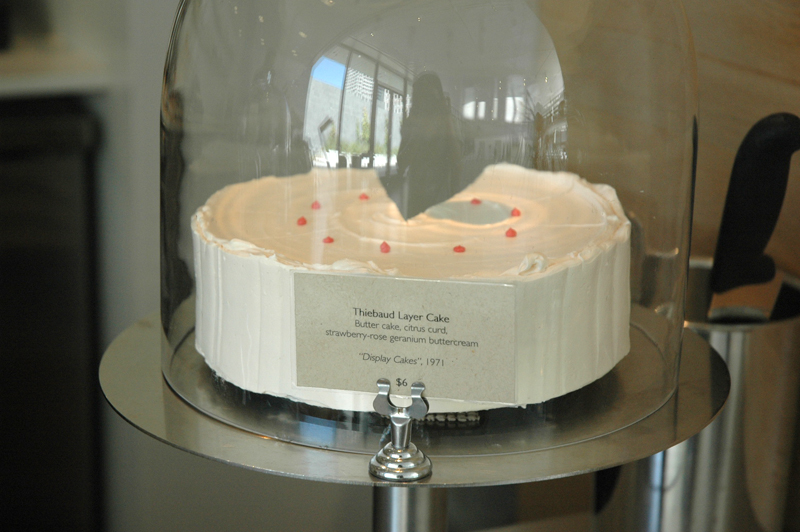
Who can resist a Thiebaud cake? SFMOMA's Blue Bottle Cafe.

Who can resist a Thiebaud cake? SFMOMA's Blue Bottle Cafe. That means it's probably baked by painter/sculptor/cake-maker Leah Rosenberg.

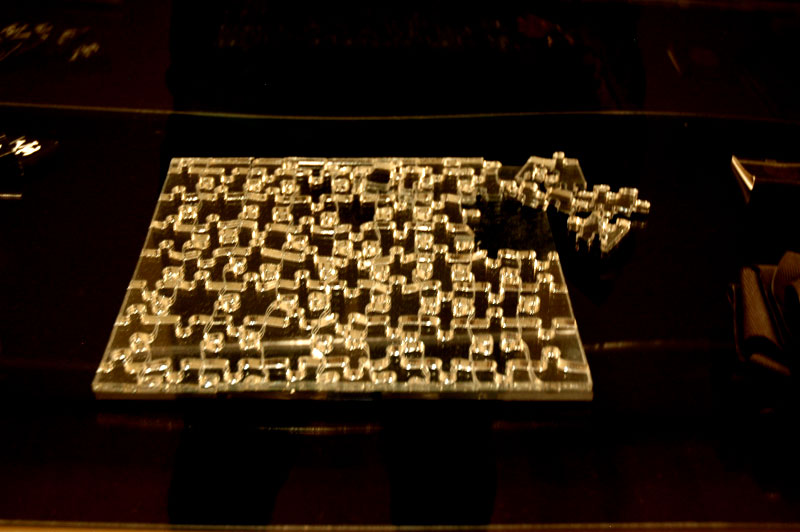
Tobias Wong's mirrored puzzle. SFMOMA.

Tobias Wong's mirrored puzzle. SFMOMA.

A few moments after suppressing a few goodbye tears at SFO, I re-encountered this mosaic tile by Mike Mandell and Larry Sultan. Based on photographs of people awaiting arrivals, the faces are expectant. Reunifications are impending, and there's something very sweet about that joy counterbalancing the sorrow of goodbyes in equal measure at the airport.

A few moments after suppressing a few goodbye tears at SFO, I re-encountered this mosaic tile by Mike Mandell and Larry Sultan. Based on photographs of people awaiting arrivals, the faces are expectant. Reunifications are impending, and there's something very sweet about that joy counterbalancing the sorrow of goodbyes in equal measure at the airport.

Standard
Impressions, Travelogue

New Haven: Art, architecture, clouds, and nativity scenes

New Haven, I learned, is very sleepy during Yale’s winter break. The special exhibitions at Yale University Art Gallery and the Yale Center for British Art are in changeover. Artspace was not open during their normal scheduled hours of the current show. Though the timing of my visit was not ideal, I enjoyed looking for and finding art in New Haven today.

Yale University Art Gallery
First—Louis Kahn’s building knocked my socks off. The exterior was cold and blocky, but the interior featured a beautiful lobby, interesting textures, and warm touches, like the uneven edges on the window scrims, and a cool-while-totally-sensible triangular stairwell. Big points for the handsome building signage in projected light.

Collections worthy of a prestigious Ivy League, like an Assyrian stone wall from the 5th c. BC. C’mon! (It’s the first image in this Flash-based “gallery tour.”)

Lots of gems in European and American art. I studied debossed gold-leaf patterns at length in some stunning pre-Renaissance icons. Duchamp’s Tu M’. A good Nam June Paik closed circuit television installation showing a live video of artificial flowers mounted to the top of the tube. Lucas Samaras’ Chicken Wire Box #4 (1972) and Untitled (1963), a panel covered in concentric circles of different colored yarn, then pinned with hundreds of straight pins (kind of like this). Happy and perception-stretching.

I also very much enjoyed mentions of local industry. The decorative art and design—early modernist nickel-silver tea set, pressed lead glass bowls—manufactured in little Massachusetts towns like Dedham and North Attleboro. They assert a history about designers and craftsmen that contrasts, in my mind, the must-have (in 19th c. wealthy homes and 21st c. general art museums) portraits of wealthy patrons.

joseph smith, tea caddy, 1767, source yale university art gallery

Joseph Smith, Tea caddy, 1767. Source: Yale University Art Gallery website

Joseph Smith’s Tea Caddy (1767) kills me. It looked totally out of place in the vitrine with mirror-polished silver vases. It manages to be endearing and craptastic. The construction of the clay seems unconcerned with formal considerations, but the calligraphic curliques suggest a desire to make it beautiful and refined. It’s surprisingly complex.

I also found the Asian and African art floor inspiring—Chinese watercolors and ceramics spurred me to think about patterns and line and the tropes of genre paintings; a ceremonial mask surrounded by oversized photographs of similar masks in use in Africa seemed like a sensitive approach to exhibiting these objects in contexts so different than their originally intended ones.

Yale Center for British Art
The architecture here is opposite what you’d think—instead of heavy, dark wood paneling with ornate wainscoting is warm, orange-toned wood interrupted with concrete. The galleries were lined with unbleached canvas-covered walls and filled with light. Except for an atrium (pictured on the museum home page), which I found suffocatingly prison-yard-esque, the museum was open and welcoming. This fresh approach seemed reflected in the collections curation. There were what seemed like hundreds of British paintings on view, and I never thought I’d hold up to make it all the way through, but surprising choices in the selections kept my morale up.

John Constable’s Cloud studies are a special treat that alone would make a visit worthwhile. Even for non-painters. (Otherwise you can get the book.)

I also liked the house portraits—they are more like oil-painted illustrated 3-D maps (remember these cheesy illustrated maps?) of English estates. The perspective is often forced and awkward. They’re interesting as cultural documents. (When you have a mansion and gardens upon gardens, do you really need a painting of it too? Do the servants carrying loaded baskets upon their heads evoke the same sense of satisfaction as the parasol-wielding leisure-seekers?) They are, essentially, heavily narrated architectural and informational graphics, and their quirks appeal.

Knights of Columbus Museum

The Knights of Columbus are a Catholic service organization, and they have a huge “museum” (though it seemed more like an office building with some gallery spaces) on the edge of downtown New Haven. I visited and found their exhibition on a recent mosaic project in DC to be informative. Photographs and texts guide viewers step-by-step through the old-world tradition completed with modern industrial tools. From drawing, making the mosaic in sections, scaffolding, to installation, it was great for nerding out on technical side of art making.

There’s also the State Room, full of memorabilia of different honorary gifts that were given to various Knights. The KoC-logo has been emblazoned on cowboy boots, judge’s gavels, and even a Filipino barong. It reminded me of promotional item showrooms, which are fun to visit as an artist.

The real reason I went to the KoC Museum, though, was for the Christmas in Asia exhibition of crèches, or nativity scenes. They were so brilliant that I am still disappointed that photography was not permitted; after all, I didn’t see any individual artists credited. While a few works were attributed to specific woodcarving workshops in China, the overwhelming majority was to “Unknown Artist”—presumably, some street vendor who sold the item in a brief transaction where Western currencies were advantageous and an exhibition loan form was absent. But whatever.

The crèches generally fell into two groups. In the first category, it seemed as if Asian craftsmen did a competent job of simulating Western realism, as well as tropes about the nativity scene and the participant’s appearances. This is interesting as an outcome of globalization. The objects were made for Western audiences, or for a local audience that prefers their nativity scenes traditional. The second category, however, spoke to my taste for the awkward and funny cross-cultural translations. In these cases, artists interpreted the nativity scene with local materials (bamboo, Korean paper mâche, Indonesian woodcarving, Filipino shells) and traditional forms. Sometimes the manger was substituted with a raised bamboo platform-hut with a thatched roof. The camels gave way to elephants (Pakistan) and a cat (Korea). This kind of willful naiveté was captured in an elaborately traditional Thai scene, featuring wrapped skirts on the women, farmer’s shirts on the men and a gilt fruit basket loaded with tropical fruit. The kicker was that the three wise men included a saffron-robed monk.

The crèches might indicate a darker truth—local craftsmen turning to non-native narratives to appeal to tourists’ tastes, not to mention colonialism. However, there are other possible explanations, and here’s one: For my mom, a Buddhist, Christ presents neither conflict nor contradiction. (In fact, I think the reason Christianity is not my cup of tea is because it’s incapable of this kind of religious tolerance.) It’s possible that some of these folk crafts emerge from the same feeling of nonchalant appropriation. Or maybe the craftspeople just love Christmas.

Standard
Art & Development, Community, Travelogue

Late Summer, Cross-Country Points of Reference

I’ve just crossed the country from San Francisco to New York by car. That’s three thousand, eight hundred miles in 14 days: camping, sightseeing, a few gallery visits and more than a few BBQ meals. The experience increased my appreciation for friendliness, waving at strangers, America, the grandeur of the West, the rich musical history of Tennessee, the quaint main streets of the lush Eastern seaboard—and most of all, the astounding diversity. I love that so many people can epitomize being American, while freely espousing indigenous, foreign, and home-spun cultures without a sense of paradox. From West to East, a few of my strongest visual impressions:

Dockside with Friends
Lake Merritt, Oakland, CA

A gathering of friends on a beautiful July evening at sunset. Celebrating friendships and the blessed life I’ve enjoyed since moving to Oakland in 1994.

landscape with road, arizona
The West
I’m California-born and raised, but I haven’t really seen the “West until now. It’s stunning. My fears that the world is crisscrossed with interstates and civilized with Walmarts are not completely warranted. The drive from Las Vegas, N.V. to Santa Fe, N.M. showed me that much of the West is still wild; the dramatic red bluffs are nothing short of breathtaking. I snapped some pics, but they fall terribly short; you have to be there to experience sense of scale and grandeur.

Santa Fe paper mache
Santa Fe, New Mexico, America
M and I played tourist in Santa Fe, seeing sites in the historic downtown (and crashing a church festival for some G.O.A.T. carne asada tacos). Santa Fe is gorgeous, scenic, historic, and bursting with culture. Tons of visual art, Native American art (so many images from art history classes come to life: black-on-black pots by Maria Martinez, squash blossom turquoise-and-silver-necklaces), Spanish colonial architecture, and fun stuff like Native American papercuts, paper machê crafts, and—yes, ya’ll—Southwestern regional woodcut artists (and why not?). Our brief visit was far too short; I was struck with the feeling that I could easily spend more time there. So I’m putting it out there, Universe: Have Me Back To Santa Fe.

The Dissolve: SITE Santa Fe’s 2010 biennial
Santa Fe, NM

A strong show of videos made and manipulated by 30 contemporary international artists, including biennial-circuit usual suspects (Kara Walker, Paul Chan, William Kentridge) and more. Thomas Demand’s video of raindrops hitting a glossy concrete floor is another impressive feat of stop-motion paper animation, very sweet in its mundanity. Robin Rhode’s short video in black and white, largely about inversions, race and light, is another favorite of mine. I just didn’t have time to see the whole show (which would have taken days), but many of my impressions were influenced by the forceful exhibition design, for better and worse. The first room successfully featured scrims dividing roughly equal-sized screening rooms.* But the exhibition design of later rooms overpowered the ther works. The light and audio seepage in the cyclorama-like oval were missteps, as was the integration of solo viewing booths into a bench in theater with one dominant screen. The experience was unpleasantly akin to screen-in-screen browsing; I could focus on neither screen in front of me. I think this kind of overwhelming media experience is fine for solo shows, but in a group show, it shafts the artists who’ve drawn short straws. It’s a strong curatorial statement to feature 30 videos, and it would be a challenge to any institution, but you have to wonder what the architects were thinking. SITE Santa Fe had some flaws but it was energetic, now, and smart.

Who Shot Rock & Roll?: A Photographic History, 1955 to the Present
Brooks Museum, Memphis, TN
Organized by the Brooklyn Museum with guest curator Gail Buckland

Who Shot Rock & Roll is a large, highly enjoyable exhibition of photographs of rock and pop musicians from the last half-century. The celebrity, glamor, pop culture, and sensationalism appeals. Those who dig deeper will find insightful captions about the technique, ingenuity and chance that went into the making of the famous photographs. Having spent my fair share of adolescence studying trippy album covers, I also appreciated the didactic texts and displays about the surreal, pre-Photoshop images by artist-designer Storm Thorgersen and Jean-Paul Goude (of superhuman Grace Jones, natch).

Hatch Show Print

Photo: Michael Yap

Hatch Show Print
Broadway, Nashville, TN

In our improvised gander at Nashville, we stumbled into a beautiful, huge, working letterpress shop and storefront. Downtown Nashville is anchored by a shiny new country music museum, the usual Hard Rock Cafe and BB King blues club, so I wasn’t expecting to see such historic, indie culture. But there it was on touristy Broadway, with its fittingly nostalgic relief prints, cheeky and upbeat typography, and endearingly worn sign type. While we were browsing the wares, I overheard the proprietor mentioning CCA and the SF Center for the Book!

Roanoke, VA
That the two most interesting contemporary art exhibits on my eastern migration (the SITE Santa Fe biennial and Rock & Roll) were curated by New York curators/institutions was not a good sign for the idea of a de-centralized contemporary art world. So it was a pleasant surprise to come across SF Bay Area artists Binh Danh and Primitivo Suarez in, of all places, Roanoke, VA. Danh (whose solo show opens at Mills College Art Museum August 21) mentioned that he was doing a residency, but I forgot until I saw his artist’s talk advertised in the local paper. Suarez has a large installation on view at the Taubman Museum of Art, a swooping steel-and-glass trifle that contrasts sharply with the colonial railroad town.
roadside America
roadside America
Roadside America
Shartlesville, PA

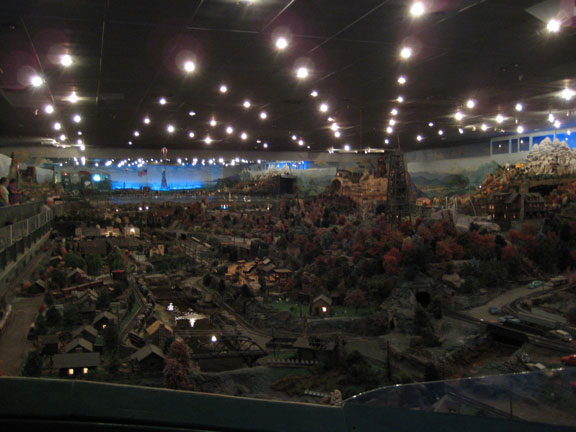
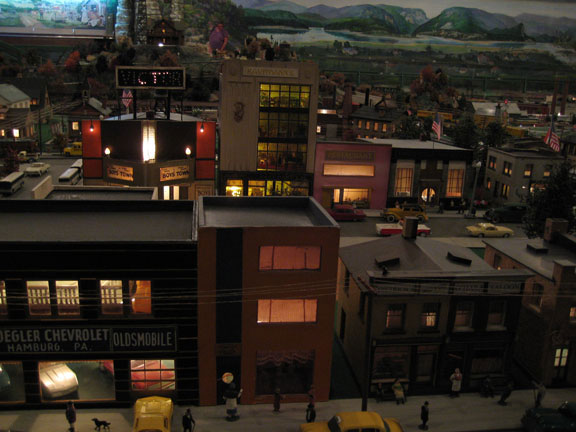
Perhaps M was right—this is a tourist trap. Or maybe I’m right—a miniature village hand-crafted by two brothers at mid-century, which sprawls over several thousand square feet, loaded with electric trains, lights, fountains and a waterfall is art. Or at least it is artistic production worth a visit, because it says something about tinkerers, hobbyists, miniature culture, maker culture, and the urge to create and reflect the world you see. In either case it is odd and wonderfully preserved, though you get the sense that it is anachronistic enough that its future is in jeopardy, and you feel lucky to have seen it.

Brushy Lake State Park, Oklahoma

National Forests and State Parks
Despite serious weather (lots of thunderstorms, and threats of flash floods, hail, tornadoes and severe heat), our car-camping trip was safe, fun, and scenic. Here’s a brief round-up of our stays made possible by the U. S. of A.’s government-run, social programs:
·Coconino National Forest, A.Z.: Friendly park hosts, beautiful pine grove at elevation that brought the oven-like southwestern heat to nice cool temps. Absolutely pristine and sparsely populated in a way that you’d never see in California.
·Ute Lake State Park, N.M.: Your basic horseshoe campground in a great plain. Curious and friendly park hosts and RV campers. Apparently we visited during monsoon season; hot, humid, windy.
·Foss Lake State Park, western O.K., and Brushy Lake State Park, eastern O.K. Oklahoman reservoirs tricked out for RV camping and water sports, a study in contrasts. The former filled with empties-throwing, nappies-leaving, jet-skiing yahoos and not a ranger in sight; the latter, alcohol prohibited, but quiet, scenic, clean and staffed by a generous host.
·Edgar Evins State Park, T.N.: A unique campground situated on a steep hillside. Sites were wood-plank and I-beam pads jutting out from the road. The reservoir was clean and calm, great for swimming. Fireflies abounded.
·Hungry Mother State Park, V.A.: Hands down the best park: natural lake with diving boards, lots of swimming, lots to explore, cute discovery center. The only downside was that the sites were too close together, but the neighbors in our RV subdivision were nice enough.
·Fort Frederick, M.D. Self-pay, no water, no bathrooms, lots of rules, and a train passing nearby. The fort itself had a neat history (at one time owned by a formed slave) but the campsites weren’t nothing special.

A pleasant greeting
Queens, NY

My new neighbors shouting from the patios of their tidy brick townhouses:
“Welcome to Astoria!”

[*In a previous version I got my German filmmakers with the initials L.R. mixed up, committing a cardinal sin of be-smirching an innocent leftist with Nazi support. It was a mistake. Apologies.]

Standard
Travelogue

The $1,300 test

Whilst in the UK during the Breathe Residency, I’d heard rumblings that the UK’s Home Office (domestic government) planned to tighten the borders with hugely detrimental effects on art galleries and residency programmes. The new procedures require:

“All non-EU visitors now must apply for a visa in person, and supply biometric data, electronic fingerprint scans and a digital photograph. The Home Office’s 158-page guideline document also outlines new controls over visitors’ day-to-day activity: visitors must show that they have at least £800 pounds of personal savings, which have been held for at least three months prior to the date of their application.”

What?! £800 amounts to over $1,300 USD. It would be nice if all artists could maintain a little nest egg, just for their own financial security—however, to maintain it for the sole purpose of entering the UK for a residency program or art exhibition seems ridiculous. The rate of exchange is not really favorable for Americans — imagine the challenge for artists from developing countries. There must be away to keep the country safe, without making England seem so Orwellian to its own highly-surveilled citizens and unwelcoming to potential visitors.

Some art organizations are getting organized and have posted a petition aimed at Parliament here.

Standard
Art & Development, Research, Travelogue

notes from the southland

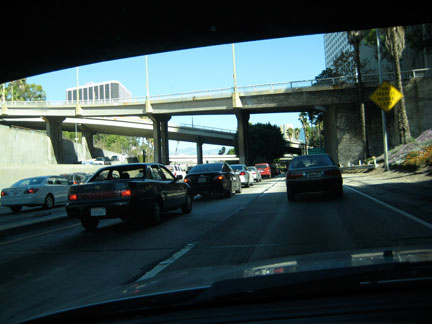
la_traffic

LA. Traffic.

Just got back from Los Angeles, where I de-installed my work at Tarryn Teresa Gallery. A few notes from my mental scrapbook:

mailinvoice

Packing up mailinvoicegetcarsmogged, 2006, plastic and ink on paper, 48 x 66 x 12 inches

Packing tools? I’ll never doubt you again, needle-nose pliers and extension cords! I should expect map pin heads to come clean off by now. I should know better than to rely on the palm sander’s cord. Thankfully, I erred on the side of caution, and it paid off.

NPR and classic rock. Apparently there’s no public radio along the I-5 in Fresno and Merced Counties, or they’re all run by evangelicals. Sans audio books, my substitute of choice was a Bakersfield-based classic rock station. If you could forgive the gratuitous misogyny, you’d discover a playlist spanning Zep, GNR, Def Leppard, Van Halen, Metallica, and Journey. Those bands once inspired repulsion in me, but I think we can all agree now that hair bands made some pretty great pop music. Last week, I heard Thin Lizzy’s “The Boys Are Back in Town” on an early morning grocery run, and it instilled a good mood that lasted hours. So I’m reclaiming this music from the heshers/burnouts/metalheads/bullies who gave it a bad name in high school, and you’re welcome to join me. For those about to rock…

Charles Burchfield, Glory of Spring, 1950, Watercolor on paper. Collection Parrish Art Museum, Southampton, New York. Gift of Mr. and Mrs. Alfred Corning Clark, 1959.6.6. Photo by Gary Mamay. Image source: Hammer Museum


Charles Burchfield at the Hammer Museum. I couldn’t see what Robert Gober, the contemporary hyper-realist sculptor, would see in a mid-century painter of landscapes. The Hammer exhibition, however, is fantastic. It makes clear that Burchfield was vastly under-recognized and portentious. His interest in abstraction, background in Asian-influenced Art Nouveau wallpaper design, experience with social realist pictorialism, and probable mental illness (see Dave Harvey’s great write-up in the LA Weekly) led to an innovative body of paintings that manages to embody countless references (to traditional Chinese scroll painting, Japanese woodcuts, OCD doodling, Cubism, and modern-day fantasy art) while forging a distinct visual language — psychedelic, immersive. I also admire his sheer conviction — after a successful stint as a Regionalist painter, Burchfield wrote in his journal,

“It seems to me, more than ever, imperative that I somehow get these fantasies into finished concrete form even tho there is not sale for them. How we will live, I do not know.”

Burchfield’s final paintings are really tremendous pictures. Some of them are breathtaking. The show is accompanied by extensive notes which provide welcome keys to the artist’s process, thoughts, doubts and motivations.

Nic Hess’ Hammer Project. Pretty great too. Masking tape drawings, a ton of vinyl decals. The placement of imagery in the space was cheeky and unexpected.

Robert Crumb’s Book of Genesis at the Hammer. I always feel the same way after viewing Crumb’s drawings: slightly dirty and tawdry, like I’d stayed at a cheap motel and watched Entertainment Weekly. More of my base self and less of my ideal self. It’s brilliant for Crumb to do a literal interpretation of the first book of the Bible in all its wretched, meaty drama. Of course Crumb can draw like no other, and there’s something vaguely appropriate, like Chick Tracts, to visualize this content in a sensational manner. The curators took pains to point out Crumb’s attempts at historical accuracy in regards to robes and architecture, but his comically zaftig female figures seem excepted from revision.

The historical exhibit at the Japanese American National Museum. I went for the Giant Robot Biennale, but two items from the historical exhibit were like punches to the stomach. First: a small girl’s cape. An internee mother modified a disused Navy peacoat for her daughter. It makes tangible the completely deranged skewing of context (where giving old military coats to forcibly-relocated families is like compassion; where modifying said coat is an act of love and resilience). Second, a massive diorama reified the scope of the internment camp at Manzanar. It was conceived and created by Robert Hasuike, a Mattel Toys model maker. It was effective and, by extrapolation, nightmarish.

Exhibition in Pasadena featuring some high-profile artists from the past 20 years of the institution’s programming. Ambitious show, disappointing reality. Only a few works emerged unscathed from the poor presentation and compromised spaces. I think the less said about this exhibition, the better. So I’ll pose, then, a series of questions:

1. When you’re an artist, and have identified artists you admire who embody rigor, quality, thoughtfulness and professionalism, and you see their work suffer due to poor presentation, how does that make you feel? Do you have similar experiences in your own history so that you can relate to these established artist’s possible regrets? And does this make you hopeful (that you’re not alone) or sad (that even established artists can’t avoid partnerships with presenters who don’t deliver)?

2. Is it the artist’s burden to accept the limitations of a non-commercial presenter? Or is it the artist’s responsibility to push them to expand their capacity and raise the level of exhibition installation and management towards professionalism?

3. When you’re a viewer and your expectations of an exhibition are raised by professionally-produced promotional collateral, who is at fault when the actual show’s installation reads on a lower level of quality, like student-grade?


On Whinging. This post is a bit more critical than usual, but I do grapple with these questions and criticisms wholly. I’m invested—I drove all over LA on a beautiful holiday afternoon and selected a a few shows to focus my attention on. I don’t set out to be critical of these shows—I try to keep an open mind and hope to be surprised for the positive.

Happy Halloween!

halloween

Standard
Research, Travelogue

L.A. Looks

Between installing recent works at Tarryn Teresa Gallery and being stuck in traffic, I got to have some fun art-life in Los Angeles last weekend…

–Peeked behind the scenes of a down-low James Turrell light installation. Don’t ask where, because I won’t say!

–Experienced Richard Serra’s monumental Band and Sequence steel sculptures at LACMA for the first time, and in near solitude, to boot. I was really grateful to get them both to myself, as the experience was sensory and meditative. I was baffled, though, when I encountered an LED light piece in the corner. It was completely lacking wall text. I knew it was a work because its perimeter was demarcated with vinyl commanding, “Please do not touch,” and when I entered the throw of light, I set off a high-pitched alarm. Yet I’d never known Serra to do light-based work, and I’m sort of keen on these things. A new museum mystery remains unsolved.

–Upstairs at LACMA were a massive Barbara Kruger vinyl installation and a Koons, Warhol and Baldessari group show. The dude show was great, if not especially urgent (in fact, it was scheduled to close a year ago). Still, I hadn’t seen one of Koons’ balloon animals in the flesh in a while, and it was totally and surprisingly effective, accomplishing what I think the provocateur meant to do. That taut, shiny sculpture sort of turned me on. Awkward!

–In the other huge wing was a large survey of Beuys’ multiples. Shows of multiples, esp those tangential to Fluxus, can be wonderfully curio-esque or miserably archival and academic. I’ll admit, my art stamina was no match for the massive scope of this survey. I also had a hard time turning off my preparator brain, noticing the grey-vinyl-on-grey-paint instead of synthesizing the text, and being bothered by the lack of didactic texts in the vitrines. Still, it was cute to see Beuys’ famous sled sculpture, which Stephanie Syjuco is re-creating for 1969, a show at PS1 this fall.

–When you like a gallery, and their shows keep exceeding your expectations, you start to worry about becoming biased. This is what happens to me at Marc Foxx Gallery. I loved the Anne Collier show the last time I was in town, and I loved the group show with Jim Hodges and Frances Stark the preceding visit. This time round, I was slowly but surely impressed with a solo show by Matthew Ronay, who crafts fictionalized juju capes, hoods, staffs and other ritual objects. They’re completely engrossing.

Joel Kyack’s Knife Shop at Francios Ghebaly’s Kunsthalle LA in Chinatown was pretty great too. It’s a theatrical installation in the vein of low-brow, folky, male juvenile art, but it worked for me because it was hokey but believably dangerous. I mean, there’s a table of dozens of hand-made shanks. Anger at the world seems less pathetic (even if the work is in a ‘pathetic aesthetic’) when the artist has ground metal license plate holder and other bits of metal into long blades. These aren’t Nut N Fancy tactical knives; they’re fetishes of obsession and rage.

–The recession seems to hit Chinatown galleries especially hard, with many shops folding or moving, so it’s fantastic to see an example of rigor over sell-ability in this ‘hood. Rachel Khedoori’s installation at The Box is timely and political, and its visual interest is minimalist but nightmarish. It’s a museum-quality show at a small commercial gallery. Not sure how that happened, but it’s cool.

Standard
Impressions, Travelogue

london art and life highlights

My last weekend in the U.K. was spent visiting galleries and friends in London. I’m too happy and exhausted to make any sense of it. It is what it is. So here are pics, in no particular order, of art + life from Mayfair / Soho / So. Kensington / Essex.

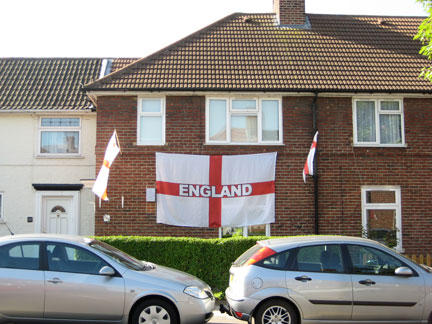
St Georges flags still up in Essex. I did my bit and ate a hot cross bun.

St Georges flags still up in Essex. I did my bit and ate a hot cross bun.

LOVE IT! Calligraphic letters cut from cardboard. Mason's Yard, London.

LOVE IT! Calligraphic letters cut from cardboard. Mason's Yard, London.

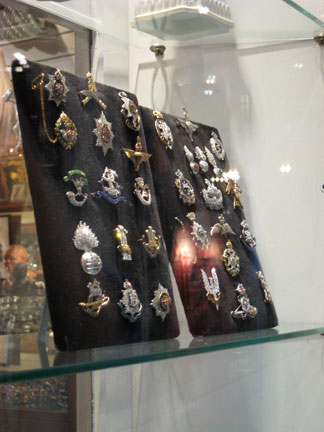
The type of British commemorative badges that inspired my Sorted badge.

The type of British commemorative badges that inspired my Sorted badge.

Love this silver, mirror-finish shop sign using an inline typeface on high gloss black paint. Hot!

Love this silver, mirror-finish shop sign using an inline typeface on high gloss black paint. Hot!

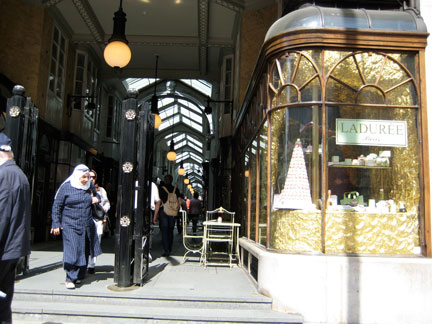
I see my future, and there are macaroons in it.

I see my future, and there are macaroons in it.

Royal Academy of the Arts. On a personal level, this trip has really inspired me to think about what I want in life. And I want to do more travelling.

Royal Academy of Arts. On a personal level, this trip has really inspired me to think about what I want in life. And I want to do more travelling.

Underpainting / works in progress by Mediha Ting in her studio near Bow Road, London. She's got a show opening in Manchester this weekend, and one in Shanghai later this summer.

Underpainting / works in progress by Mediha Ting in her studio near Bow Road, London. She's got a show opening in Manchester this weekend, and one in Shanghai later this summer.

Mixed media on slate by Tom Barnett, from the exhibition, To Paint is to Love Again: Painters from Peckham. Hannah Barry Gallery, London.

Mixed media on slate by Tom Barnett, from the exhibition, To Paint is to Love Again: Painters from Peckham. Hannah Barry Gallery, London.

Sculptural "painting" by Edward Wallace of stretched, striped lycra, also at Hannah Barry.

Sculptural painting by Edward Wallace of stretched, striped lycra, also at Hannah Barry.

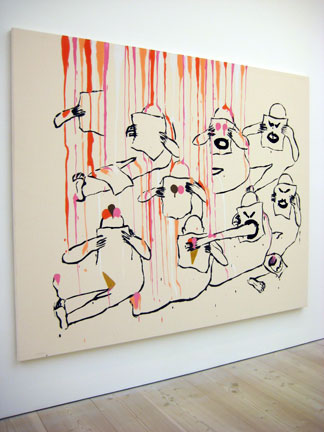
Tala Madani's paintings at Saatchi Gallery, South Kensington, were  pretty great. I saw them in NYC before, and still don't really get them, but I sorta like them. Moreover, Mediha is right: Saatchi Gallery, despite the horrid website, has some of the best lighting I've ever seen in my life. If heaven had a gallery, it would look like this: flawless lighting, walls, floors, wall texts...

Tala Madani's paintings at Saatchi Gallery, South Kensington, were pretty great. I saw them in NYC before, and still don't really get them, but I sorta like them.

This neon chandelier by Richard Wheator made from glass and rapid-prototyped hardware, at the Taschen shop in South Kensington. Brilliant art, brilliant curation!

This neon chandelier made from glass and rapid-prototyped hardware, at the Taschen shop in South Kensington. Brilliant art, brilliant curation!

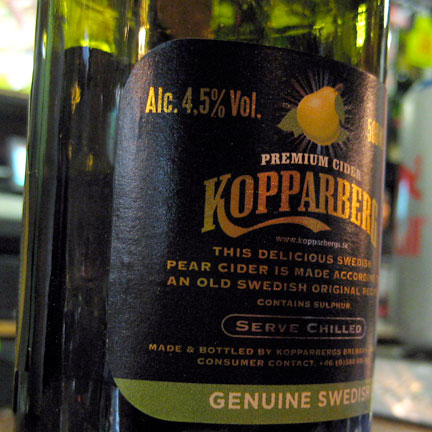
Really, nothing beats a fresh, not-too-sweet pear cider over lots of ice on a hot day in London. The search for a Bay Area supplier has already begun.

Really, nothing beats a fresh, not-too-sweet pear cider over lots of ice on a hot day in London.

Traveller's luck -- finding friends from near and far, like Steph and Maria (Yason too).

Traveller's luck -- finding friends from near and far, like Steph and Maria (Yason too).

No pics, but also great:

Tom Friedman at White Cube Mason’s Yard.

Isa Genzken retrospective at Whitechapel.

Ian McKellen and Patrick Stewart in Waiting for Godot at the Royal Haymarket Theatre. Brilliant. So witty, so poignant. Delightful existential aches.

Cindy Sherman at Monica Spruth Philomenes Magers. Good and terrifying.

Standard