Sights

This Saturday in San Francisco

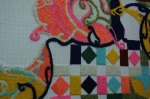
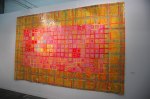
Positive Signs, 2011, glitter pen, fluorescent pen, foil print, gridded vellum, 8.5 × 11 in / 21.5 × 28 cm.

Positive Signs, 2011, glitter pen, fluorescent pen, foil print, gridded vellum, 8.5 × 11 in / 21.5 × 28 cm.

Artists’ Talk
In Other Words
Sat, March 24, 2pm
Intersection for the Arts
925 Mission Street (at Fifth), San Francisco CA 94103
Exhibition extended through 3/31
Gallery hours: Tue–Sat, 12–6pm

In Other Words is a group exhibition that looks at language and its capacity to clarify and confuse, convene and separate, inspire and discourage. By exploring a range of areas concering the influence and evolution of language in our lives—the impact of technology, the obscurity of industry-specific terminology, the psychological internalization of language, and the recontextualization of language—the artists in this exhibition demonstrate through a diversity of media the many ways in which we strive to communicate to each other.

Katie Gilmartin, Julia Goodman, Emanuela Harris-Sintamarian, Susan O’Malley, Meryl Pataky, Alex Potts, Cassie Thorton, Annie Vought, Christine Wong Yap

Read reviews on SFGate, Zero1 blog, and the East Bay Monthly.
View opening photos on ArtBusiness.com.

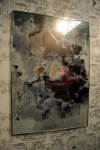
hope for good, allow for even better, 2012, ribbon, thread, pins, 51.5 × 47 in / 1.3 × 1.2 m

hope for good, allow for even better, 2012, ribbon, thread, pins, 51.5 × 47 in / 1.3 × 1.2 m


Opening reception: Sat, March 24, 3–5
Winter Art Walk 2012: Sat, March 24, 12–5
Voices of Home
Jenkins Johnson Gallery
464 Sutter Street (between Powell & Stockton), San Francisco, CA
Gallery hours: Tue–Fri 10–6; Sat 10–5
Exhibition: March 24–April 28, 2012

Each of these artists visually articulates works inspired by their diverse and rich cultural and ethnic backgrounds.

Artists: Noel Anderson, Kajahl Benes, Elaine Bradford, Elizabeth Colomba, Jamal Cyrus, Nathaniel Donnett, Zak Ové, Leslie Smith III, Devin Troy Strother, Felandus Thames, and Christine Wong Yap.


Standard
Research

[International Art] English Spoken Here

In “Tip of the Tongue” (Frieze, Spring 2012), writer and translator Vincenzo Latronico asks, “Since English has become the lingua franca, what has happened to art – and to language?”

It’s an interesting question, which was brought to my attention a few years ago during a studio visit. A Lithuanian curator asked why I make my text-based work in English. As a native speaker born in the US, my initial reaction was that it was somewhat essentializing, though now I think he wanted to question any assumptions about English’s neutrality. Latronico delves deeper into the implications of art world English:

On the predominance of English in the art world and its effects:

[When artists switched from writing in their native language to English] The most obvious transformation was formal – short sentences, modest vocabulary, basic syntax…. English has a distinct intellectual style: language-specific criteria for a convincing argument, a well-grounded idea, a strong proposal or a good quotation.

Contrast English with Italian intellectual style, whose description recalls visions of my graduate school readers, scribbled marginalia asking, “What’s the point?”:

Italian intellectual style … has been determined, until very recently, by … 19th-century German philosophy … and French post-Structuralism…. This mixture makes the prose meandering, strenuously long, convolutedly composed of subordinates nested within other subordinates in a smoky mise-en-abîme. To anyone used to English writing, it’s most likely to sound as if no argument had been made at all.

And consider a study by

…artist David Levine and the sociologist Alix Rule…. ‘International Art English’ is exemplified by a large set of English-language, art-related press releases and newsletters. They analyzed the corpus and found a tendency towards overly long sentences, a proliferation of superfluous abstract nouns, the excessively frequent derivation of nouns ending in ‘-ization’ and even a slightly peculiar metaphysics: writers granting agency to inanimate objects – exhibitions, projects, research – when this agency should be ascribed to the people who created them. For Levine and Rule, the cause of these traits lies in a foreign influence: the imitation of French philosophy and theory as read in English translation.

Which the author interprets thusly

The foreign influence makes the language more accessible for a different, wider, more diverse audience than one composed of native speakers only. International Art English … uses fewer words and less varied syntax than ‘high’ standard English; at the same time, the words used are not necessarily the easiest, nor are the syntactic constructions the simplest. Adapted to the needs of non-native speakers, the language becomes at once complex and easy: a combination of convoluted, abstract refinement and down-to-earth directness….

This is a satisfyingly optimistic conclusion, and I hope it’s true.

Standard
Research

optimism and setbacks, tony tasset sculptures

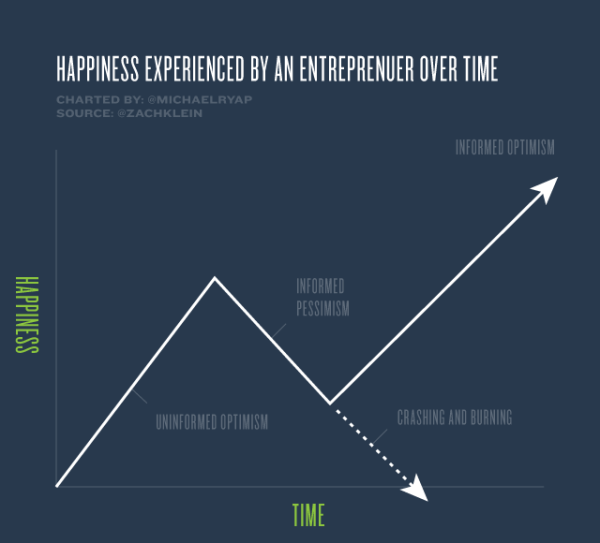
Happiness experienced by an entrepreneur over time. Michael Yap. Source: twitter.com/#!/michaelryap

Happiness experienced by an entrepreneur over time. Michael Yap. Source: twitter.com/#!/michaelryap

As Martin Seligman points out, the difference between optimists and pessimists is not that optimists do not suffer from setbacks, but that they optimists weather setbacks better.


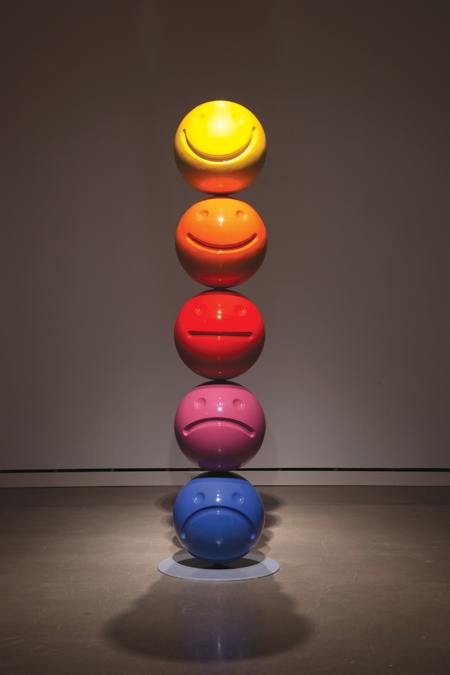
Tony Tasset, Mood Sculpture, 2011, Fiberglass and paint, 90" x 18" diameter, Photos: courtesy Kavi Gupta Gallery, Chicago // Source: ArtLtdMag.com

Tony Tasset, Mood Sculpture, 2011, Fiberglass and paint, 90" x 18" diameter, Photos: courtesy Kavi Gupta Gallery, Chicago // Source: ArtLtdMag.com


Tony Tasset, Why Can't We All Just Get Along?, 2009, lambda print, 47" x 47". Source: KaviGupta.com

Tony Tasset, Why Can't We All Just Get Along?, 2009, lambda print, 47" x 47". Source: KaviGupta.com

Standard
Impressions

An Art Fair, Positively Materialistic

Last week I researched a lot of art materials, so when I attended the Armory Art Fair it seemed like the thing that attracted me the most were materials.

Spared from crowds and achey feet, you’ll have to excuse the poor-quality snapshots.

First, some novel materials or presentation styles I found attractive, interesting, or fun. Followed by some examples of exuberance/knickknackery, good ideas, nice techniques, and one lone example of an interest in psychology.

I did attend VOLTA, but my battery promptly quit. On my camera, that is. View a catalog. I loved Patrick Jacob‘s miniature vistas as seen through a miniature domestic set (The Pool, NYC). Also nice to see Ed Pien‘s work at Pierre-François Ouelette Art Contemporain, Montreal. Neat retroreflective paper cut.

Standard
Research

Everyday objects: Vessels for sentiments and memories

Prized possessions: What do they mean to their owners? How do they accomplish this? Where does our subjectivity end, and the thing’s objecthood begin?

I’ve been interested in this since starting graduate school, when I tried to change my practice from making art that represented an idea, to making art that embodied it. This quote from a Fluxus artist sums up the paradox beautifully.

We are all fetishists snared by the object…. The object is the vehicle of the affections… until they reach the flea markets of the world, where these objects continually pile up stripped of their magic and cut off from the memory of their history… All that remains of these preserves is the container the artists made for the time, the “can” the preserves came in…. The container will never interest me as much as the contained, but where would I pour my wine without a glass?

—Daniel Spoerri, The Mythological Travels, 1970.

I’ve been interested in how possessions act as vessels, and it keeps coming up in different ways. In Irrational Exuberance (Asst. Colors), discount store goods triggered questions of value and taste. In reading Mihaly Csikszentmihalyi’s Flow and Creativity, I zeroed in on the psychological benefits of a symbolic ecology of the home for Positive Signs drawings.

This idea seems to be coming up more frequently from outside sources as well. Perhaps I’m noticing it more, or possibly a zeitgeist is coalescing…. Here are my notes from the field:

The Floating Lab Collective: Re-Museum
March 20 – April 27, 2012
5×5 public art installations, various sites in Washington DC

The Re-Museum … mirror[s] the process of collecting, displaying, attributing value to, and commodifying art objects by the institution.

Recognizing that souvenirs play a familiar role in the reinforcement of national ideologies, beliefs and rituals, The Re-Museum is selecting an array of souvenirs drawn from and representing issues and aesthetics embedded in our local communities. Through a variety of workshops and conversations created in partnership with local community centers we will select significant objects, sites, narratives and images from various DC communities to be housed in the Re-Museum.

The Re-Museum wil be making weekly stops at locations ranging from the Corcoran Museum to outdoor parking lots in Colombia Heights and Recreation Centers in Deanwood.

(Via Coro/Raquel de Anda)

A life full of things – of personal relationships with the inanimate – only seems possible through the mediation of art, and so I prefer theidea of things, rather than the thing itself.

Isla Leaver-Yap, curator*

(*Yap clan in contemporary art!)

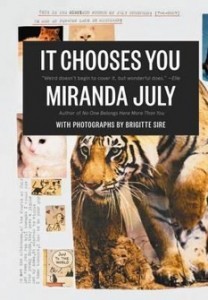
It Chooses You, Miranda July

It Chooses You 
Miranda July 
McSweeney’s, 2011

July interviewed subjects who were selling possessions in the Pennysaver in LA. She asks them to talk about their items, and notes how they decorate their houses. The characters tend to be rather marginalized, so the stories are imbued with pathos.

Read excerpts on NewYorker.com.

Listen to Miranda July and actors read excerpts on WNYC’s Selected Shorts. Recommended. The idea of July’s work strikes me as self-consciously quirky, uncomfortably over-sharing, twee indie like Michael Cera, but when I actually give it a chance, it is always sincere and affecting. This reading is quite long, but very moving towards the end.

Animism: exhibition and conference
16 March–6 May 2012
Haus der Kulturen der Welt, Berlin

In the habituated scheme of modernity, objects are conceived as the passive stuff on which human action leaves its imprint or trace. Whenever this passive/active nexus between objects and subject, humans and the non-human is disturbed or even reversed—as in the coming-to-life of seemingly dead matter, or the becoming autonomous of inert things—we inevitably step into the territory of animism: that non-modern worldview that conceives of things as animated and possessing agency. Is it possible to de-colonize the imaginary manifest in the modern conception of the animist “other”, by bringing into view the practices that both make and transgress the distinctions and boundaries in question?

(Via e-flux)

Vibrant Matter: A Political Ecology of Things, Jane Bennett

Vibrant Matter
Jane Bennett
Duke University Press, 2010

Lecture: Powers of the Hoard: Artistry and Agency in a World of Vibrant Matter

How do objects sometimes act as vibrant things, with an effectivity of their own, a degree of independence from the words, images, and feelings they provoke in humans? Political theorist Jane Bennett delivers the inaugural lecture as the Vera List Center for Art and Politics embarks on a two-year exploration of the material world. In the face of virtual realities, social media and disembodied existences, the center will focus on the material conditions of our lives and examine “thingness,” the nature of matter.

Renowned for her work on nature and ethics, Bennett investigates the power of things, which sometimes manifests as the strange allure that even useless, ugly, or meaningless items can have for us. Her latest book Vibrant Matter: A Political Ecology of Things (Duke, 2010) asks how our political world would approach public problems were we to seriously consider not just our human experience of things, but the capacity of things themselves. How is it that things can elide their status as possessions, tools, or aesthetic objects to manifest traces of independence and vitality? Following the tangled threads linking vibrant materialities, human selves, and the agentic assemblages they form, Bennett examines what hoarders – people preternaturally attuned to things – might have to teach us about the workings of agency, causality, and artistry in a world overflowing with stuff.

Finally, a call for prized possessions for exhibition:
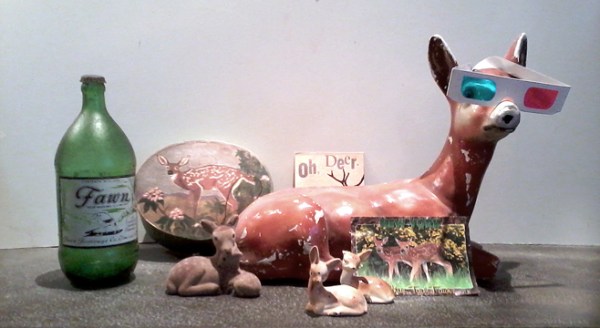
Fawn's collection of fawns. Source: Greene County Art Council.

Fawn's collection of fawns. Source: Greene County Art Council.

The People’s Collection
Greene County
Arts Council, Masters on Main Street project
in collaboration with  Occupy with Art
Friday, April 13 – May 31, 2012

Wall Street to Main Street is pleased to announce an open call to all residents of Catskill and the Hudson Valley to share things you love in your home with your community in a beautiful common space. We ask that you bring one object that has inspired you and gives meaning to your life to be shown with your neighbor’s loved-things in a surprise exhibition located on Main Street.

Not to mention The People’s Biennial, curated by Jenns Hoffman and Harrell Fletcher.

Also, did you know that there are institutions named “The People’s Gallery” in San Francisco, California as well as Riverside, California;  Derry, North Ireland; Cork, Ireland; and Cheshire, UK. It was also the name of a 19th-century African American photographer’s studio in St. Paul, Minnesota, as well as the name of this year’s civic exhibition in Austin, Texas.

Standard
Sights

see: Cindy Sherman @ MoMA

If you’re in New York this weekend, you’re probably going to the fairs (Armory, Scope, Volta, Independent, etc), but if you can, do yourself a favor and get to the MoMA for the Cindy Sherman retrospective.

Cindy Sherman. Untitled #466. 2008. Chromogenic color print, 8' 1 1/8 x 63 15/16" (246.7 x 162.4 cm). The Museum of Modern Art, New York. Acquired through the generosity of Robert B. Menschel in honor of Jerry I. Speyer. © 2011 Cindy Sherman. Source:MoMA.org.

Cindy Sherman. Untitled #466. 2008. Chromogenic color print, 8' 1 1/8 x 63 15/16" (246.7 x 162.4 cm). The Museum of Modern Art, New York. Acquired through the generosity of Robert B. Menschel in honor of Jerry I. Speyer. © 2011 Cindy Sherman. Source:MoMA.org.

I liked Sherman’s work before, though I always thought of her in the context of the Pictures Generation. Now, after seeing this world-class exhibition of her work, I’m convinced about her unique position in 21st-century contemporary art. There are many bodies of works in the exhibition, and a few—Untitled Film Stills, the history paintings, and the more recent grand dames—alone would make fantastic accomplishments for one artist’s lifetime. Some little-seen works really add to the visit, too. Sherman is an incredible photographer and artist, and I left feeling very inspired to be prolific, think big, and take risks.

(For example, I’ve been daydreaming about a forthcoming series of large collage/posters, envisioning a series of 10. Sherman’s Untitled Film Stills knocked my socks off—all 69 of them. Time to up the scale of my ambition, and do work!)

(Also, female self-portraitists, cliché of art schools: Bring it or quit it! Sherman’s A-game comes at risk to her, and the viewers benefit with immense rewards. Making vulnerable self-portraits in a very general way about “the gaze” can be like working on your punching form by hitting the air. It’s how you start, but sooner or later, you either step into the ring, or move on to Zumba.)

Cindy Sherman is on view at the MoMA through June 26. If you can’t make it, there’s a nicely organized exhibition website, though it’s just a sampling of the pictures and details you’d see in the exhibition. (Typography nerds will appreciate the fluctuating typefaces for this identity-upending show.)

Standard
Research

Happy Happy Joy Joy

A few questions about the intersection of art, design, and psychology.

Do you like your data:
[ ] Cheeky?
[ ] Data-rich?

Do you like your psychology:
[ ] Positive
[ ] Negative
[ ] Empirical
[ ] Practical
[ ] Experimental
[ ] Applied

Do you like your holiday cards:
[ ] Amusing
[ ] Informative

Do you want your ideas to:
[ ] Reinforce your brand
[ ] Enhance understanding
[ ] Enrich experience

GOOD and OPEN's Mean Happiness data visualization.

GOOD and OPEN's Mean Happiness data visualization. April 6, 2010.

“Today I’m Feeling Turquoise,' Pentagram's holiday cards.

“Today I’m Feeling Turquoise,' Pentagram's holiday cards, pairing colors with moods.

Standard