Community

Duke Riley, Gary Hill, Erik Wysocan

I took a very brief jaunt around NYC’s Chelsea a few days ago and was enamored with the following shows:

Duke Riley: Two Riparian Tales of Undoing
Magnan Metz Gallery, 521 West 26th Street
Through April 9 (Last day is tomorrow!)

I’d adored a prior show at Magnan Metz Gallery on West 26th Street, and I was impressed again with the scope of Riley’s exhibition. There are two large, detailed shows that remind me of historical museums in different ways. The first, on one of Riley’s train-riding, hobo, antecedents was an immersive installation dotted with videos, dense smells and a massive-window-turned-lightbox featuring a handmade drawing. The second tells of Riley’s attempt to recover an island near Pennsylvania where said antecedent once squatted. This is told through mosaics, a delft-inspired plate collection, artifacts, rubbings, and a documentary video. I love that Riley, additionally a tattooist, clearly has a love of the drawn line, but his draftsmanship enhances—rather than defines—the scope of his inquiries.

The MM site appears to be down at the moment, so have a look at the photos that accompany Time Out’s review of the show.

Gary Hill: of surf, death, tropes & tableaux: The Psychedelic Gedankenexperiment
Gladstone Gallery, 515 West 24th Street
Through April 23

Hill presents a series of trip-out psychedelic projects, including 3-D videos, animations, a stereoscopic photo, and a video installation that exploits optical after burns. A molecule model, presumably of lysergic acid diethlyamide, recurs throughout, in a instance where constancy does not reassure. Nice install photos on Gladstone’s site.

Erik Wysocan: A Thousand and One Nights
Andrea Rosen, 525 West 24th Street
Through April 23

I originally plotted to see David Altmejd’s exhibition in the main gallery. His oversized plexiglass vitrine displaying thread and human anatomy of clay was interesting, however, I lingered much longer in Wysocan’s installation in the back room. Viewers pass through mock metal detectors to a security clearance and storage area.

What I loved most was the way Wysocan used light, lightboxes, plexiglass, and optical media to unique effects. He had two lightboxes featuring polarizing film sandwiched between glass sheets, one of which was broken. That, in turn was in front of a wrinkled sheet of clear cellophane. I spent a long time trying to figure out how it worked, what I was looking at, appreciating the optical effects, as well as the nice installation touches (such as running electrical leads behind the drywall).

He also had bass-ackwards vitrines where, presumably confiscated objects were on display, or not, in the case of one vitrine made of dark-tinted plexiglass where each object was carefully masked out. A number of reversals occurred where exterior-grade plywood pedestals were perched upon clear vitrines. Especially charming was a still-life of flowers in rococo vases, colors muted by their encasement in a tinted vitrine. Lots of great photos on Rosen’s site.

Standard
Community, News

Through April 16: IMPRESSIONS: From the CCA(C) Print Shop

Thanks to AR for pointing this out to me: An old woodcut print of mine, originally exhibited in my BFA senior show in 1998 at the California College of the Arts, is in a current exhibition in Oakland, CA.

Curated by CCA(C) printmaking instructors Tim Sharman and Jack Y. Ford, I’d wager that the exhibition includes lots of oldies-but-goodies, with etchings, lithographs (from actual limestones!), woodcuts and letterpress prints on view.

I haven’t made prints in a while, but I’ve hung two etchings in my kitchen here in NY. They were acquired in one of the department’s end-of-semester print exchanges.

March 4 – April 16
IMPRESSIONS: From the CCA(C) Print Shop

Studio Quercus
385 26th Street, b/Broadway & Telegraph, downtown Oakland, CA

THE FAMOUS, NOT-SO-FAMOUS AND THE TOTALLY UNKNOWN
Curated by Tim Sharman and Jack Ford

An exhibition of prints spanning 60 years of printmaking from the print shop at the California College of the Arts—formerly known as the California College of Arts and Crafts. Examples of lithography, intaglio, relief and screen printing will be on display. Over the years, the CCA(C) print shop has seen many students and teachers using the presses to create images to remember. This survey is a celebration of that long history of creativity.

Curated by CCA(C) alumni and instructor Tim Sharman and CCA(C) alumni and professor Jack Ford, this exhibition honors the traditional craft of printmaking.

Standard
Community

New online art journals

I’m cheered by these two new art journals. In addition to providing a platform for emerging critics, these outlets have the potential to cover under-publicized exhibitions and offer fresh perspectives.

On-Verge is CUE Art Foundation’s website for “Alternative Art Journalism.”

Temporary Art Review was co-founded by Sarrita Hunn (CCA MFA 2004) and James McAnally. It’s “a platform for contemporary art criticism that focuses on alternative spaces and critical exchange among disparate art communities.” Founded in the Midwest, there are already reports from Houston, Saint Louis, San Francisco, New Mexico, and Portland.

I would encourage any artist interested in writing criticism to develop submissions for these journals, or get in touch with Art Practical about writing a 250-word Shotgun Review.

Writing about art affords artists:
• more opportunities to look at art, whether it’s merely the extra motivation created by deadlines, or invitations to press previews;
• the experience of thinking more deeply about media, forms, messages, and presentations;
• new perspectives on art shows—that is, critical distance to others’ art as well as your own;
• a critic’s perspective on the art world, at least in terms of how galleries receive writers into their spaces or contact them in their publicity efforts;
• experience honing the craft of writing, if you’re lucky enough to work with great editors.

In grad school, I expressed fear of taking the leap into criticism—who am I to judge?—when MP advised me that I already know everything I need to know in order to write about art. I think she was saying that you don’t need permission to write about art—you just need the skills of perception, and the ability to turn those observations into thoughts and sentences. Of course having an understanding of media, materials, artists and spaces helps, but for those artists who are at all interested in criticism, I’d say: take the leap.

Standard
Community

Everyday UFOs & Shame the Devil

I’m pretty excited about these two openings coming up this week. The first features some really fun and funny photos, and the second is curated by a friend and hardworking curator from CCA.


March 16 – April 23, 2011
Gregg Louis: Everyday UFOs
Nohra Haime Gallery
730 Fifth Avenue, between 56th & 57th Streets, NYC, NY
Opening: Wednesday, March 16, 6 – 8 PM

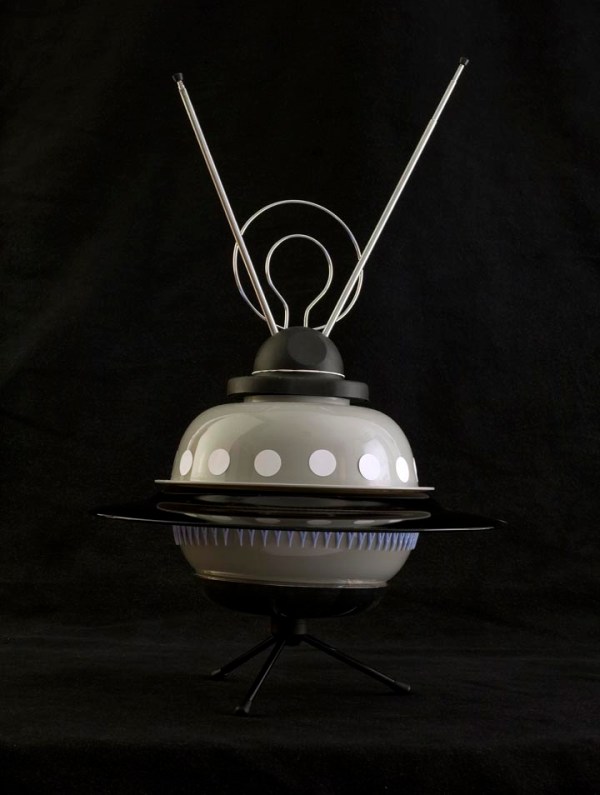
Everyday UFOs, an exhibition of recent photography by artist Gregg Louis will be on view in the project room at the Nohra Haime Gallery from March 16th through April 23rd.

In his first solo exhibition in New York, Louis uses photography to construct uncanny images of UFOs out of found household objects such as light bulbs, TV antennas, dishes, plungers, ect. His process of arranging, stacking, and transposing these mundane objects against a black backdrop creates surreal images that humorously and sometimes eerily re-imagine everyday reality. By transforming these ubiquitous objects that typically fade into the background of our daily lives, Louis creates playful images that at once feel unique, familiar, and otherworldly.

Everyday UFOs mediates between an optimistic child-like playfulness and a skeptical investigation into projections and blind faith in phenomena beyond the earthly realm. The work blurs the line between belief, imagination and reality, and explores the potential we have to knowingly or unknowingly redefine our everyday perceptions for better or worse.

Gregg Louis, a multidisciplinary artist, was born in St. Louis, Missouri. He moved to New York and received his Master of Fine Arts from School of Visual Arts in 2009. Louis was a participant in the Skowhegan School of Painting and Sculpture Residency Program in 2009. His work has been exhibited in both the US and abroad. Louis currently lives and works in Brooklyn, New York.

BAZIN_WIN11_large.jpg

Photo: Kenya (Robinson)


March 17–April 30, 2011
Shame the Devil
The Kitchen
512 West 19th Street, between 10th and 11th Avenues, New York, NY
Opening: Thursday, March 17, 6-8pm
Exhibition Hours: Tues-Fri, 12-6pm; Sat 11-6pm
FREE

Curated by Petrushka Bazin

The genre of comedy, in all its various manifestations in stand-up, theater, literature, television, and movies has long provided rich and valuable inspiration for artists seeking to critique contemporary society using parody, satire and dark humor. Inspired by the parallel ability of both the stand-up comedian and the artist to play the role of cultural observer and provacateur, this exhibition presents new sculpture, video, installations, and photography by artists, who strategically examine, with their frank observations and dry wit, the socio-political dimensions of power associated with cultural, racial, and economic issues. Titled after the longer idiom “tell the truth and shame the devil,” which means to speak honestly and without censor, these artists, following the long traditions of political caricature, offer up wry send-ups of political commentary on such critical issues as global poverty, racial profiling, anti-terrorist paranoia, and right-wing extremism. Artists include: Jabari Anderson, Elizabeth Axtman, Michael Britto, Wayne Hodge, My Barbarian, Huong Ngo, Jessica Ann Peavy, Sara Greenberger Rafferty, Jimmy Joe Roche, and Kenya (Robinson).

Standard
Community

America Now and Here

M is involved in this new contemporary art initiative, and it’s super exciting! After 9/11, Eric Fischl started this project involving loads of contemporary artists to start dialogues throughout the country. They are gearing up to tour soon and bringing killer artists to Kansas City first, with more cities to be announced…

I love that it’s sort of civic but in a grassroots way, and totally artist-initiated. Despite the divisive political climate, there is still much that connects us, and art can play a role. Getting to see some of the country firsthand when I drove cross-country last summer really made me excited about the range of regional identities and cultures that are all uniquely American. The prospect that contemporary art can help to generate a dialogue about America and our hopes is too good to pass up.

I think on-the-ground cultural exchange like this can have so much potential (just ask Antonio Carlos Joabim and Dizzy Gillespie). I promise you’ll be excited about these artists as I am…

America: Now and Here

“The idea is simple. Let’s find a theme that everybody shares and build a dialogue around it. Our theme is America. We’ll start by sharing our ideas and experiences through the art that we make. Now, it’s your turn. Let’s use art to have a dialogue about America.”
—Eric Fischl

Standard
Art & Development, Community, Research

Works in Progress

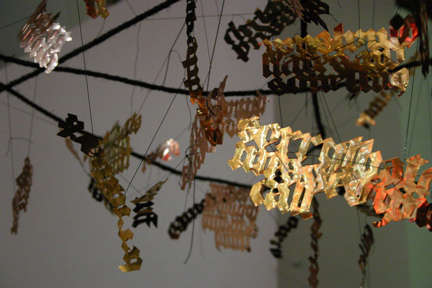
Christine Wong Yap Work-in-progress view of Cloud II (Aura / Good Thoughts) 2011 mixed media installation: Glitter foil on board, 3-D illusion plastic, fun fur yarn, thread, elastic, hula hoops, beads dimensions vary

Christine Wong Yap, Work-in-progress view of Cloud II (Aura / Good Thoughts), 2011, mixed media installation.

I’ve been working on a new cutout text installation for a forthcoming group exhibition. It will be an optimistic, exhuberant update to my copper and elastic installation, Cloud.

Cloud (installation view), 2006, copper, rope, elastic, monofilament, 7 x 6 feet / 2.1 x 1.8 m

Cloud (installation view), 2006, copper, rope, elastic, monofilament, 7 x 6 feet / 2.1 x 1.8 m

The original installation was comprised of mundane, mindless texts, such as “hey, it’s me, are you busy now?” The new iteration uses spoken, written and emailed texts from my life that express happiness, gratitude, or empathy. It will be made of colorful materials like 3D illusion plastic and glitter foil.

Your wish has come true

Work-in-progress view of hand-cut glitter foil on board. Text: “Your wish has come true.”

February 28 – April 1, 2011
Portraiture: Inside Out
Opening Reception: Thursday, March 3, 5—9pm
An exhibition of contemporary portraiture. Curated by Ruth Ballester, Whitney Fehl and Lauren Thompson, Graduate Students in the Museum Professions Program.

Artists: Sarah Bliss, Dominic Guarnaschelli, Gwen Hardie, Jenny Hyde, Pat Lay, Greg Leshé, So Yoon Lym, Ryan Roa, Steve Rossi, Jesse Eric Schmidt, Travis LeRoy Southworth, Tanja Targersen, Peter Whittenberger, Christine Wong Yap, Raphael Zollinger

Opening Reception: Thursday, March 3, 5–9pm
Walsh Gallery at Seton Hall University, South Orange, NJ
Gallery hours: Monday–Friday, 10:30am–4:30pm

Also in the exhibition, by chance, are two members of the collective, Brolab, who I met through volunteering for the Art in Odd Places festival, and whose work I enthused about, last fall.

Random & Rad:

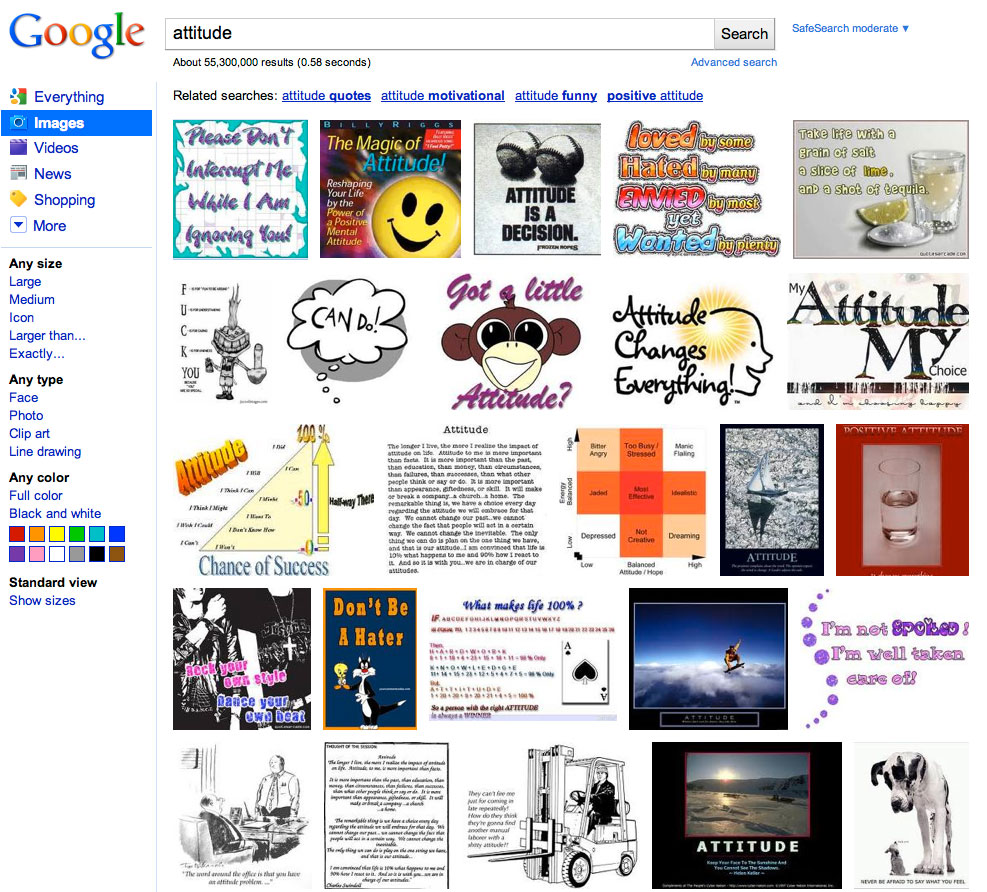
I did a Google image search for “attitude” and this is what came up:

Google image search results for Attitude

I love the mix of results! Trashy, jokey mottos alongside sincere (if simplistic) mantras for optimism. Just the first row is brilliant: unapologetic crudeness underscored by a sassy type treatment, self-help clichés (positive thinking, magic, happy face), motivational sports maxims, more unapologetic crudeness plus sexual egomania, and a party-goer’s mantra. It sort of exemplifies American ignominy as well as the desire for inspiration and the futility of oversimplified positive thinking. It presents lowbrow poles of irony and sincerity.

Standard
Artists, Community, Research

College Art Association: artists, ideas, inspiration

[Apologies for the duration since the last post. I’ve been busy working towards an exhibition—Portraiture: Inside Out, opening at the Walsh Gallery at Seton Hall University in New Jersey on March 3rd. I’ve also been preparing for a stint as a contributor to SFMOMA’s Open Space blog from March through June.]

———

The College Art Association (CAA) 2011 Annual Conference is in New York this week, so I took some time out to attend. I first heard of the conference from classmates seeking academic jobs, but it turns out that the conference has a lot to offer non-job-seekers as well.

My personal highlights are:

During the “Data As Medium” panel, Brian Evans (University of Alabama) talked about cognitive linguistics (someone’s been reading Lakoff/Johnson!) and found similarities between Kandinsky’s point-line-plane schema with databases’ variable-array-table. He also drew parallels between the hierarchy of information (noise-data-info-knowledge) and the experiential spectrum (reality-sensation-perception-cognition). I was fascinated.

Penelope Umbrico, Img Collection #6: Universal Remotes, (for sale on the Internet)

Penelope Umbrico, Img Collection #6: Universal Remotes, (for sale on the Internet). Source: PenelopeUmbrico.net

Penelope Umbrico, For Sale/TVs From Craigslist

Penelope Umbrico, For Sale/TVs From Craigslist. Source: PenelopeUmbrico.net

I adored the artist’s lecture by Penelope Umbrico (Bard College and School of Visual Art). She uses mundane sources like Flickr and Craig’s List to find images of mundane things, like sunsets and armoires. What made her talk especially engaging and funny is the way she structured her narrative to follow her thought process. First came the sunsets, then armoires followed, then televisions. Then photos of people in front of her installations of photos of sunsets at museums, such as the nice installation at SFMOMA’s 75th Anniversary collection show. The worm eats itself.

Curiously, Umbrico cited numerous authors already on my list of to-reads:
Walker Percy, a 20th century fiction and non-fiction writer interested in cognitive science; Vilém Flusser, a Czech philosopher whose writings are oft cited by artists; and Milan Kundera, Czech author of books like The Unbearable Lightness of Being.

The discussion was especially provocative after reading “The Postmedia Perspective,” a recent article by Domenico Quaranta on Rhizome.org (brought to my attention by the astute and curious ET). Quaranta, summing up Peter Weibel, says:

postmedia art is the art that comes after the affirmation of the media; and given that the impact of the media is universal and computers can now simulate all other media, all contemporary art is postmedia.

Or in Weibel’s words:

This media experience has become the norm for all aesthetic experience. Hence in art there is no longer anything beyond the media. No-one can escape from the media. There is no longer any painting outside and beyond the media experience. There is no longer any sculpture outside and beyond the media experience. There is no longer any photography outside and beyond the media experience.

I also attended “Making a Living With or Without a Gallery,” in which the panelists could offer little beyond common sense career advice (dealers aren’t parents {or peyh-rints, in the New York idiom}; getting a gallery is not an end; artists should make their own scene). Thus my highlight was running into art critic Jerry Saltz. I think his writing is accessible, smart and unpretentious. Indeed, I’ve heard people say that the New York Magazine and Work of Art critic is–aided by social media–populist to a fault, but I think in the art world, where playing nice-nice for self-advancement seems like the rule, I find his willingness to say what he really thinks, to engage mass audiences, and to be uninhibitedly enthusiastic at times to be refreshing.

A panel on residencies hosted by the Alliance of Artists Communities exposed me to the Fine Arts Work Center in Provincetown, MA. It sounds like a great residency if you can commit to seven (winter) months in New England.

I did not manage to formulate my comment into a question during the Q&A session, but I wanted to say that after all the hours (and fees) I’ve spent applying to residencies (14 applications to residencies, fellowships and studio programs in the past 12 months), I have come to appreciate specificity. I am grateful to those organizations that state what kind of artists should apply, and frustrated by organizations who cast very wide nets, even if the artists they have awarded in the past fit a specific profile—perhaps they are international or established, or comfortably 2-D or 3-D work.

Even if application fees merely offset the costs of the program, and organizations want to attract the largest pool of entries in order to secure the best applications since you never know what the jurors will go for, it seems like being specific about which artists should apply would behoove the jurors and applicants. While I wouldn’t want any artist to lose out on opportunities, let’s be realistic about the odds of success and the wasted efforts of hundreds of applicants.

For example:

The A.I.R. Gallery’s 2011 Fellowship program received 250+ applications for six fellows.
//////////////////////////////////////////////////
//////////////////////////////////////////////////
//////////////////////////////////////////////////     or 1:41
//////////////////////////////////////////////////
//////////////////////////////////////////////////

Smack Mellon’s 2011 Artist Studio Program received 600+ applications for six studios.
//////////////////////////////////////////////////
//////////////////////////////////////////////////
//////////////////////////////////////////////////
//////////////////////////////////////////////////
//////////////////////////////////////////////////
//////////////////////////////////////////////////     or 1:100, or 1%
//////////////////////////////////////////////////
//////////////////////////////////////////////////
//////////////////////////////////////////////////
//////////////////////////////////////////////////
//////////////////////////////////////////////////
//////////////////////////////////////////////////

The Public Art Fund’s In the Public Realm new work commission program received 400+ applications for a 10-person shortlist, for up to three commissions.
//////////////////////////////////////////////////
//////////////////////////////////////////////////
//////////////////////////////////////////////////
//////////////////////////////////////////////////     or 1:133, or 0.7%
//////////////////////////////////////////////////
//////////////////////////////////////////////////
//////////////////////////////////////////////////
//////////////////////////////////////////////////

The Lower East Side Printshop Special Editions Residency Program received a whopping 600+ applications for four awardees.
//////////////////////////////////////////////////
//////////////////////////////////////////////////
//////////////////////////////////////////////////
//////////////////////////////////////////////////
//////////////////////////////////////////////////
//////////////////////////////////////////////////     or 1:150, or 0.6%
//////////////////////////////////////////////////
//////////////////////////////////////////////////
//////////////////////////////////////////////////
//////////////////////////////////////////////////
//////////////////////////////////////////////////
//////////////////////////////////////////////////

[See more art competition odds.]

I don’t intend to discourage artists from applying (quitters never win!), and I do not mean to imply that these programs don’t warrant their desirability and high level of competition. What I’m trying to say is: Don’t say your program supports emerging artists if rarely awards them in actuality. Save us the time, effort, and dashed hopes. There are certainly easier ways of generating income and finding great artists. The Jerome Foundation is very clear about who and what it funds, and I think it’s a great model.

Unsurprisingly, my favorite panel featured major artists talking about life as artists. Parallel Practices featured Petah Coyne, Philip Taafe, Vija Celmins, Robert Gober, and Janine Antoni. That’s a mind-blowing group of artists. Initially, they responded to the question of what they do when they’re not making art: gardening (Celmins), travelling or walking to observe (Coyne & Taafe), nothing (Taafe), purposively driving cross-country to stop in post-Katrina New Orleans and Laramie, WY (Gober), and seeking to release the unconscious through dance (Antoni; she demonstrated an amazing five-part sequence of movements inspired by Jungian unconscious. To boot, she also mentioned flow, the concept by Mihaly Csikzentmihalyi, one of my favorite authors at the moment. Of flow, Antoni said, “I live my life for it,” and I think many artists would agree.)

But the Q&A session made me realize that this discussion was not just good because these were great artists, but because the talk focused on two fundamentals of being an artist:
1. Creativity—where it comes from, and how to find it when it’s gone; and
2. Resolving life of an artist, which can feel like an anomaly in conflict with the status quo.

I think hearing these artists speak about such fundamental and personal matters provided a sense of wholeness; implied was the vision of the integrated self, in which being an artist did not conflict with being a committed partner, parent, worker, or invested citizen. While these artists are arguably among the most important living artists of our times (I’m in agreement with Gober, who said such of Celmins), and their realities are much different from the mass at CAA (few know the pain of a bad Venice Biennale show, but most can relate to bad reviews), there was a sense that common conditions to being an artist, like finding balance in art and love, can be resolved. It was hope-inspiring.

At the International Association of Art Critic’s panel, “Artist-Critic: The Critic-Artist,” my negative emotions narrowed in on one critic—I didn’t catch his name because I couldn’t see who was who—but he caught my attention with glib, disparaging statements like,

“I don’t find contemporary art that engrossing.”

“Forty years ago, poets and painters all went to the same events,” (as if there were ever only one scene, or one scene that mattered) “and that’s not so today, so I think that’s why there are no poet-critics.” (What about Kevin Killian and a lively, arty lit scene in San Francisco?)

With the rise of blogs, “there’s rampant amateurism” that the panelists stood against, and deservedly so, because “If you were going to get your car fixed, you wouldn’t take it to a repair shop that’s just been open six months. Likewise, we’ve been looking at art for thirty or forty years, and that experience sets us apart.” (What a bad analogy. I would totally trust a newly certified mechanic with basic repairs. The inexperienced would never become experienced otherwise. Plus, while excellence may be aided by experience, it is not exclusive to the experienced.)

Ironically, someone else on the panel told a joke about critic’s kingmaker complex, for which this self-important critic seemed to be a case study.

Mel Chin, Safehouse

A safe house in New Orleans that will store the hand-drawn “Fundred” dollar bills before they are brought by armored truck to Congress. Source: Fundred.org.

Mel Chin is my new favorite artist. His interview by Miranda Lash of the New Orleans Museum of Art revealed a thoughtful, intelligent, politically-engaged, humble and personable artist. Besides the utter charm of a Southern-accented Chinese American contemporary artist (seriously!), he talked with sensitivity and generosity about his projects, which could be considered social practice or political art, yet seems to come from such a place of intellectual clarity and moral certainty, it seems free of the politically-correct baggage. It is not aesthetic theory that lends these projects value. They are compelling because they act in the world with efficacy.

In Chin’s view, “Art is a catalytic structure that forms the possibility of options.”

Watch a PBS Art 21 video of Mel Chin discussing Revival Field, a scientific experiment to show how plants can remove toxins from soil. Chin’s animation explains the project in greater detail.

I am also a huge fan of the Fundred project, a participatory movement to lobby Congress to clean up the lead-contaminated soil in a New Orleans neighborhood. Get involved and draw a Fundred!

Fundred is an art project envisioned by Chin and executed by children, adults, teachers, and all of us.

Between sessions I attended the California College of the Arts alumni reception. It was really great to see former instructors, catch up with alumni, and connect with other artists new to New York. Being surrounded by bright, thoughtful artists and art workers is still one of my favorite activities.
Standard
Community

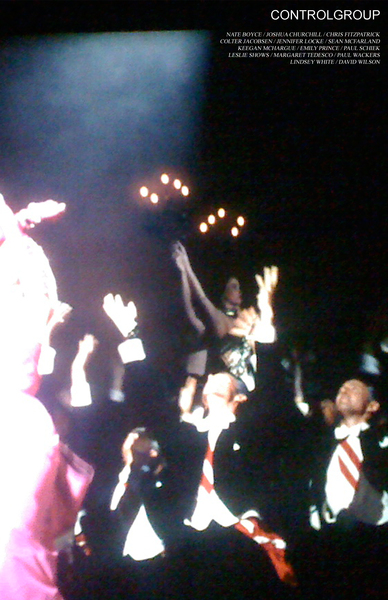
CONTROL GROUP at NOMA Gallery/Partisan

I love two-venue shows when the venues seemed previously unrelated. That collaborative spirit in San Francisco is so hope-inspiring. This looks like it’s going to be a great show. Lots of strong artists, and at two spaces with interesting—to say the least—programs.

CONTROL GROUP
CURATED BY Chris Fallon and Jasmin Lim
Partisan Gallery

JANUARY 28 – FEBRUARY 26, 2011
Opening reception: Friday 28 January, from 6 to 8 pm

ARTISTS
Nate Boyce
Joshua Churchill
Chris Fitzpatrick
Colter Jacobsen
Jennifer Locke
Sean McFarland
Keegan McHargue
Emily Prince
Paul Schiek
Leslie Shows
Margaret Tedesco
Paul Wackers
Lindsey White
David Wilson

Control Group is an investigation into the individual artistic process and the risks taken when directed to work outside one’s chosen medium(s). With the metaphor of the fish out of water, each artist will communicate their ideas and aesthetics through
unfamiliar means, allowing new variables to emerge.

We intend to challenge the comfort zones artists sometimes inhabit by asking them to relinquish a degree of control over their creativity, while perhaps exercising it more completely than usual, invigorating the dialogue between artist and viewer. Control Group is an invitation to make mistakes. While this may seem counterintuitive, we see the threshold between success and failure as a space for progress.

NOMA Gallery
80 Maiden Ln. 3rd flr, San Francisco, CA 94108
Tuesday–Saturday: 11 am–6 pm and by appointment

The Partisan Gallery
112 Guerrero Street, San Francisco, CA, 94103

Standard