Art & Development, Research

Pop teeth

Artists are consumers themselves. They have their own elaborately constructed systems of valuation as subsets within larger realms of consumer value. No art is absolutely pure, or created in a vacuum outside those larger realms. (Gibson Cuyler on Libby Black’s Be Here Now, Art Practical 13, April 22, 2010)

Strange that this must be re-stated, but it’s often the case that criticism and radical opposition are considered equivocal. (Johanna Drucker argues that critics and academics best accept our complicity and move on to responding to the actual art in Sweet Dreams.)

To broach capitialism or material culture in one’s artwork is to risk easy, politically loaded readings. The work might be interpreted sympathetically as anti-capitalist commentaries, leftist/Marxist/politically correct indictments of globalization/consumerism/mass media/environmental destruction. On the opposite extreme lie allegations of consumerist gluttony, environmental sinfulness, aesthetic hedonism, artistic slumming, or naked ambition. Tsk-tsk! should art, which could signify genius and the sublime, muddy itself in base, money-grubbing popular culture.

I’m interested in work that doesn’t deny the facts of the world: capitalism, labor, production, material culture, popular culture. I think artists have the right to beg/borrow/steal from these themes without having being pigeonholed into positions of critical subversion or immoral kowtowing. It’s possible I’m a waffler. That I’m exploiting ambiguity by not taking a stand. If you were really cynical, you could argue that the only crime worse than politically incorrectness in contemporary art is being boring and didactic.

I’m looking at the catalog for Pop Life, the recent survey of Pop Art after 1970 at the Tate Modern. As I’m developing Irrational Exuberance (Asst. Colors), a shop-like exhibition of work on paper, sculpture and installation coming up at Sight School (opens May 14), it’s neat to think about Keith Haring’s Pop Shop and Sarah Lucas and Tracey Emin’s The Shop. I also listened to the Tate’s podcast of Emin talking about The Shop, wherein Emin clicked for me: her personality, class, background, enmeshed in the world, results in work that is likewise enmeshed in the world and her life.

Standard
Art & Development

Spring Cleaning, Part 2: Knickknackery

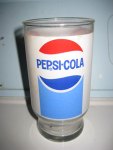
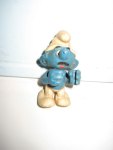
I’ve been increasingly enamored by the seduction/repulsion of some objects—how things, devoid of animate life, can have such an impact on people.

I find all of these things great in their own ways. The line between irony and sincerity can be blurry, though I aspire to avoid cynical irony.

Standard
Art & Development

Spring Cleaning, Part 1: Dad’s Garage

Can I just say, my dad had a roto-tiller?
That he built a play structure out of a barrel, a 2×6, and an old rotor he pulled off of a car?
That when I as 8, he gave me and my sister a huge saw and had us cut down a small tree?

I took it for granted that dads have workbenches. Of course, this is a dwindling phenomenon in the U.S., squeezed out by manufactured obsolescence and injection-molded everything (even car motors are socked away from view when you lift a hood of a new car).

In the face of disposable, virtual culture, I’d like to share some photos of my dad’s workbench and tools, and raise a wrench to tinkerers worldwide.

Yup, that's a tofu carton.

Of course Dad built his own workbench. No fancy slides for his drawers. Just a scrap of door frame moulding and some nails do the job.

Knick-knack drawer!

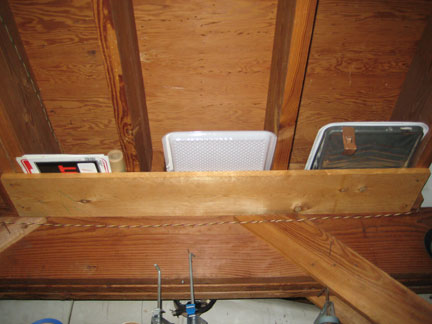
Making use of architecture!

Filled to the rafters.

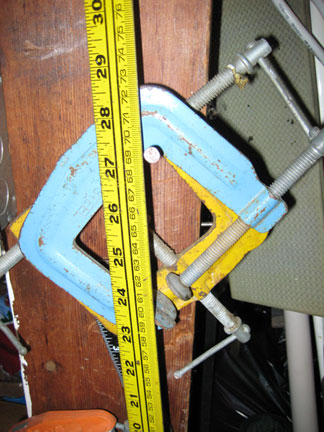
In my opinion, it was a bad idea to stop making tools in baby blue.

Caboodle!

Machine caboodle!

More bits and bobs in a Danish-but-so-Chinese cookie tin. You know you're Asian when your breakaway boxcutter is pink.

These transparent handles are so iconic. If they're not part of a design museum collection, they should be.

Dad's drill is so old the forward/reverse switch is one of those square bobbers on the back side of the handle. It sounds like forks in a blender but still packs a hefty punch.

That's what you call graphic and industrial design. Note the drill is operated with a chuck key.

Standard
Art & Development

Spring Cleaning: Introduction

Recently, I cleaned my parents’ garage, where the odds and ends my life have slowly accumulated. I got a particular snapshot of my life in things, and three strains became clear:

1. My dad’s garage was a formative place for me. I didn’t realize it then, but the “Dad things” that Dad did—fix up the house, paint, do minor electrical, crack open broken appliances—were special. When he enlisted me to help, he was really passing his abilities on to me.

M once mentioned that garages, which were formerly “man spaces,” have been taken over as storage areas for Costco-scale over-consumption. He lamented the fact that men no longer have tinkering spaces. Obviously I haven’t got such a gendered view: without a messy space, a workbench and tools, everyone loses out on the chance to learn how to work, even at very basic levels, with their hands, and to repair the things in our lives.

2. Everyone loves knickknacks. As JL and I agreed, from mansions in Atherton to 99¢ stores on San Pablo, one man’s trash is another man’s treasure.

“The meanest habit of human beings is to be suspicious of sentiment.”(unknown, quoted by David Ellis Dickerson, Hallmark card writer, on Studio 360, credit unintelligible)

What is it about mementos, those deeply personal objects that make you who you are? How can those items—even mass-manufactured, obsolete ones—elicit so many feelings, remain protected from dustbins by mere sentiment? Seeing my mementos from my childhood and teenage years was like visiting my own flea market—except all these things, these repositories of memories, were still full; they hadn’t yet been depleted of their power….

3. Student art: so bad, so great. Like everyone who decides to be an artist, I really loved being creative and expressive. I’d kept a lot of early work. All of it was bad, in terms of “Art,” but some of it was pretty good for my age. I could barely remember making some works, much less what motivated me.

I’ll post photos illustrating these three themes. Not all of it will be flattering to me. Be kind.

Standard
Art & Development

Studio peaks and valleys

Sometimes, art-making is painful. Critic Jerry Saltz summed up torments this way:

the crushing loneliness of the studio and the fear, self-hate, delusion, and shame that go into making art you believe in.

—Jerry Saltz in “What Do You See?,” a review of Red, the play about Mark Rothko, by Stephanie Zacharek & Jerry Saltz, New York Magazine, April 2, 2010.

But rewards await if you push through the valleys.

For the past few weeks, I’ve been producing small works along the themes of modest ambitions and discount-culture decoration for my upcoming solo show at Sight School in May. The projects are sweet and humorous and they fit my concept. But this new work is different than my previous work and what people might expect from me. The thought of unpleasantly surprising audiences is terrifying. Plus, I was worried about how these small projects would fill the gallery space — until today.

This morning, I unmasked some freshly painted walls (Behr Premium Plus: paint the way paint should be made), fired up a new lightbox, and installed three series of small multiples.

My exhibition mock-up delimited and finessed the objects and spaces. It was coherent, yet there was enough mass, visual interest and difference to create a sequential experience. It was optical but also conceptually intriguing (to me, anyway). In short, it started looking like a show. Relief, joy and excitement washed over me.

I’ve got a lot to do before my exhibition opens in May. Mostly, I need to match my ambition with capacity. My needs include: time, creativity, labor, money, ladders, the right kind of critical feedback at the right time, balloons, huge quantities of painter’s tape, laser cut acrylic, pegboard hooks, and more. I would also like to schedule some related programming, perhaps a guest lecture for the closing event… (Maybe this is something I can delegate. Email me if you have suggestions.)

Standard
Art & Development

Zeitgeists, LA art, Mysteries

Frieze, January-February 2010. Source: Frieze.com.

Even critics who hate contemporary art reckon on [the zeitgeist]—it allows them to use a small handful of particularly loathed examples in order to damn an entire system.

Dan Fox, “Spirit Guide: The Many Uses o f the Zeitgeist,” Frieze, January-February 2010.

If I had a nickel for every time someone cited Damien Hirst’s diamond-covered skull as everything that’s wrong with contemporary art….

There are certain sectors of the art world that crave a useful social role for art. Other see art as an activity making important contributions to intellectual discourse. Many look to art for pleasure. And then there are those who appreciate all of this seriousness, but crave the trappings of the entertainment industry too—fame, power, money, glamour, hierarchies, cultural parochialism. One year the art world is interested in this, the next year it’s interested in that. It wants to party, it wants to be scholarly. Markets go up, markets go down. … Everything changes and nothing changes…

—Fox, cont.

Fox’s tone might be interpreted as weary, or maybe even cynical. But I like to think that this passage is the art critic’s equivalent of the maxim, This too shall pass. Chasing the next trend in contemporary art, and comiserating about contradictions in the art world’s collective behavior, isn’t worth the time. Paradox happens.

Glimpse a tiny peek at the massive (9×14′ and up) photographs in Andreas Gursky‘s new exhibition at Gagosian Beverly Hills in “Andreas Gursky makes a long-distance connection” by Suzanne Muchnic, LA Times (March 6, 2010). They’re really a sight to behold.

Gary-Ross Pastrana, rule of thumb. Source: LATimes.com

Check out another great LA Times art review—this one of Minimum Yields Maximum, a group exhibition curated by Gina Osterloh and written by Leah Ollman.

Laura Collins-Hughes inaugurates a new series on alternative arts spaces with a profile of the very artist-friendly non-profit Southern Exposure for ARTicles, the blog of the National Arts Journalism Program.

I had a great time at SoEx’s Monster Drawing Rally, and was really pleased with the result of my hour (OK, 70 minutes) of cutting and collaging. Photos are forthcoming.

Brice Bischoff, Bronson Caves, 2010

Brice Bischoff, Bronson Caves, 2010. Source: SoEx.org


Alchemy, SoEx’s next exhibition, looks like it’s gonna be killer. Curated by Sarah Smith, the artists include Ellen Babcock, Brice Bischoff, Michelle Blade, John Chiara, Randy Colosky, Adam Hathaway, Christopher Sicat, Lindsey White. I suspect there will be many nicely executed photographs about magic in the mundane, and some unabashedly transcendentalist paintings and works on paper. A few years ago, I found San Francisco’s glut of dreamy, semi-ironic, new-age-y paintings terribly insincere and pretentious in their faux-naïveté. I’m still averse to woo-woo-for-woo-woo’s-sake, and laziness regardless of how it’s stylized. Alchemy presents highly capable artists and I’m looking forward to this show. Maybe I’ve sipped the Kool-Aid and it tasted great…. Drink it all in at the opening, Friday, March 12, 7-9pm, concurrent with the opening of Alison Pebworth’s Beautiful Possibility.

Image: Michelle Blade. Source: basebasebase.com

Image: Michelle Blade. Source: basebasebase.com


…Along those same lines, Michelle Blade‘s work can exhibit an earnestness that is anachronistically un-ironic, but I really loved every minute of viewing Blow as Deep as You Want to Blow, her solo exhibition at Triple Base Gallery (through March 21). [Full disclosure: she’s a collaborator of mine; I constructed the lightbox in the show.] She’s turned her high attention to materials and craftsmanship towards transcendence, patterned rugs and metaphysical books. Deploying opalescent paints and vellum marked on both sides, she’s created physical experiences of radiance. It’s Romanticism for 2010. Go see it in person. The front room is great, and if the back room, filled with accomplished works on paper, is not enough, there’s even more works on paper spilling over in a portfolio on the flat files. Inspirational work ethic and spirit-informing content matter.

Perhaps that’s why mystery, now more than ever, has special meaning. Because it’s the anomaly, the glaring affirmation that the Age of Immediacy has a meaningful downside. Mystery demands that you stop and consider—or, at the very least, slow down and discover. It’s a challenge to get there yourself, on its terms, not yours….

The point is, we should never underestimate process. The experience of the doing really is everything. The ending should be the end of that experience, not the experience itself.

J.J. Abrams, “J.J. Abrams on the Magic of Mystery,” Wired Magazine, 17.05, April 20, 2009.

Standard
Art & Development

Recent, future, random

A random round-up of things I’ve seen or are looking forward to:

RECENT

Robert Irwin‘s rambling, 50-MPH monologue at Mills College. I couldn’t sum up what he said — comparing Modernism to a cup of Coke, and proposing an array of realms of art rather than a hierarchical pyramid — but I’m pretty sure it was brilliant. I should probably re-visit Lawrence Weschler’s biography of Robert Irwin, Seeing is Forgetting the Name of the Thing One Sees after all the other books I’m reading, or intending to read (Ranciere’s The Future of The Image and Beyond Visual Perspective by Gaetano Curreri-Alibrand. Yikes!). Cheers to Mills for bringing such an influential and erudite artist to the East Bay.

Valentine’s Day Celebration at Glide Memorial Church.
I’ve lived in the Bay Area all my life, but I am taking time to appreciate quintessentially San Franciscan experiences like visiting Glide, a Unitarian church whose openness, political activism and community service is a prime example of powerful faith-based progressive work. M and I attended the service on the suggestion of a friend, who was performing an excerpt of The Erica Chong Shuch Performance ProjectsLove Everywhere, a beautiful, tender dance/theater/music performance on love and marriage equality—the civil rights struggle of our time. It was really profound to have the time and space to celebrate love in all of its manifestations—unconditional love, the love of one’s community, to love fiercely and courageously—on Valentine’s Day. (How many red teddy bears does anyone need anyway?) More often, what’s needed is a reminder to look beyond your immediate situation towards community, and to be in spaces where you are accepted as you are. To love and be beloved.

Collaborative installation by Chris Bell, Elaine Buckholtz, and Floor Van Herreweghe at SF Arts Commission Window Space, 155 Grove Street, San Francisco
For Chain Reaction 11, artists were invited to nominate other artists to exhibit at SFAC. One chain went beyond the call and developed a collaborative installation that fills the window site with a sculpture, video and light work, and spills onto Grove with a moody, Sam Shepard-esque musical component. It’s wonderfully unexpected and surreal, and it’s one of my favorite art things that I’ve seen of late. I urge you to visit it, especially at nighttime. It’s on view 24/7 at 155 Grove Street through May 16.

Future

Friday, February 19, 7-10pm: Opening Reception
Blow As Deep As You Want to Blow: New Work by Michelle Blade

Triple Base, 3041 — 24th Street, San Francisco
Exhibition: February 19 – March 21, 2010

Weird bad paintings; don’t come to this if you leave your sense of humor at home.
Denim on Ice: paintings by Keith Boadwee / Erin Allen / Isaac Gray
Steven Wolf Fine Arts, 49 Geary St., Suite 411, San Francisco
Exhibition: February 19 – Mar 20, 2010

Standard