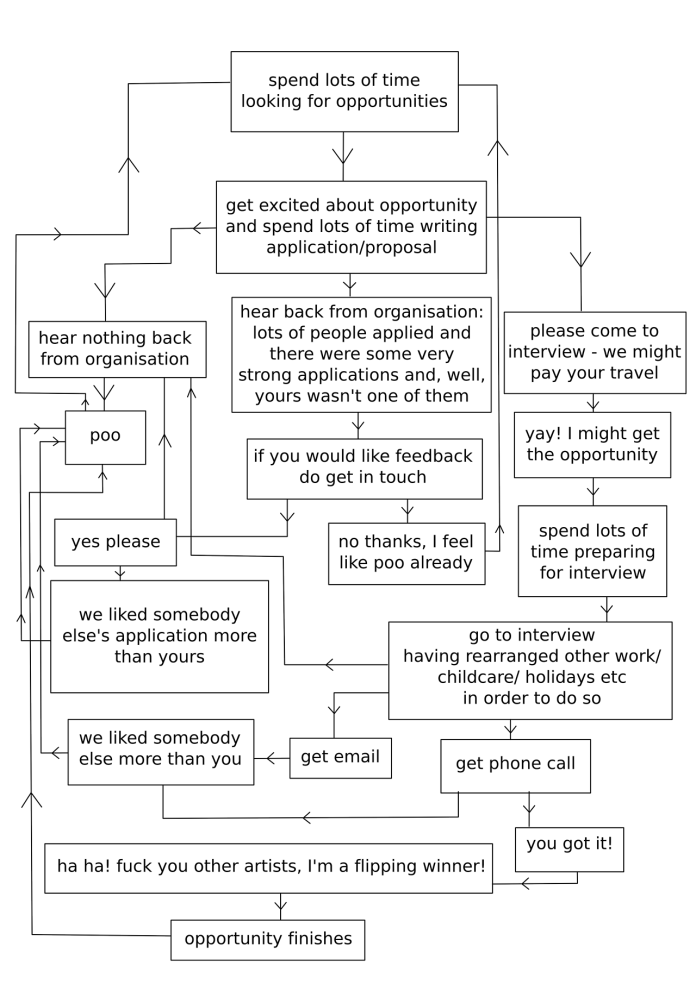
Ben Sadler's flow chart, on Emily Speed's Work Makes Work Tumblr, which ostensibly encourages young artists to keep working. However, Sadler jump-cuts from receipt of an opportunity to the end of it, and shows how applying to opportunities seems circularly Sisyphean...

Ben Sadler‘s funny flow chart, on Emily Speed’s Work Makes Work Tumblr. Ostensibly, the charts encourage young artists to keep working. But Sadler jump-cuts from receipt to the end of an opportunity, showing how the application process can seem circularly Sisyphean…. // Source: workmakesworks.tumblr.com

I received four rejection letters in as many weeks. Applying to opportunities means fielding rejections, but it can feel pretty harsh—as illustrated above—when they come in quick succession.

Meta-Practice

work makes (more) work: Ben Sadler on applying to opportunities

Image
Citizenship, Meta-Practice

No, Thank You: Letting a tech-sponsored art opportunity pass

My response letter to a tech company’s in-house art program.

Recently I was invited to submit a proposal to a tech company for an artist’s residency or commission at their corporate offices. The project manager was very gracious. The program sounds fiscally generous. I debated whether or not to do it. Some colleagues have participated or will do so (I wish them nothing but the best), and I’ve benefitted from such projects as well as sales to other tech firms. Still, my instinct was to propose an idea that would never be accepted, but I didn’t really want to waste time essentially pranking a nice person with a fake proposal. So I wrote and submitted the following….

I’m skeptical of the idea of creating artwork as a site-specific, private, corporate commission with employees as the constituency. Here’s why.

  • I try to make my work not about me; I try to make it about the viewer and his/her perceptions or emotions. The viewer and the context shape the meaning of the work. For your program, I’d make work for your audience and your site, so I’d have to ask myself, Why these employees? Why these offices? And I haven’t come up with good enough answers.
     
  • As I understand it, there’s no public viewing program, so the commission serves employees, and ultimately, the corporation’s goals such as maintaining morale or acting as recruitment or PR talking points. Psychologists like Phil Zimbardo have written that marketing efforts exploit humans’ instinctual reciprocity; by offering perks, the corporation may well be influencing workers to spend increasing hours of unpaid overtime at their jobs, rather than in their communities (where they could support local public museums and galleries).

    Perhaps you see your program as a philanthropic venture benefitting artists. There are many ways to support artists. A purchase program of existing works would allow artists like me to spend less time working day jobs and more time in my studio. Supporting an existing art organization that is open to the public would benefit the organization, as well as artists and the viewing public.
    But investing my labor, time, and attention to provide a service and product that may be instrumentalized as corporate culture perks doesn’t speak to why I’m an artist.

  • I came of age in the 1990s, and anti-corporate, DIY, punk ethos is in my cultural DNA. Overwhelmingly, I see corporations putting profits before people. Even if this program seems like an exception for those involved, it does in private what I’d rather do in public.
     
  • I feel loyal to friends—artists and small arts organizations—in San Francisco who are being priced out or evicted, or mourning the city’s declining diversity due to the influx of tech workers and their wealth. It’s a huge issue that individuals like you and I cannot singly account for—yet while my small decision to let this opportunity pass may not change anything, it at least spares me anxiety of a possible dilemma, the uncomfortableness of explaining my rationale to friends, and any self-doubt about ethics.
     

You asked why I’m motivated towards residencies like –––: it’s non-profit; the organization provides time and space for artists to be artists—they have no agenda and don’t require specific outcomes; and I feel great about their constituency—their exhibitions are public and their visitors heterogenous. Another difference is that they don’t own the work afterwards. I get to show it elsewhere, sell it and garner additional support, or live with it and change it if I like. If they do purchase the work, there’s an additional fee, as well as the honor of joining the collection of an organization that has earned artists’ esteem.
 

I don’t have all the answers; in fact, like many in the arts, I have way more questions than answers. But if you’d like to know more about references that have influenced these thoughts, the introductions and first chapters of both Ben Davis’ 9.5 Theses on Art and Class, as well as Martha Rosler’s Culture Class are worthwhile examinations of the complicated position that many contemporary artists negotiate.

Standard
Meta-Practice

Social Media: More is not always better

Turning over a Facebook page.

Eleven months ago, I started a Facebook page. I thought I would use it to interact with the public (for unclear reasons, FB remains very popular with artists). It seemed like a good idea* after taking a workshop on social media for artists, but now there are reasons to re-consider having a page at all. 

Valleywag just confirmed that Facebook suppresses page visibility to drive up ad revenue:

the social network is “in the process of” slashing “organic page reach” down to 1 or 2 percent.

It’s enough for me to discontinue using the page. 

Thanks to folks who had been kind enough to like or follow my page.

Please continue to find me here, or check out my website or tweets

*The following is not news, but being able to control one’s attention is crucial to both creativity and happiness, so I’ll share it at the risk of stating the obvious: I was also hoping to target and limit my Facebook usage. I detest the addictive, pleasureless compulsion its usage always fosters; the composing of updates in my mind instead of being in the moment; and the rage-y, poisonous aftermath from dealing with trolls and disagreements. For these reasons, I try to limit my time on FB, and therefore keep my personal profile very private, and my circle of friends extremely intimate. Ironically, my relationship to FB might be best explained by FB-speak: it’s complicated.

Standard
News

just published: make things (happen)

New project featuring 29 artist-created activity sheets to make things or make things happen just posted!

make things happen

how to participate

I’m over the moon to share my latest project, featuring 29 freely downloadable artist-created activity sheets to make things or make things happen at makethings-happen.christinewongyap.com.

Check out projects by artists from New York, California, Canada, the UK, and beyond, and participate!

Part of the exhibition:
Social in Practice: The Art of Collaboration
Curated by Deborah Willis and Hank Willis Thomas

March 27–October 2, 2014
Nathan Cummings Foundation
475 10th Avenue, 14th Floor, NYC

Reception: March 27, 6-8 pm
Reservations required; email exhibits@nathancummings.org.

Standard
News

Land and Sea Overview

I just got my edition of Land and Sea’s 21st project, Overview: a box set that features 79 risograph prints by various artists. It was conceived, organized, and printed by artist Chris Duncan.

How neat to make cross-country connections: I picked up the box set from contributing artist Laura Splan, during an opening at Dose Project Space [great mission!] for Lauren Davies’ show. It was a great mishmash of connections spanning the Bay Area (Chris, Lauren, plus contributing peers like Sarah Hotchkiss, Genevieve Quick, Kelly Lynn Jones, Aaron Harbour, Val Imus, and many more).

Risograph prints have a beautiful tonal quality. Chris picked out a nice, toothy, heavyweight paper to print on. Each piece has heft to it, and could easily (literally) stand on its own on a tilted shelf. In other words, they feel like prints, not posters.

Many of the artists created abstractions in black ink, and others explored riso’s odd, saturated palette of Sunkist orange, cobalt, and vibrant green. A very light greenish parchment-grey is fascinating. The back of each print is flooded with a repeated text, adding a cohesive element.

I love how my piece came out:

Irrational Exuberance flags, two color risograph; mini flags to be cut out and displayed.

Irrational Exuberance flags, two color risograph.

These are designs based on the Irrational Exuberance Flags series, but miniaturized, so you can cut them out and make a set of mini flags of your own.

And here are a few of my favorites:

Luke Fischbeck, two color risograph print, various renderings of possibly happy/sad faces.

Luke Fischbeck, two color risograph print, various renderings of possibly happy/sad faces, made all the more fractured and interesting with slight offsetting.

Luke Fischbeck, two color risograph print, various renderings of possibly happy/sad faces.

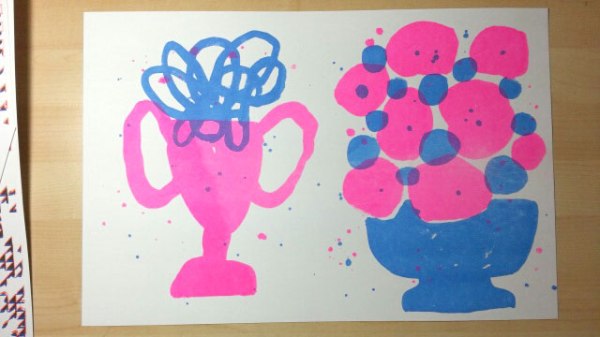
Tucker Nichols’ pink and blue risograph print. I think it’s a trophy and some flowers. So exuberant! I love it.

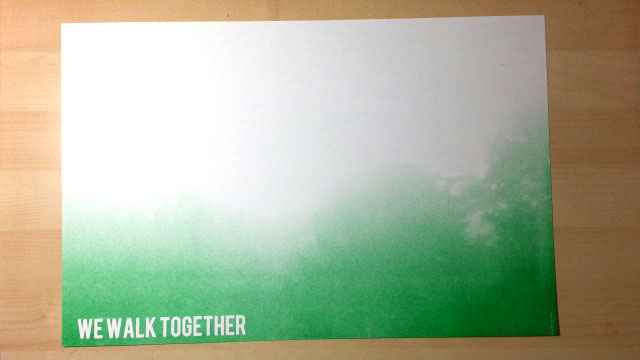
Lee Hunter, one-color riso. We walk together.

Lee Hunter, one-color riso. I’ve been thinking a lot about collective action lately.

Michael Milano's operational two-color print, in which a single triangular design is rotated and overprinted.

Michael Milano’s operational two-color print, in which a single triangular design is rotated and overprinted. It’s an ingenius exploration of the medium.

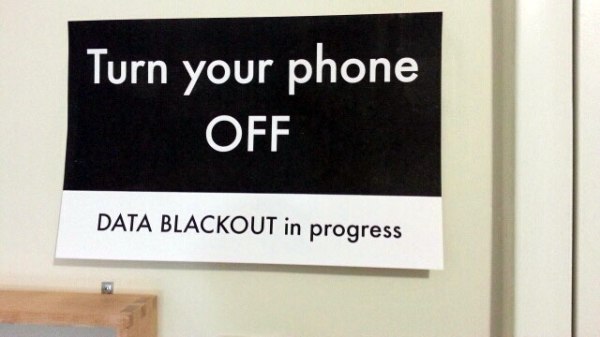
Sarah Berkeley, great reminder, and already up in my studio. Turn your phone OFF. Data Blackout in progress.

Sarah Berkeley. Great reminder, and already up in my studio.

View the full portfolio, and support this independent, artist-run venture, here.

Standard
Citizenship, Meta-Practice

Art World Misogyny

Sexism in the art world: the art world needs to radically re-think its ethics.

Today’s profile of Simon Evans and Sarah Lannan (WSJ) was framed as an ongoing quandary between husband-and-wife collaborators: How will Evans and Lannan share credit for artwork branded as Evans’, which Lannan has increasingly co-authored over the past eight years?

The title, “An Art-World Love Story: As Simon Evans’s star rises in the art world, his wife wants more credit” is frankly pre-Women’s Lib. Besides the fact that Evans is identified by name, and Lannan only as “his wife,” the angle is sexist—it implies that a gold-digging Lannan wants credit because Evans’ capital is increasing, not due to her contributions:

While Ms. Lannan, 29, was deeply involved in the creations, the works continued to carry his name…. Ms. Lannan had been growing increasingly uncomfortable with their practice of showing work that they had jointly produced under Mr. Evans’s name. They went to a couple’s therapist in 2012 to talk about it, but found they spent much of the sessions educating the counselor on how the art world worked….

The commercial art world is no model for ethical behavior. To me, explaining the art world’s misogyny to a therapist sets up conditional ethics. What ought to be done—giving credit where credit is due, and honoring one’s life partner—is obvious. Yet the couple seems to waffle in deference to money and power:

…given Mr. Evans’s reputation, Ms. Lannan was wary of upsetting the status quo. “We thought it was up to ‘The Man,’ or whoever was in control of the art world,” she said. “There is no way I was going to destroy this thing that Simon has. And neither one of us wants to lose our jobs.”

This illustrates the pervasiveness of artists’ precarity: with so many artists desperate for modest recognition, those who’ve garnered success can become fearfully beholden, lacking personal agency. From my reading, Evans holds the cards—and he is reluctant to sacrifice his male privilege to risk marginalization by association.

To cynics (or so-called realists) who call this strategy is a fair response to an unjust market, I’d offer this: The market is not fixed. It’s not truth, and we shouldn’t let its distortions form the organizing principles in our lives, relationships, and creative collaborations.

The commercial art world of collectors and dealers reflects the values of a privileged and prejudiced few. By doing nothing, and allowing Lannan to carry the burden of agitating for recognition, Evans allows the the myth of male genius to work to his benefit at his wife’s detriment. Similarly, if artists feel that we’re never in any position to assert our principles within the shape and structure of our interactions, then we are likewise complicit.

When George Baselitz recently said that women “don’t paint well,” as backed up by  “the market test,” at least his shock-schtick publicized the art world’s sexism overtly. Internalized misogyny and self-preservationist complacency, on the other hand, are less public, more prevalent, and no less abhorrent.
Standard
Art Competition Odds

art competition odds: Urban Glass’ Spring 2014 Visiting Artist Fellowship

Urban Glass’ Spring 2014 Visiting Artists Fellowship received 60 applications for 1 fellow.

////////////////////////////////////////////////////////////

Participants comprise about 1:60, or 1.6% of applicants.

In an email, Urban Glass’ Office Manager Kitty Irwin stated that “we do 2-3 [residency calls] per year, choosing one recipient each time.”

See all Art Competition Odds.

Standard