Impressions

Impressions: Lygia Clark, Other Primary Structures, Mel Bochner, and more

Some notes on exhibitions at the MoMA and the Jewish Museum.

Driven by cabin fever (I’ve been cooped up in the home studio rendering video for three hot days) and hungry for inspiration, I met up with NM and visited the MoMA and the Jewish Museum of New York. The shows we attended were excellent. I couldn’t be happier with our selections.
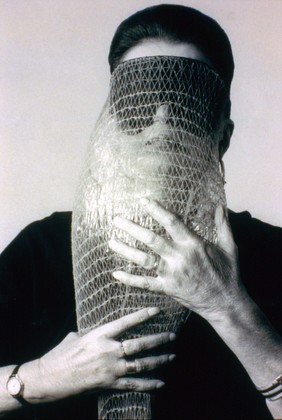
Lygia Clark wearing Máscara abismo com tapa-olhos (Abyssal mask with eye-patch, 1968), a work made of fabric, elastic bands, a nylon bag, and a stone, in use. Courtesy Associação Cultural "O Mundo de Lygia Clark," Rio de Janeiro. Photograph: Sergio Gerardo Zalis, 1986 // Source: moma.org.

Lygia Clark wearing Máscara abismo com tapa-olhos (Abyssal mask with eye-patch, 1968), a work made of fabric, elastic bands, a nylon bag, and a stone, in use. Courtesy Associação Cultural “O Mundo de Lygia Clark,” Rio de Janeiro. Photograph: Sergio Gerardo Zalis, 1986 // Source: moma.org.

Lygia Clark: The Abandonment of Art, 1948-1988
Museum of Modern Art 
Through August 24, 2014

  • The curatorial premise of the show is that the Brazilian artist started off as a Modernist painter of geometric abstraction, transitioned into making interactive sensorial objects, and finally left art to practice psychotherapy. (This seems unusual, as the default curatorial impulse is to historicize and affirm the importance of an artist within art history.)
  • The size, texture, and visuals of the early paintings reminded me of Constructivism. However, Clark expanded beyond the rectangle and engaged in a reflexive investigation. (NM and I wished to shape our own practices around questions more, as open-ended inquiries.)
  • A room of black and white, 2-D, Neo-Concretist compositions had a lot of energy—lots of visual tension and concision. I especially loved the wall text explaining how Neo-concretism differed from the Concretist aim to rid all external referents, acknowledging that (We are always embodied!):

“the work of art is a projection of the body”

  • The final room invites interaction with replicas of her iconic mirror goggles, and instructions for actions, including a surprisingly delightful Möbius strip activity. This is a rare participatory space in a museum that is completely authentic and appropriate. 
  • Clark met resistance in art and psychotherapy—as a wall text explained, “her work was an abyss, an absence pointing to open, unresolved questions in both disciplines.” (Art is presumed to take all kinds, but then why is it so uncomfortable when projects become too akin to other realms? I think Clark is totally underrated, and I hope the exhibition and substantial monograph act to remedy this.)
  • Installation notes: [Sometimes I wish I could turn this habit off, as it detracts from my experience of the art; on the other hand, I hope it hones my exhibition-making craft.] Most of the work is installed very high on the wall—I’m guessing on a 66″ centerline. I felt like I was craning my neck to look at the pictures. The last room, however, featured projections flush to the floor, so maybe the height was designed to emphasize Clark’s evolution to participation. 
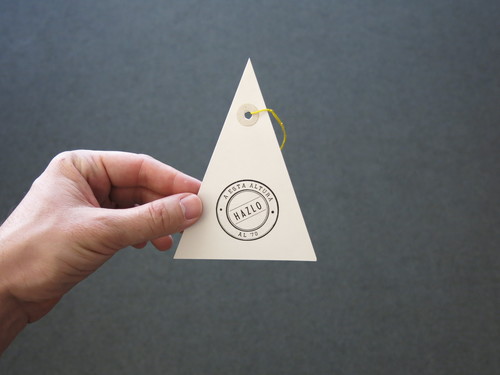
Edgardo Antonio Vigo. Hazlo (Do it). 1970. Photo: David Horvitz // Source: moma.org.

Edgardo Antonio Vigo. Hazlo (Do it). 1970. Photo: David Horvitz // Source: moma.org.

The Unmaker of Objects: Edgardo Antonio Vigo’s Marginal Media
Museum of Modern Art
Through June 30, 2014
View the exhibition site.

“This exhibition celebrates the mail art, visual poetry, performative works, and publications of the Argentine artist Edgardo Antonio Vigo (1928–1997).” —MoMA site

  • Gorgeous typography. Much of the ephemera was beautifully produced letterpress or woodcut prints with custom cutout shapes. Hailing from the late 1960s, it was stylish, exuberant and not overly complicated. It wasn’t on fancy paper with a pronounced de-boss, or dream-of-the-1890s-hipster-baroque. It was tasteful and original. In my thinking about simple gestures and conceptual works, I tend to recall Stanley Brouwn’s scribbled scraps or Fluxus’ typewritten  instructions. However, elemental/conceptual gestures can be accompanied by killer graphic design, too.
  • One piece of paper, one cutout, two words = more than most art achieves.
  • Many of the works bore prompts or procedures. I’ve wanted to improve my atrophied Spanish skills, and this became one more reason.
  • Installation notes: Four vitrines in a mixed-use atrium. Not the most ideal venue, but the display inside was great. The ephemera was laid out on wool or some other non-woven fabric, and the grey texture contrasted the paper nicely, grounding it in everyday usage.
An unfortunately small thumbnail of an installation view of Other Primary Structures at The Jewish Museum, New York. Photo: David Heald/The Jewish Museum.  // Source: thejewishmuseum.org.

An unfortunately small thumbnail of an installation view of Other Primary Structures at The Jewish Museum, New York. Photo: David Heald/The Jewish Museum. // Source: thejewishmuseum.org.

Other Primary Structures
The Jewish Museum
Through August 3, 2014

  • Jens Hoffman, formerly of the Wattis Institute, restaged the seminal Minimalist exhibition with non-Western artists.
  • The physical space was challenging—ornate architecture, small rooms. But Hoffman bent the space to his will with his stylized, almost aggressive exhibition-making. Reproductions of the original exhibition loomed on billboard-sized temporary walls. They crowded the small spaces, and positioned the actual physical works in a more literal relationship to the original show.
  • There was a surprisingly great amount of tension in the show. The works were present, palpably.
  • The minature model of the original show, fabricated by Bay Area artist Andy Vogt, is a treat.
  • Museum notes: The Museum’s identity is being re-designed by Sagmeister…. Jon Sueda and Jens Hoffman were an unstoppable duo, IMHO. Also, the way the Upper East Side building had been selectively renovated as a contemporary museum reminded me of places like the Ikon Gallery in Birmingham, UK. Being reminded of such history in physical spaces makes totally-white cubes seem boring.)
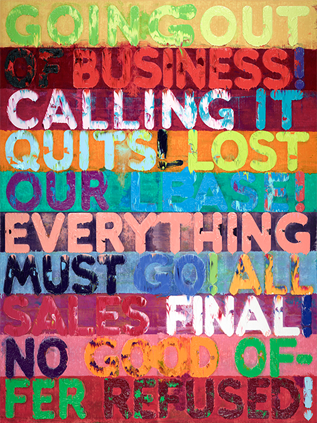
Mel Bochner, Going Out of Business, 2012, oil on velvet, 93 ½ × 70 ¼ in. (237. 5 x 178.4 cm). Private collection, New York. Artwork © Mel Bochner. // Site: thejewishmuseum.org.

Mel Bochner, Going Out of Business, 2012, oil on velvet, 93 ½ × 70 ¼ in. (237. 5 x 178.4 cm). Private collection, New York. Artwork © Mel Bochner. // Site: thejewishmuseum.org.

Mel Bochner: Strong Language
The Jewish Museum
Through September 21, 2014

  • I’ve been a huge Bochner fan since seeing his retrospective at Whitechapel.
  • This is another great exhibition. See it! Reproductions of Bochner’s text paintings do not do them justice!
  • Bochner’s exhibition reviews—including Primary Structures—dating back to the 1960s are also on view. It’s not often that artists’ critical writing practices are acknowledged alongside their gallery work.
  • Bochner has talked about his love of graph paper—numerous drawings attest to his usage of printed grids of all sorts as a medium for sketching and expanding the conceptual bounds of portraiture.
  • Installation note: In the final room, three subtle text paintings use interference paints (reflecting light in different colors), but it’s nearly impossible to tell they way they are installed.

Excellent venues, exhibitions, and curatorial vision are bountiful, if you know where to look, or find them with good luck and/or persistence.


Standard
Research

“The art world is and always has been a  complex system, a field of constellations and interrelations—some friendly to each other, some antagonistic… each of us acteurs decides where we position ourselves and in what direction we move…

Exhibitions are opportunities to test situations and combinations, and to explore thoughts. For me, they… carry the potential to construct architectures of discourse. From my perspective, exhibitions are equal to seminars; both produce a space for communication through artistic and intellectual means…

An exhibition is a zone of activity, a space for communication that one must produce; it is not a given. An exhibition has to clarify what questions are being raised and share this process with the audience…”

—Ute Meta Bauer, “Zones of Activity: From the Gallery to the Classroom,” from Learning Mind: Experience into Art, Mary Jane Jacobs and Jacquelynn Baas, eds. (2009)

Ute Meta Bauer on Exhibitions

Quote
Make Things (Happen), Sights

Get Excited: Artists Make Things (Happen)

Check out these shows featuring make things (happen) artists! 

Through 6/22
Surveillapocalypse
Five Myles, Brooklyn
(Maria HupfieldDavid Gregory Wallace)

Through 6/30
SIP 2013 Fellowship Show Part 1
Blackburn 20|20, NYC
(Dionis Ortiz)

Through June
Lexa WalshMapping the Archive
de Young Museum, San Francisco

Through 7/6
Piero PassacantandoI Paint You, You Paint Me
Ed Varie, NYC

6/21–8/17
Sondheim Finalists Exhibition
The Walters Art Museum, Baltimore
(Lauren F. Adams)

And help make things (happen) artists support great alternative art spaces!

Take Genevieve Quick’s personalized tour of OMCA for Royal Nonesuch Gallery’s fundraiser.

Help Islington Mill* purchase a bus to provide access and mobility for its numerous artists/musicians/visitors (*co-founded by Maurice Carlin).

Standard
Sights

See: SURVEILLAPOCALYPSE @ FiveMyles, Crown Heights, BK

JUNE 7 -  JUNE 22, 2014 OPENING RECEPTION SATURDAY, JUNE 7, 5–8PM  SURVEILLAPOCALYPSE  INSTALLATION, WALL WORKS, PERFORMANCE BY BROOKLYN-BASED COLLECTIVE ARTCODEX, CANADA-BASED NATIVE AMERICAN COLLECTIVE OO7, AND GUEST ARTISTS OASA DUVERNEY, LAURA NAPIER, JOSHUA PETERS, DAVID GREGORY WALLACE, BRYAN ZIMMERMAN.

SURVEILLAPOCALYPSE
June 7—June 22, 2014
Opening reception Saturday, June 7, 5–8pm
FiveMyles, 558 Saint Johns Place, Brooklyn

Installation, wall works, performance by Brooklyn-based collective Artcodex, Canada-based Native American collective 007, and guest artists Oasa Duverney, Laura Napier, Joshua Peters, David Gregory Wallace, Bryan Zimmerman.

Sounds like a great show, and excited to support the ever-thoughtful Laura Napier, and of course Make Things (Happen) artists Maria Hupfield and David Gregory Wallace, who will be showing a kinetic shadow puppet installation (learn how to make your own with his activity sheet).

Standard
Jeremy Deller, My Failures, installation view, Hayward Gallery, 2012. // Source: JeremyDeller.com

Jeremy Deller, My Failures, installation view, Hayward Gallery, 2012. // Source: JeremyDeller.com

I highly recommend this video of a lecture by Jeremy Deller presented by Situations UK. His background and practice form a welcome alternative to the cult of young, ‘bankable’ artists (he was 31 when he staged his first art show—in his parents’ house). He mentioned instances of his indifference to the contemporary art world’s reception and its isolation/self-regard, as well as being pleased when an art object lost its aestheticized status and returned to being an object. I also appreciated his candidness about failure, and its productive possibilities, as seen above.

Sights

Jeremy Deller, My Failures, exhibition of rejected proposals

Image
Research

Helen Molesworth explains what curators (should) do

The art of hanging pictures, to steal a phrase from Kerry James Marshall, is a bit like the craft of using words to make sentences, which in turn cohere into paragraphs, which accumulate in the service of an idea. It is part didactic instruction, part ineffable feeling about what things work well together. Both rely on the principle that the space between pictures is not neutral, that the pictures themselves are not autonomous (unless they are placed in a way to suggest that), and that the whole is greater than the sum of its parts….

…the arrangement of pictures, to steal another phrase, this time from Louise Lawler, … was also inextricably tied to the primary methodology of art history: that of “compare and contrast.” …the underlying idea was that meaning is built through syntax, that syntax requires difference, and that difference is something to be staged or spatialized or, at the very least, invoked through the act of adjacency.

Too many recent exhibitions have taken their installation cues from art fairs and the like, more prone toward leveling than toward difference, more inclined toward the presentation of opinion than toward the dexterity of argumentation. Is there no way that we can imagine holding on to the productive syntactic function of compare-and-contrast?

Helen Molesworth, review of the Whitney Biennial, Artforum, May 2014.

(HT @forwardretreat)

Standard
Diango Hernández, If (page 45), 2011, oil on paper mounted on board and linen, 16.5 x 13.5 in / 42 x 34.5 cm // photo:  Anne Pöhlmann // Source: Alexander and Bonin, alexanderandbonin.com

Diango Hernández, If (page 45), 2011, oil on paper mounted on board and linen, 16.5 x 13.5 in / 42 x 34.5 cm // photo: Anne Pöhlmann // Source: Alexander and Bonin, alexanderandbonin.com

Love this series, especially as I’m thinking about a project on the disassembled self. See these at Alexander and Bonin, starting June 3.*

[*Full disclosure, I helped out with the changeover.]

Sights

Diango Hernández, If (page 45)

Image
Art & Development, Community, Works

My Imaginary Group Show

A few weeks back, I posted about an assignment for artists to describe their own dream group show.

I came up with one version of my own dream group show—it’s local, site-specific and combines numerous interests. I was so excited by all the projects and artists, the only way I could keep my presentation under the six-minute limit was to read out a script of only keywords, and that’s what I’ll include here. Enjoy! And consider coming up with one of your own—it’s a fantastic, liberating exercise.

1,000 Single Steps

For Jeremy Deller,

art isn’t about what you make
but what you make happen.

Inspiration.

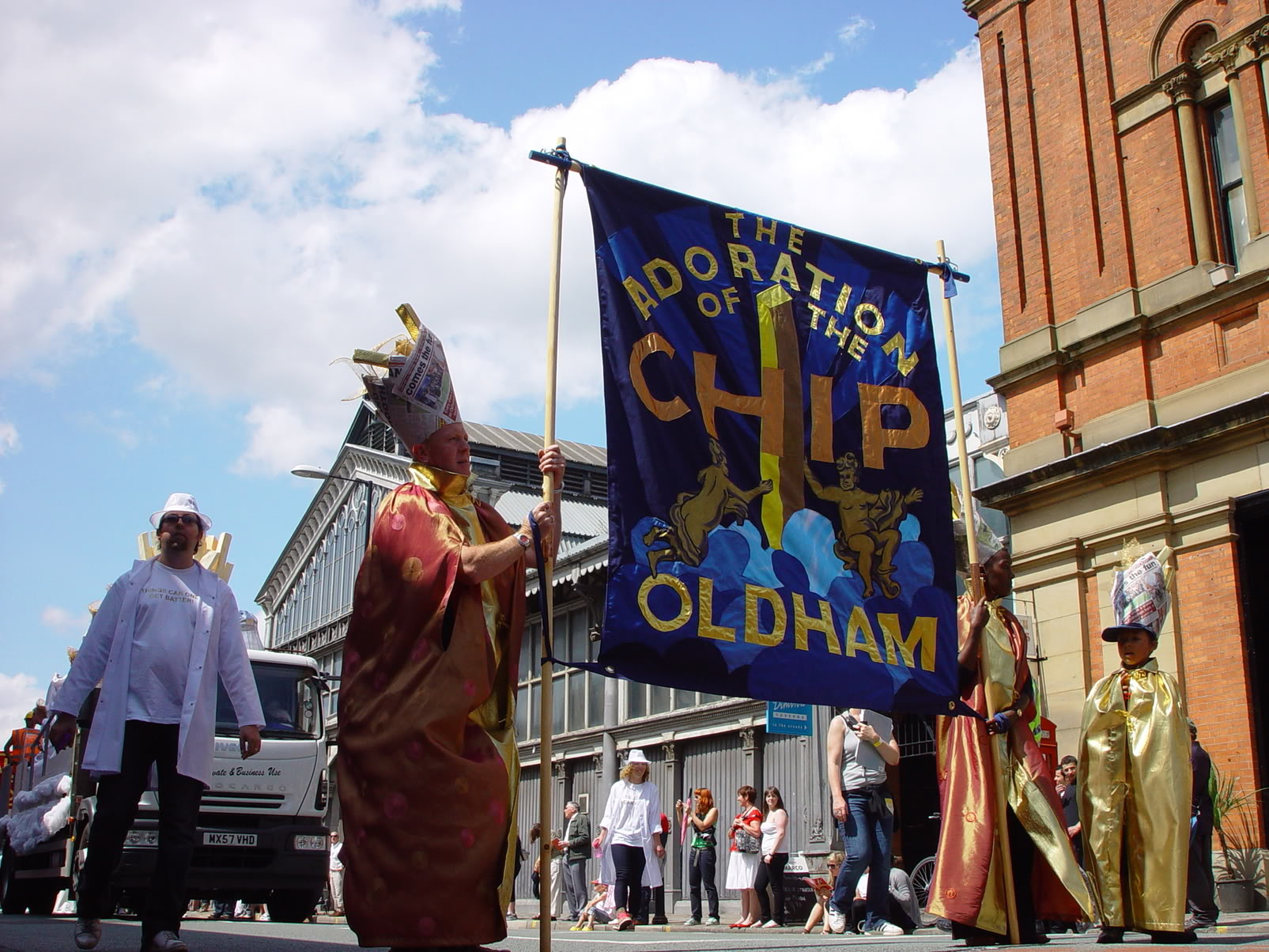
Jeremy Deller, Ed Hall, (Banner Maker), Procession, 2009

Jeremy Deller, Ed Hall, (Banner Maker), Procession, 2009

Manchester Int’l Festival.
Manchester History.
Industrial Revolution.
Workshop of the World.
Birthplace of Socialism.
Textile Mills.
People’s History.
Tradition of Banner-making.
Participation.
Contemporary groups working with a banner maker.
Parade.
Absurdist.
Crown of french fries.

Even the emo teens.

Participants. Jeremy Deller, Ed Hall (Banner Maker), Procession, 2009

Participants. Jeremy Deller, Ed Hall (Banner Maker), Procession, 2009

Proposed Site: The Queens Way

Summer of public programming as grand opening.

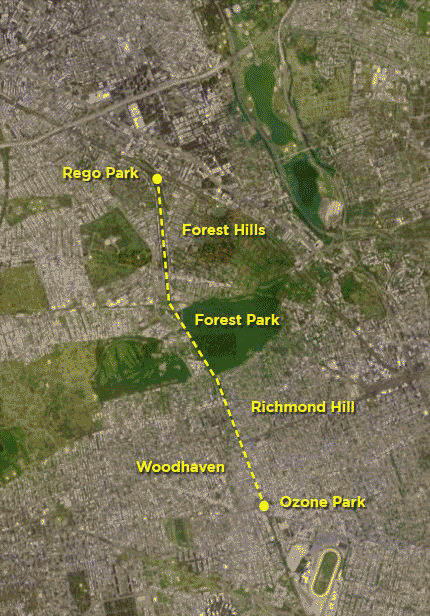
Map of the Proposed Queens Way. // Source: TheQueensWay.org.

Map of the Proposed Queens Way. // Source: TheQueensWay.org.

• 3.5-mile portion of the abandoned Rockaway Rail Line
• community-led effort
• current status: feasibility studies

Present conditions of the Queens Way. // Source: TheQueensWay.org.

Present conditions of the Queens Way. // Source: TheQueensWay.org.

I am not a natural optimist.
Anxiety and rumination, humans’ natural states.
Exercise, surefire mood-elevation.
Importance of access to clean, green open space.
For Physical health.
For Psychological health.
A society where women can go for a run in their own neighborhoods without fear.
Improve quality of life for generations.


Artists and Projects

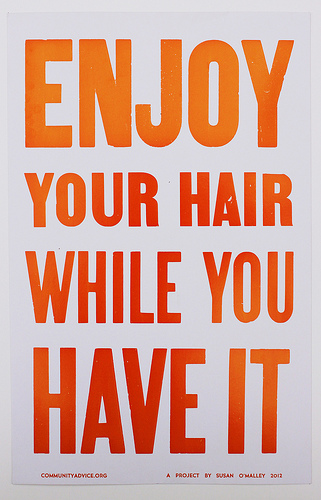
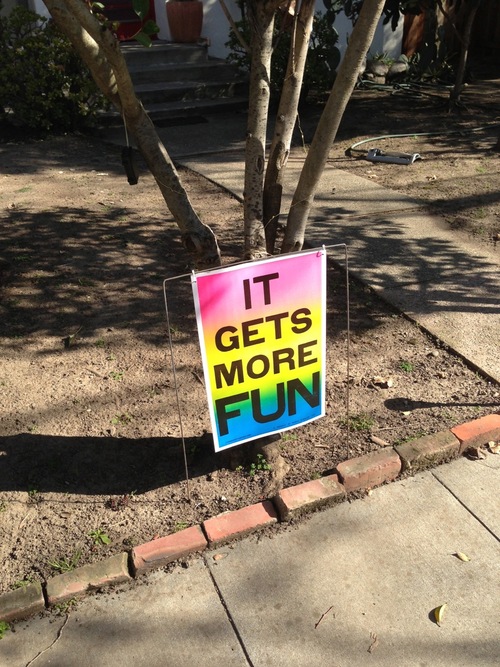
Susan O’Malley, Community Advice, 2012.

Susan O’Malley, Community Advice, 2012. // Source: susanomalley.org

Susan O’Malley, Community Advice, 2012. // Source: susanomalley.org

Susan O'Malley, Community Advice, 2012. // Source: susanomalley.org

Susan O’Malley, Community Advice, 2012. // Source: susanomalley.org

Classmate, friend.
Based in California.
Site-specific variation on project.
100 participants.
2 questions.
What advice would you give your 80-y-o self? 8?
Collaboration with printmaker.
Wood type posters
Posted in the community.

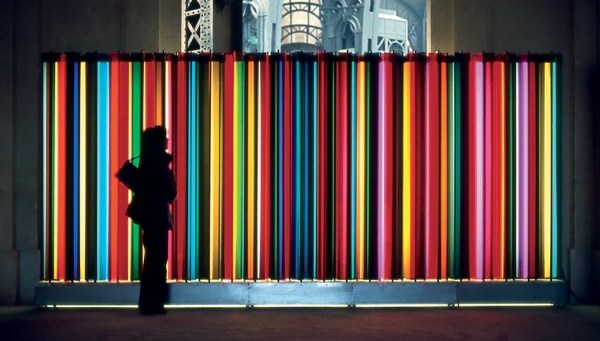
Carlos Cruz-Diez, Transchromie Mécanique 1965, 1965

Carlos Cruz-Diez, Transchromie Mécanique 1965, 1965 // Source: cruz-diez.com

Carlos Cruz-Diez, Transchromie Mécanique 1965, 1965 // Source: cruz-diez.com

Immersive phenomenological optical installations.
Like Eliasson, but earlier.
Like Turrell, but happier.
Commission:
Shadows underneath elevated tracks.
Transformed to spaces of light and color.

Michelangelo Pistoletto, Lunch Painting, 1965

Michelangelo Pistoletto, Lunch Painting, 1965 // Source: afasiaarq.blogspot.com

Michelangelo Pistoletto, Lunch Painting, 1965 // Source: afasiaarq.blogspot.com

Arte Povera.
Transition from gallery oriented art object to direct social engagement.
Seminal work.
Blue-chip artist.
Museum collections.
Do not touch.
Proposed exhibition copies as public sculptures.
Please touch.

Bob and Roberta Smith, The Art Party, 2011–ongoing

Bob and Roberta Smith, The ArtParty Conference, 2013 // Source: suegough.blogspot.com

Bob and Roberta Smith, The ArtParty Conference, 2013 // Source: suegough.blogspot.com

Artist mostly known for twee sign paintings on junk.
Recent years’ increasing activism.
Reaction to Tea Party.
Opposition to cuts in Art Education in UK.
Paintings, installations, videos, events.
Defense of accessibility of art education and therefore art.
Earnest.
Populist.
Art is not elitist.
Everything is made.

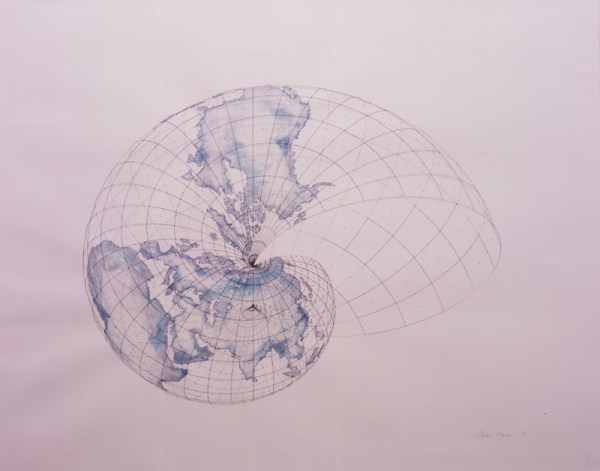
Agnes Denes, Isometric Systems in Isotropic Space—Map Projections, 1979

Agnes Denes, Isometric Systems in Isotropic Space—Map Projections, 1979 // Source:  students.concordiashanghai.org

Agnes Denes, Isometric Systems in Isotropic Space—Map Projections, 1979 // Source: students.concordiashanghai.org

Proposed billboards.
Artist mostly famous for wheat field in Lower Manhattan.
Beautiful drawings of world maps.
Cube, pyramid, donut.
Love diagrams.
Queens demographics.
Always changing.
Always diverse.

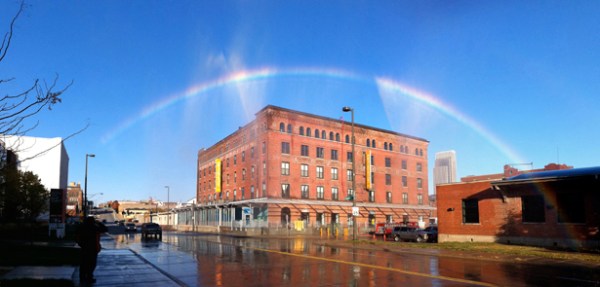
Michael Jones McKean, The Rainbow: Certain Principles of Light and Shapes Between Forms, 2012

Michael Jones McKean, The Rainbow: Certain Principles of Light and Shapes Between Forms, 2012 // Source: therainbow.org.

Michael Jones McKean, The Rainbow: Certain Principles of Light and Shapes Between Forms, 2012 // Source: therainbow.org.

Bemis.
Artificial rainbow.
Water hoses.
Experiment.
Unpredictable results.
Depends on weather.
Ironic.
Makes it even better.

Fourth of July 2012: San Diego Pyrotechnic Accident

san diego 2012 fireworks display

San Diego 2012 fireworks display

Not art.
Curatorial influence of Jenns Hoffmann.
Contemporary art alongside historic art and artifacts.
Contextualizes art practice in wider cultural production.
7,000 fireworks in less than 60 seconds.
Holiday ruined?
Or expectations exceeded.
Grand Finale.

Addendum:

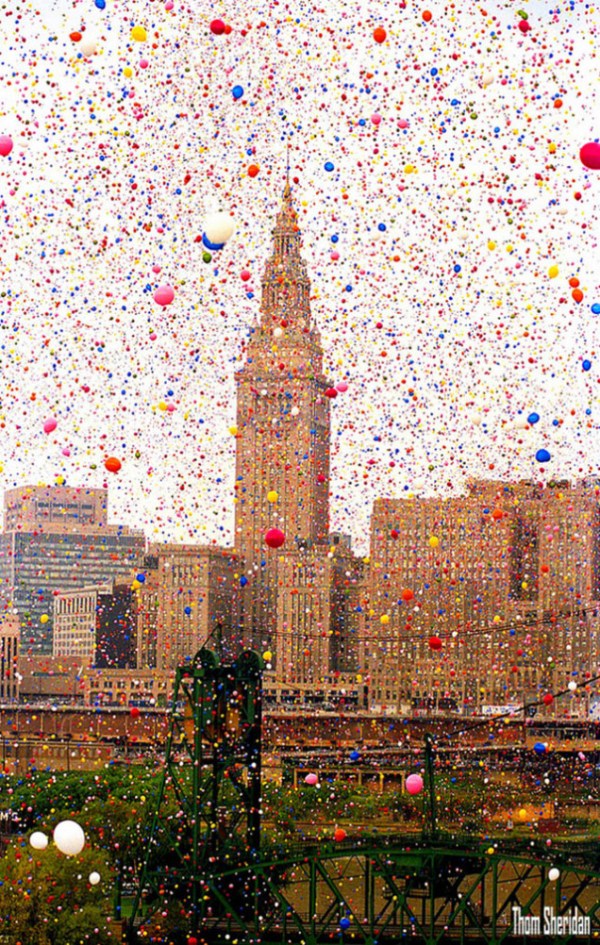
I also recently learned about this other spectacular fun-but-relatively-safe disaster, which I love for the same reasons as the fireworks display:

1986 Cleveland accidental 1.5 m balloon release. // Photo: Thom Sheridan // Source: Gizmodo

1986 Cleveland accidental 1.5 m balloon release. // Photo: Thom Sheridan // Source: Gizmodo


Standard