Research

Psychology for Profit

Inspiring gratitude to influence (consumer) behavior via “relationship marketing”:

… the idea is that the unexpected nature of the gifts will leave the customer not just pleased but also grateful. Gratitude is a powerful, and potentially quite profitable, emotion to inspire.

–Rob Walker, “Hyatt’s Random Acts of Generosity,” New York Times, June 17, 2009

Of course, the manipulation of generosity can backfire as well:

Perceived unfairness can throw reciprocity instincts into reverse: instead of being disproportionately grateful, you might feel disproportionately spiteful — and take your business, and your loyalty, elsewhere.

I’m all for gratitude, when it makes people happier. In this case, it seems like customers are being subtly manipulated to feel a little more satisfied with their hotel experience, while its investors and evil marketing geniuses might become a lot happier with their bottom lines.

Is a kinder, gentler capitalism better than a cutthroat one? Ideologically, no. Pragmatically, though, empowering workers to reward pleasant customers seems, well, nice. Service sector workers might like having some agency in the workplace.

And what does this tell us about relational aesthetics, which is still somewhat marginalized as a practice (as an emergent field, its validity is often up for debate), when corporations are talking about reciprocity and relationships?

Standard
Research

Summer Reading List 2009

I’ve taken a break from going to shows in order to hit the books. Some of these books are just food for thought, others will be reviewed in due time here. In the meantime, though, here’s my Summer Reading List so far:

Source: University of Chicago Press website

Source: University of Chicago Press website

Johanna Drucker’s “Sweet Dreams: Contemporary Art and Complicity,” University of Chicago, 2005

I’ve become an acolyte, and I can admit that I can barely restrain myself from evangelizing about this book. Drucker’s an American artist, theorist and art/design historian. She’s currently a research fellow at Stanford U., but she’s typically based at UCLA. “Sweet Dreams” presents Drucker’s critical theory with a refreshing methodology: developing critical theory out of contemporary artistic practice, rather than projecting theory onto art. Her thesis is that the academia’s radical negativity (that criticality = opposition) has become orthodoxy, which is rigid and outmoded. She proposes a position of acknowledged complicity that is better suited for the attitudes of affirmation, engagement with material pleasure, and complexity of art of the 1990s and 2000s.

I’ve only read the first few chapters, but I’d recommend this books to artists and curators interested in theory and new ways of understanding recent contemporary practice. I wouldn’t recommend it to artists allergic to aesthetic theory (though Drucker accomplishes a Herculean task of summing up modernism, postmodernism and aesthetic theory in the first three chapters), but she also writes cogently (it’s not a speculative work of philosophy—it’s precise and methodical).

Also on the list, in various stages of completion:

Source: MIT Press website

Source: MIT Press website

Martha Buskirk, “The Contingent Object of Contemporary Art,” MIT Press, 2003

Buskirk’s investigation into “contingency” in 1980s and 1990s art might be a good bridge between Modernist “autuonomy” and Drucker’s “complicity” for art of the 1990s and aughts.

Source: Tal Ben-Shahars website

Source: Tal Ben-Shahar's website

Tal Ben-Shahar, “Happier: Learn the Secrets to Daily Joy and Lasting Fulfillment,” McGraw-Hill, 2007

Positive Psychology from a Harvard University professor. Hands on, concise, useful for reminding oneself of what’s ultimately meaningful in life.

Source: Lucifer Effect website

Source: Lucifer Effect website

Philip Zimbardo, “The Lucifer Effect: Understanding How Good People Turn Evil,” Random House, 2008

The psychologist behind the infamous Stanford Prison Experiment turns towards morality and how humans are highly influenced by their conditions.

Source: Simon & Schuster website, Learned Optimism CD page

Source: Simon & Schuster website, Learned Optimism CD page

Martin E. P. Seligman, “Learned Optimism: How to Change Your Mind and Your Life,” Free Press, 1990/1998.

Much of my inquiry into optimism and pessimism has been shaded by skepticism, so I think it’s high time to embrace the attitude/beneficent delusion of optimism.

Source: Princeton Architectural Press website

Source: Princeton Architectural Press website

Ellen Lupton, “Thinking with Type: A Critical Guide for Designers, Writers, Editors and Students,” Princeton Architectural Press, 2004.

A concise, erudite read; I will continue to employ this newly gained knowledge for a long time.

Standard
Art & Development, Research

Camp

Just re-read Susan Sontag’s “Notes on ‘Camp'” (1964), which you can find here. Though the essay is showing its 40+ year wrinkles, if you can look past some of the anthropological blanket statements, it’s a great read.

I especially enjoyed:

Making connections with Paul Martin’s Sex, Drugs and Chocolate: The Science of Pleasure (Harper Collins, 2007).

Sontag considered Camp to be “modern-day dandyism,” and described how dandies were driven by a fear of boredom. Martin examines this fear at great lengths, citing the reckless hedonism of Nero and Lord Rochester. Interestingly, Martin points out that boredom often reveals more about the bored person than it does about the world around him or her.

Further, Sontag sees Camp as a means of accessing pleasure. She seems to align with Martin’s thoughts on the importance of modest pleasures in daily life.

Sontag:

The discovery of the good taste of bad taste can be very liberating. The man who insists on high and serious pleasures is depriving himself of pleasure; he continually restricts what he can enjoy. … Here Camp taste supervenes upon good taste as a daring and witty hedonism. It makes the man of good taste cheerful, where before he ran the risk of being chronically frustrated.

Martin advocates becoming a “wily hedonist,” who pursues “more of the Modest Pleasures of everyday life that many of us tend to take for granted. … They should also be cheap or free; pleasure should not be the preserve of the wealthy.”

Q. Why is it that old things look so cool?

A. Sontag:

This is why so many of the objects prized by Camp taste are old-fashioned, out-of-date, démodé. It’s not a love of the old as such. It’s simply that the process of aging or deterioration provides the necessary detachment—or arouses a necessary sympathy.

Sympathy!?

[Camp and the attraction of everyday materials]

Just last week, I noted in a previous post that British sculptor Eric Bainbridge appreciates cheap materials because they “elicit a kind of sympathy, an identification with the viewer that this is what we are.”

Sontag:

Another effect: time contracts the sphere of banality. (Banality is, strictly speaking, always a category of the contemporary.) What was banal can, with the passage of time, become fantastic. …

Sontag’s talking about Campy aged materials; Bainbridge is concerned with cheap readily-available consumer-grade items. I think they’re one and the same now, because of levels of mass production. Bainbridge’s fake fur is immediately obsolete, destined for the landfill even before it reaches the retailer. To give you another example, cheap toothbrushes packaged for an Arabic-reading market and sold in a discount shop in post-industrial northern England are simultaneously new and old.

Sontag:

Camp taste transcends the nausea of the replica.

Christine Wong Yap, Pounds of Happiness (installation), 2009, mixed media, pound shop items, 8 x 8 x 5 feet / 2.4 x 2.4 x 1.5 m. Produced in the Breathe Residency at Chinese Arts Centre.

Christine Wong Yap, Pounds of Happiness (installation), 2009, mixed media, pound shop items, 8 x 8 x 5 feet / 2.4 x 2.4 x 1.5 m. Produced in the Breathe Residency at Chinese Arts Centre.

This hyper-compression of time seems to allow objects to be ultra-mundane in ways that are variously witty, arrogant, simultaneously dull as a doorknob and smart as a whip. I’m thinking about Pounds of Happiness, and also of Chu Yun’s Constellation. I really like Constellation because it’s so matter-of-fact: it consists of a dark room loaded with electronic appliances, so you see a field of standby lights. Interestingly, NG, whose tastes in art usually diverge from my own, liked the work as well. She imagines it to be quite spooky and poetic. I appreciate the nerve of calling incessantly humming electronic detritus art.

Chu Yun, Constellation No.1, Installation, 2006. Source: Vitamin Creative Space web site.

Chu Yun, Constellation No.1, Installation, 2006. Source: Vitamin Creative Space web site.

Failure.
For the past few years I’ve been obsessed with failure in art. I wondered, How can art convey the ineffable, yet still have to be materialized (and thereby be subjected to the constraints of semiotic systems, formal considerations, material limitations, etc.)? It seemed art was doomed to fail, or would be vaguely metaphoric and inadequate at best. I responded by embracing failure in projects like Soft Sculpture for Brougham Hall—a constantly-deflating inflatable sculpture.

Sontag describes Camp as an unintended avenue through which failure is viable, and even pleasurable:

When the theme is important, and contemporary, the failure of a work of art may make us indignant. Time can change that. Time liberates the work of art from moral relevance, delivering it over to the Camp sensibility….

Thus, things are campy … when we become less involved in them, and can enjoy, instead of be frustrated by, the failure of the attempt.

Currently, I’m following up the Cheap and Cheerful and Pounds of Happiness series with further investigations of modest ambitions, lightly-recombined cheap objects, and the decorative impulse. Here’s a sneak peek of a recent project:

Christine Wong Yap, detail, not yet titled, 2009, hankerchief, placemat, thread, 18 x 18 x 2 inches.

Christine Wong Yap, detail, not yet titled, 2009, hankerchief, placemat, thread, 18 x 18 x 2 inches.

I’m working, for the first time in a long time, very visually and reflexively. But I suspect that my conceptual inclinations are still at work. Perhaps, by way of embracing modest pleasures, I’m embracing exuberance, a step towards the extravagance of Camp:

Camp is a vision of the world in terms of style — but a particular kind of style. It is the love of the exaggerated, the “off,” of things-being-what-they-are-not.

Standard
Research

Bainbridge, optimism and everyday materials

Whilst in the UK, I developed a taste for the Mancunian accent (“wot?” “ay!?” “is the shoPP open on tchoose-day, or does it close UR-leh”) and Frieze Magazine. The quality of design and content are high, and the content-to-ad-ratio is pleasant to navigate. Two articles in the May issue were particularly relevant for me.

“Future Conditional,” the editor’s note by Jonathan Griffin, makes a case for optimism— while images of dystopia and apocalypse are popular in contemporary art, we could use more images of

convincing alternatives…. A shared image of what is to come is not only healthy but also a form of prophesy; the fulfillment of the only future we can imagine, whether utopian or apocalyptic, is, on some level, deeply satisfying… [but] If a new future is to be developed, is it reasonable to ask art to contribute to its construction?

This seems to mirror Angela Davis’ argument that art must not only act in opposition, but imagine alternative futures.

In “Tales of Everyday Madness,” Griffin also profiles the British sculptor Eric Bainbridge, with this choice descriptions that seem relevant to my interest in the use of the readymade. Bainbridge “works with certain materials, forms and cultural references because he finds them ridiculous, repellant or pathetic,” and maybe these are attributes he sees in himself.

eric bainbridge
Eric Bainbridge at Middleborough Institute of Modern Art
Image Source: Frieze Magazine website, Archives Section, Issue 119, Nov/Dec 2008, Eric Bainbridge review.

In fact, cheap materials “elicit a kind of sympathy, an identification with the viewer that this is what we are.” I was bemused to hear that when Bainbridge showed his work in New York in the 1980s, he felt “utterly deflated at how English it looked, in its moderate scale, self-effacing humor, and domestic frames of reference.” But I would argue that this deflation constitutes not a detriment to the quality of his work, but an affirmation that his work was going against the grain of the spectacular, garish, market-friendly art of the time.

Bainbridge went on to assert that “the sublime could exist in the most unlikely of places…. Even the most exotic, fancy objects conceal the mundane and familiar, and conversely, that the things closest to home can occasionally reveal themselves to be strange, foreign and unknowable.”

This is not the most profound revelation in art—as it’s a fundamental principle behind Surrealism, as well as the contemporary folk-art-influenced naivete—but I love how Bainbridge articulates it. Rather than elevating the mundane, or valorize authenticity with aestheticized faux naif gestures, Bainbridge seems to complicate the act of declaring an object a work of art, and seems to be winking at viewers in the creation of what might be considered campy knickknackery.

Standard
Citizenship, Community, Research

Things are grim, but I can’t stop thinking about happiness.

Where my mind’s been at:

Positive psychology — a relatively new field of evidence-based self-help for being happier. Think of it like the shift in medicine from treating illness to increasing wellness. As Tal Ben-Shahar, PhD, writes in Happier, pretty much everything we want in life ultimately leads back to happiness.

The idea is to increase happiness in daily life, rather than dealing with unhappiness only during moments of crisis.

[See also Dr. Martin Seligman, Prof. Philip Zimbardo and Dr. Walter Mischel (whose research was the subject of a great article by Jonah Lehrer recently in the New Yorker Magazine).]

Practicing gratitude is one of the oft-cited methods of increasing happiness.

I’m tremendously grateful for friends helping friends. I know, I know, everyone’s hurting now financially. But a lot of artists are freelancers, and while freelancing is typically like riding a roller coaster, it seems like a lot of my peers are feeling lost in a free fall. These are bright, hardworking people doing everything from graphic design, to interactive art direction, to preparator/installation to cooking.

The financial safety nets are being strained, but it seems like social bonds are staying strong… Artists helping artists. Freelancers helping freelancers. I’m so grateful to be in an art community, in which, even in lean times, can exhibit generosity instead of competition.

If you can support the arts in these times, for goodness’ sake, here’s how (and where and when!):

travis meinholf art
Formerly San Francisco-based, now Berlin-based artist Travis Meinolf is in the unenviable position of raising funds for a matching grant (good luck!) for his kind of hilarious but also strangely innovative practice of action-weaving. Like his healthy ‘stache, Travis’ participatory weaving seems impossibly sincere (his last project resulted in 12 volunteer-made blankets being donated to a women’s shelter). He’s a good guy and a hard worker and I wish him the best of luck in sowing his weaving projects ’round the world… Contact Jennifer McCabe, director of the Museum of Craft and Folk Art at jmccabe@mocfa.org to make a contribution towards Meinolf’s exhibition. (Image source: actionweaver.com)

(In case you missed it, I mentioned Scott Oliver’s totally fund-able project about my beloved Lake Merritt in a previous post.)

This Saturday night is Pop Noir, an auction to benefit Southern Exposure, an alternative art space that’s consistently invested in local artists, community engagement, and excellence in contemporary art. This female-led organization has always pushed the envelope, and I’m very proud to donate a pair of text-based drawings to support their work. Over a hundred and fifty other local artists have donated work too. Countless volunteers are contributing time. But it’s all for naught without buyers. So come on down—with auction prices starting at a fraction of the retail price, the price is right. Look for some really nice pieces by Weston Teruya, The Thing Quarterly by Allora and Callzadia, Michael Hall, Laurie Reid, Jeff Canham, Jamie Vasta, Edgar Arcenaux, Dustin Fosnot, and yours truly (pictured as follows).
weston teruya artThe Thing Quarterlymichael hall artlaurie reid artjeff canham artjamie vasta artedgar arcenaux artdustin fosnot artchristine wong yap art
(Image sources: Southern Exposure’s Pop Noir Auction Artists

Pop Noir will be held at the gorgeous galleries at Electric Works at 8th and Mission Streets in San Francisco. Tix, more info, pics of the auction lots, and absentee bidding details here. Hope to see you there.

Stephani Martinez, Daily Cakes - Extra Fancy, 2009, Variable, Doilies, Plaster, Gold Leaf
(Image: Stephani Martinez, Daily Cakes – Extra Fancy, 2009, Variable, Doilies, Plaster, Gold Leaf. Image source: Intersection for the Arts’ 2009 Benefit Art Auction.)
Of course the other amazing alternative art space in San Francisco is Intersection for the Arts, who is well-respected for the rigor of their programming, and renown for making miracles on a shoestring. Like many non-profits, the downturn is hitting their typically lean infrastructure hard. Intersection’s auction comes up next weekend, on the following Saturday, June 13.

Daniel Tierny, Double Jump, 2009, Tape on lambda print, 23 x 33 in., Courtesy of the Artist and Steven Wolf Fine Arts, San Francisco.
(Image: Daniel Tierny, Double Jump, 2009, Tape on lambda print, 23 x 33 in., Courtesy of the Artist and Steven Wolf Fine Arts, San Francisco. Image source: Headlands 2009 Benefit Auction, Artists, Daniel Tierney.)
Wednesday, June 10, the Headlands Center for the Arts holds their auction at the Herbst International Exhibition Hall in the Presidio. I’ve been an Affiliate Artist at the Headlands for a year and a half. The Headlands is an amazing locus for an international and local art community. When I think about relocating, few places compare with the quality of the Bay Area arts scene, partly because of the Headlands’ role in drawing international artists in residence to the area.

So there you go. Support an artist directly, or support the organizations who support the artists. And take home some artwork!

Standard
Impressions, Travelogue

london art and life highlights

My last weekend in the U.K. was spent visiting galleries and friends in London. I’m too happy and exhausted to make any sense of it. It is what it is. So here are pics, in no particular order, of art + life from Mayfair / Soho / So. Kensington / Essex.

St Georges flags still up in Essex. I did my bit and ate a hot cross bun.

St Georges flags still up in Essex. I did my bit and ate a hot cross bun.

LOVE IT! Calligraphic letters cut from cardboard. Mason's Yard, London.

LOVE IT! Calligraphic letters cut from cardboard. Mason's Yard, London.

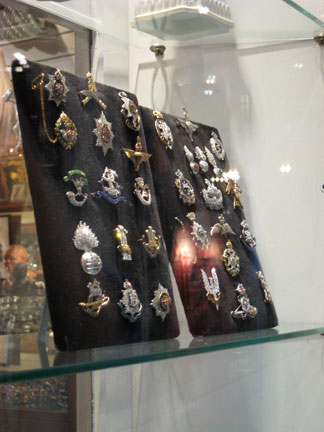
The type of British commemorative badges that inspired my Sorted badge.

The type of British commemorative badges that inspired my Sorted badge.

Love this silver, mirror-finish shop sign using an inline typeface on high gloss black paint. Hot!

Love this silver, mirror-finish shop sign using an inline typeface on high gloss black paint. Hot!

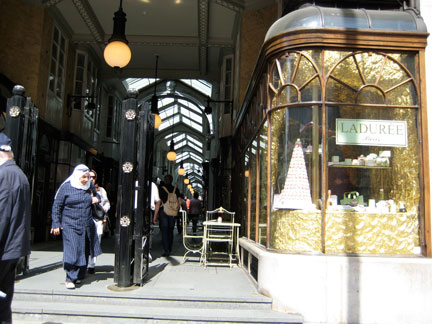
I see my future, and there are macaroons in it.

I see my future, and there are macaroons in it.

Royal Academy of the Arts. On a personal level, this trip has really inspired me to think about what I want in life. And I want to do more travelling.

Royal Academy of Arts. On a personal level, this trip has really inspired me to think about what I want in life. And I want to do more travelling.

Underpainting / works in progress by Mediha Ting in her studio near Bow Road, London. She's got a show opening in Manchester this weekend, and one in Shanghai later this summer.

Underpainting / works in progress by Mediha Ting in her studio near Bow Road, London. She's got a show opening in Manchester this weekend, and one in Shanghai later this summer.

Mixed media on slate by Tom Barnett, from the exhibition, To Paint is to Love Again: Painters from Peckham. Hannah Barry Gallery, London.

Mixed media on slate by Tom Barnett, from the exhibition, To Paint is to Love Again: Painters from Peckham. Hannah Barry Gallery, London.

Sculptural "painting" by Edward Wallace of stretched, striped lycra, also at Hannah Barry.

Sculptural painting by Edward Wallace of stretched, striped lycra, also at Hannah Barry.

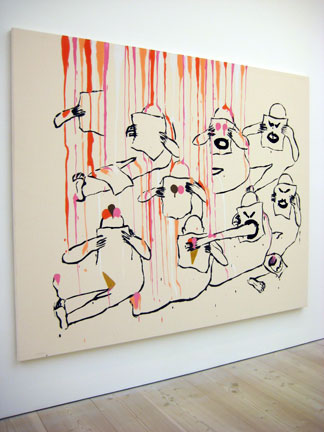
Tala Madani's paintings at Saatchi Gallery, South Kensington, were  pretty great. I saw them in NYC before, and still don't really get them, but I sorta like them. Moreover, Mediha is right: Saatchi Gallery, despite the horrid website, has some of the best lighting I've ever seen in my life. If heaven had a gallery, it would look like this: flawless lighting, walls, floors, wall texts...

Tala Madani's paintings at Saatchi Gallery, South Kensington, were pretty great. I saw them in NYC before, and still don't really get them, but I sorta like them.

This neon chandelier by Richard Wheator made from glass and rapid-prototyped hardware, at the Taschen shop in South Kensington. Brilliant art, brilliant curation!

This neon chandelier made from glass and rapid-prototyped hardware, at the Taschen shop in South Kensington. Brilliant art, brilliant curation!

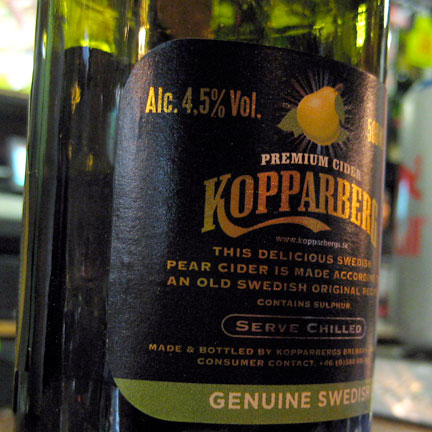
Really, nothing beats a fresh, not-too-sweet pear cider over lots of ice on a hot day in London. The search for a Bay Area supplier has already begun.

Really, nothing beats a fresh, not-too-sweet pear cider over lots of ice on a hot day in London.

Traveller's luck -- finding friends from near and far, like Steph and Maria (Yason too).

Traveller's luck -- finding friends from near and far, like Steph and Maria (Yason too).

No pics, but also great:

Tom Friedman at White Cube Mason’s Yard.

Isa Genzken retrospective at Whitechapel.

Ian McKellen and Patrick Stewart in Waiting for Godot at the Royal Haymarket Theatre. Brilliant. So witty, so poignant. Delightful existential aches.

Cindy Sherman at Monica Spruth Philomenes Magers. Good and terrifying.

Standard
Art & Development, Community, Research, Travelogue

Bits and Bobs

Detail from a drawing/sculpture in progress.

Detail from a drawing/sculpture in progress.

Cheap and cheerful

Here in Manchester, there’s a saying, cheap and cheerful. It means what it sounds like. For example, This and That is a tasty curry house that offers three items for £4.20; it’s praised as epitomizing cheap and cheerful.

I like the phrase because:

  • It’s thoroughly appreciative, even though Mancs can seem totally unsentimental.
  • It’s characteristic of something local: As Stuart Maconie put it in Pies and Prejudice,

    …many of the north’s market and mill towns … have become shrine[s] devoted to binge drinking and discount shopping.*

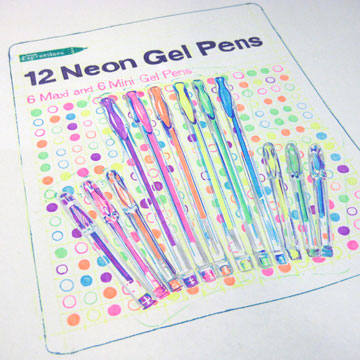
    Within a half-mile radius, there are three pound stores–Poundland, Pound World and Pound Empire, whose business name, confusingly, is Pound Kingdom–and one Quality Save.

  • It reminds me of a Chinese expression, which is nearly identical (literally, “has attractiveness, has cheapness”). For my ultra-frugal immigrant parents, no higher compliment could be paid.

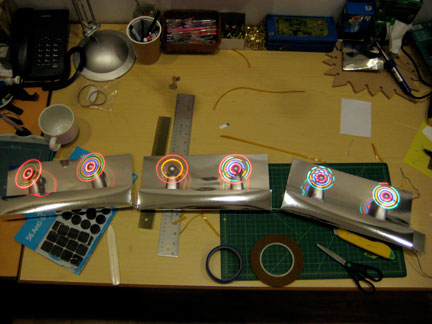
I’m about four days away from the Open Studio reception (Thursday, April 23, 5:30-7:30 pm, Chinese Arts Centre), so I’ve been working hard to finish several projects. Some are inspired by cheap and cheerful, so I’m making use of knickknacks from pound shops, like fans with multi-colored LEDs. Here’s a studio shot of the fans wired together to run on grid power instead of batteries, something I learned from this Instructables page.

Studio view

Studio view

Dan Graham, Tate Podcasts

Though I missed Dan Graham’s speaking engagements in the SF Bay Area this spring, I got his podcast lecture from the Tate. I enjoyed his talk, even without the pictures; he’s whip-smart, brisk, and completely free of affectation. For someone to have shown in as many Biennales and Documentas as he has, it’s very refreshing to hear him say in the same even, ego-less tone, that the Queen of Norway commissioned him to make a pavilion, so he made one on a fjord, it’s quite popular, and it’s referred to as a shower stall. Asides like this, from most other artists, would come across as false modesty.

Projections!

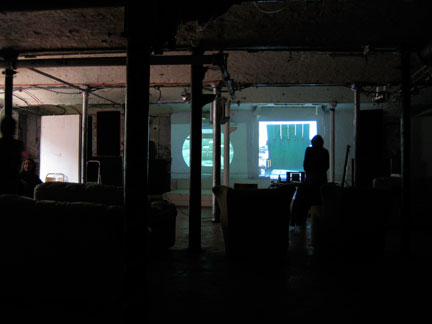
Preparing for T.S. Beall's artist's talk at Islington Mill

Preparing for T.S. Beall's artist's talk at Islington Mill

I enjoyed meeting Tara Beall, the artist in residence at Islington Mill, whose work is a fascinating combination of Arte Povera, webcam-sourced-video, boundaries, interstitial spaces, architecture, and installations that are a hybrid of kinetic art and video projections.

Her work seems in dialogue with the work of Ed Pien, whose new show at the Chinese Arts Centre is being installed right now. I’ve been getting sneak peeks of it — mirrors, projectors, cut paper, and macramé on the scale of architecture — and I think it’s going to be phenomenal!


*To be fair, Maconie also wrote, “Like [Manchester] at its best, [The Smiths] had glamor and gloom, winsomeness and wit; they were magical and proletariat all at once.”

Standard