Sights

See: James Yamada’s installation at Parasol Unit, London

James Yamada, "The summer shelter retreats darkly among the trees," 2011. Parasol unit installation view. Photo: Stephen White. Source: Parasol Unit.

James Yamada, The summer shelter retreats darkly among the trees, 2011. Parasol unit installation view. Photo: Stephen White. Source: Parasol Unit.

According to Parasol Unit’s website, this is perhaps my dream programme:

On 22 November 2011, Parasol unit will unveil the first artwork in its Parasolstice – Winter Light series of outdoor projects to be realised by various international artists, each of whom creates sculptural works that address the phenomenon of light.

This past outdoor light sculpture by Yamada floats my boat too:

James Yamada, Our Starry Night, 2008. Photo by Seong Kwon, courtesy of the Public Art Fund.

James Yamada, Our Starry Night, 2008. Photo by Seong Kwon, courtesy of the Public Art Fund.

Standard
Research

Miracle Polish by Steven Milhauser

What I saw was a man who had something to look forward to, a man who expected things of life.

See why Millhauser’s my new favorite fablist—read the short story, “Miracle Polish,” by Steven Millhauser on NewYorker.com.

Why?

Mirrors.
Optimism.
Happiness, and the difference between desire and satisfaction.
The cave; seeing things as they are or how you want them to be.

mirrorsblackportrait, 2011, mirrors, paint, frames, wire, motor, hardware; 112 x 21 x 21 in / 2.8 m x 0.5 x 0.5 m (site variable)
Standard
Bucket List, Sights

See: Sigmar Polke’s windows at Grossmüster, Zürich

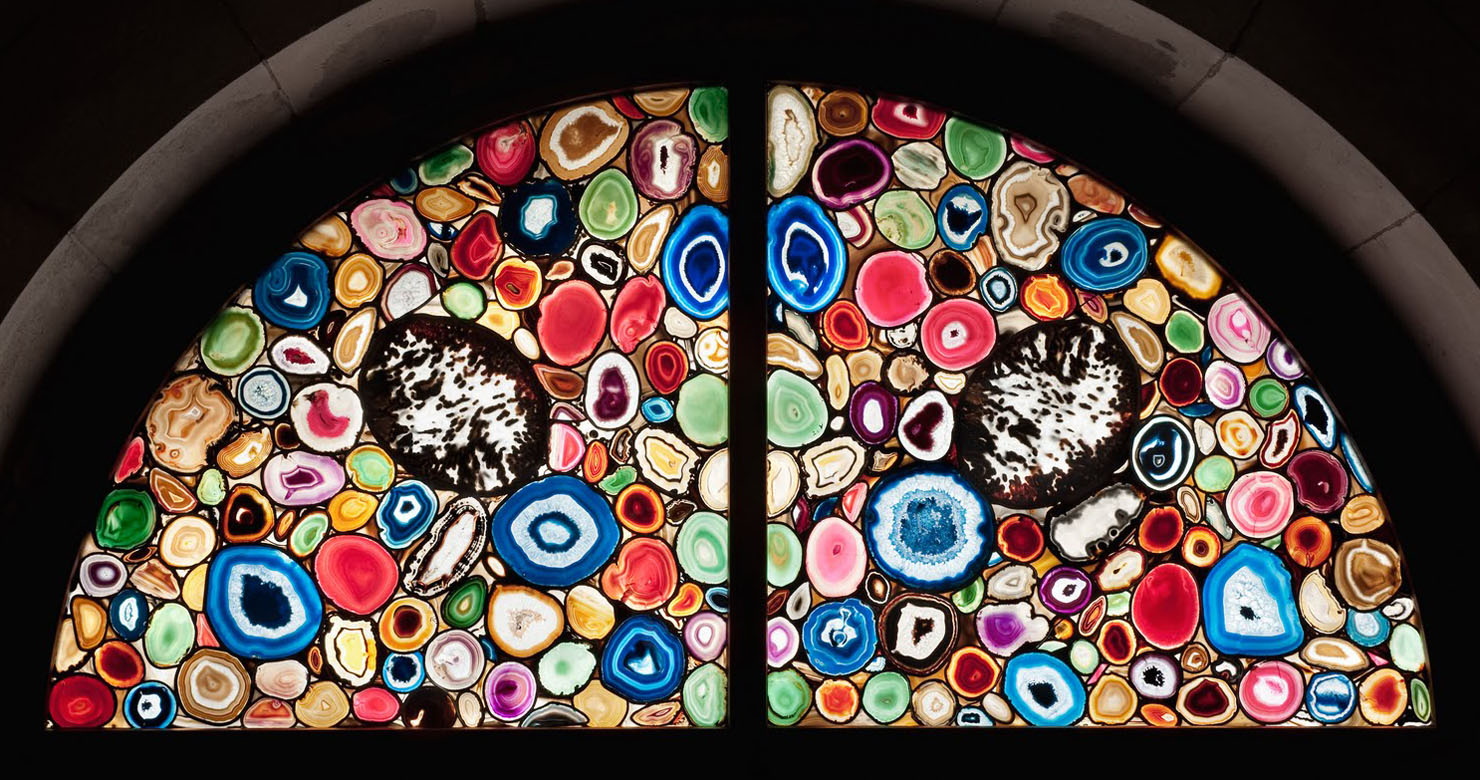
Agate window by Sigmar Polke, 2009, Grossmuenster Cathedral, Zurich

Agate window by Sigmar Polke, 2009, Grossmuenster Cathedral, Zurich.

In 2006, Sigmar Polke won the invited competition to design church windows for the Grossmünster in Zürich. It has taken three years to complete this ambitious project. Seven windows in the western part of the nave consist of sliced agate, creating brightly luminous walls of stone. The five windows to the east depict five figures from the Old Testament in stained glass. They can be interpreted as precursors of Jesus and thus relate to the Christ child in the choir windows by Augusto Giacometti. Sigmar Polke has intertwined various axes and levels of time, ranging from geological and biblical times to Romanesque art and the present day.

Press release from the Grossmünster website.

This one’s for the bucket list.

Standard
Sights

see: nicholas elias’ the geometry of innocence

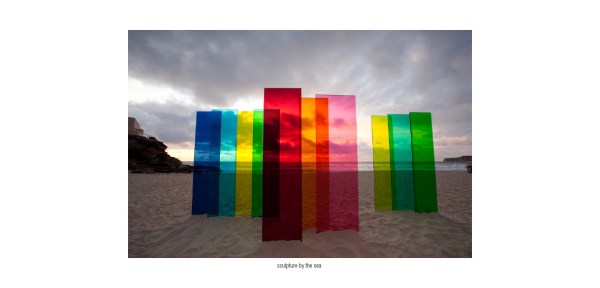
Nicolas Elias. The Geometry of Innocence, 2009. Acrylic sheets (Perspex). Sculpture by the Sea, Sydney.

Nicolas Elias. The Geometry of Innocence, 2009. Acrylic sheets (Perspex). Sculpture by the Sea, Sydney. Source: nicholaselias.com

Love the simplicity and scale of this work of public sculpture.

More photos of The Geometry of Innocence on the artist’s blog.

Part of Sculpture by the Sea, an exhibition series in Sydney.

Standard
Research

Holden Caufield, MFA

Adam—at once ideological and post-ideological, vaguely engaged and profoundly spectatorial, charming and loathsome—is a convincing representative of twenty-first century American Homo literatus. He is a creature of privilege and lassitude, living through a time of inflamed political certainty, yet certain only of his own uncertainty and thus always more easily defined by negation than by affirmation, clearly dedicated to poetry but unable to define or defined it (excet to intone that poetry isn’t about anything), and impicitly nostalgic for earlier, mythical eras of greater strength and surety. He has long suspected, for instance, that he is incapable of having “a profound experience of art and I had trouble believing that anyone had, at least anyone I knew.” Insofar as he is interested in the arts, he tells us, he is “interested in the disconnect between my experience of actual artworks and the claims made on their behalf; the closest I’d come to having a profound experience of art was probably the experience of this distance, a profound experience of the absence of profundity.”

James Wood, “Reality Testing,” (New Yorker Magazine, October 31, 2011) a review of Ben Lerner’s new novel, Leaving the Atocha Station (Coffee House). The book’s narrator is Adam Gordon, a poet.
Standard
Research

When “artists” means 90% non-fine artists

Patricia Cohen reported that an NEA “Study Says Artists Have Higher Salaries” (NY Times, October 30)—in fact, claiming that the average artists’ earnings are higher than the average worker “by nearly $4,000.”

“Average” is not equivalent with “mean,” yet it would be very easy to misinterpret the headline that most artists are better paid than everyone else. Or to assume that the artists referred to are fine artists.

But the NEA’s “Artists and Arts Workers in the United States” report’s data sets (the US Census Bureau’s American Community Survey) are particular, and what it means—and what it doesn’t mean for visual artists—is quite revealing upon investigation.

First, the survey is based on those who identify primarily as artists:

To be counted as an artist, survey respondents must have identified a job within one of these 11 occupational categories as accounting for the most number of hours worked in a given week. In other words, being an artist is their “primary” job.

Many visual artists have day jobs; those who spend most of their time as teachers, curators, or art handlers would not be counted in the survey.

Second, the category “artist” is comprised of many who may not self-identify as artists.

There are 2.1 million artists in the United States.
· More than a third of those artists (39 percent, or 828,747 workers) are designers—a category that includes commercial and industrial designers, fashion designers, floral designers, graphic designers, interior designers, merchandise displayers, and set and exhibit designers.*

The idiosyncratic boundaries of inclusion is illustrated here: curators and art installers (who are often artists) are not be included, yet exhibit designers are. Almost half (49%) of respondents are in design and architecture—typically salaried occupations that are quite technical. Would the announcement that “Designers and Architects have Higher Salaries” be surprising?

How many survey respondents are visual artists? Less than 10%.

· Fine artists, art directors, and animators make up 10 percent of all artists (212,236 workers).
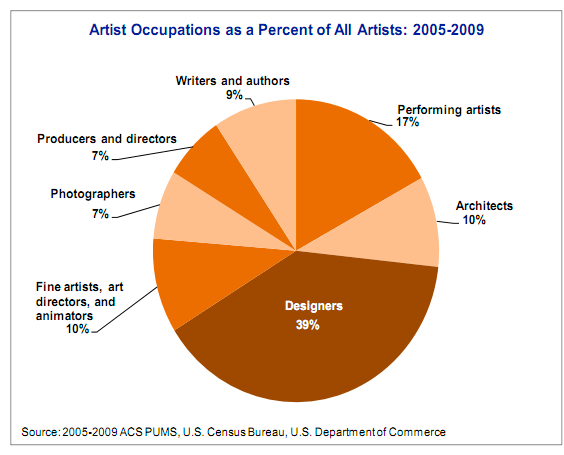
Fine artists make up less than 10% of survey respondents.

Whether fine artists make up 1% or 9% of survey respondents is impossible to tell. It’s even possible that, in this case, “artists” means 99% non-fine artists.

Standard