The Eve Of...

The Eve Of…: Studio-based Exhibitions

The studio as a gallery of one’s own.

The Eve Of… will be an open studio exhibition. What does that mean? A studio turned gallery? A pop-up gallery in a pop-up studio? Is it DIY or DIM (do it myself)? The exhibition is “artist-run,” in perhaps the most literal sense.

In any case, I think of self-organization as a method of actualizing my agency as an artist. I’m enamored with the idea that artists can stage exhibitions on our own terms.

In my small way, I’m proud to carry on a tradition of artists not waiting to be picked in order to share work with the public. Some examples:

Claes Oldenberg, The Store (1961, Lower Manhattan): a self-initiated installation in a studio open to the public // Source: museumofmuseum.com

Claes Oldenberg, The Store (1961, Lower Manhattan): a self-initiated installation in a studio open to the public // Source: museumofmuseum.com

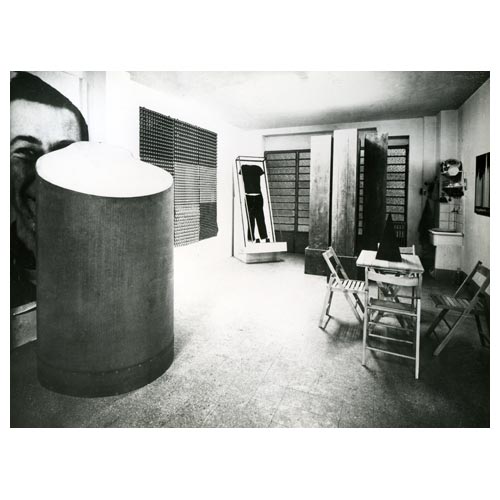
Michelangelo Pistoletto, Minus Objects (1965-66, Turin): studio-based public exhibition (including some of my favorite artworks by MP) // Source: pistoletto.it // Photo: P. Bressano.

Michelangelo Pistoletto, Minus Objects (1965-66, Turin): studio-based public exhibition (including some of my favorite artworks by MP) // Source: pistoletto.it // Photo: P. Bressano.

I’d love to learn more, if you know of others.

To reiterate: what artists make—artworks—gets amplified through what artists make happen— exhibitions, events, dialogues.

Standard
The Eve Of..., Uncategorized

The Eve Of… Mid-August Residency Update

Self-initiating a residency is a risky proposition.

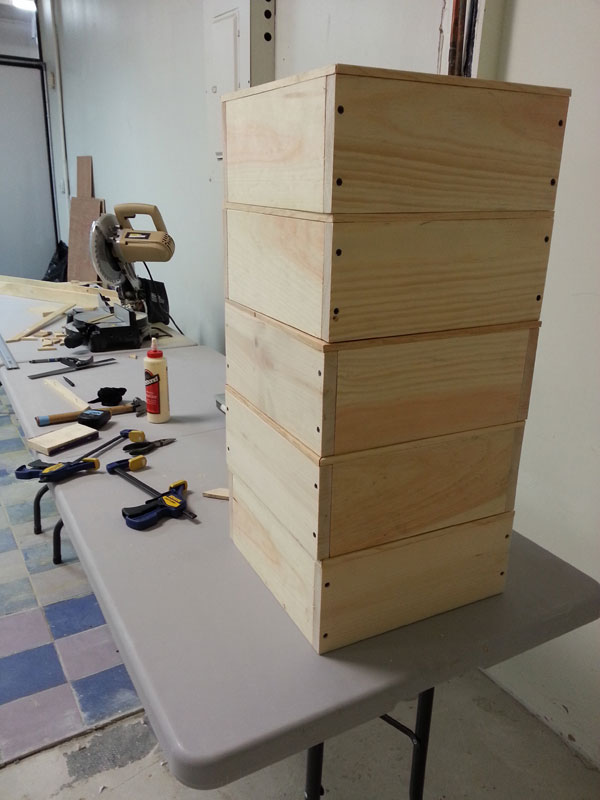
It’s taken me longer than I planned, but today I finally started moving into a larger studio for The Eve Of…. I brought over tools and a haul of lumber, and built five frames for light boxes. It was gratifying to anoint a long-awaited space with fresh sawdust.

Stack of frames and chop saw

I’m relieved to end my search. As I previously alluded, this project’s process entails a lot of uncertainty, and the biggest challenge has been finding a space. There just hasn’t been many art studio vacancies (thanks to Queens’ rising popularity). Further, few vacancies met the needs of this project—sublets were versatile enough, and larger spaces required longer terms.

Luckily, Paul Kelterborn and the Falchi Building want to support local arts, and have provided a temporary pop-up space at below-market rate for this project. I am so thankful to them for helping to make The Eve Of… possible.

If you associate my work with positive emotions exclusively, you might be surprised to learn that The Eve Of… delves into emotional states that aren’t upbeat. This change in direction is new, scary, and interesting for me.

I am intrigued to see that psychologist Todd Kashdan’s forthcoming book, The Upside of Your Dark Side, explores the utility of negative emotions like anger, anxiety, and sadness:

“With an appreciation of our entire psychological toolkit, we become whole—which allows us to climb the highest peaks and handle the deepest valleys.”

In The Eve Of…, I’m exploring how we experience these ‘deep valleys’ as internal, nebulous, and de-centered spaces.

Standard
The Eve Of...

The Eve Of… Residency: Preparations for a Sculpture

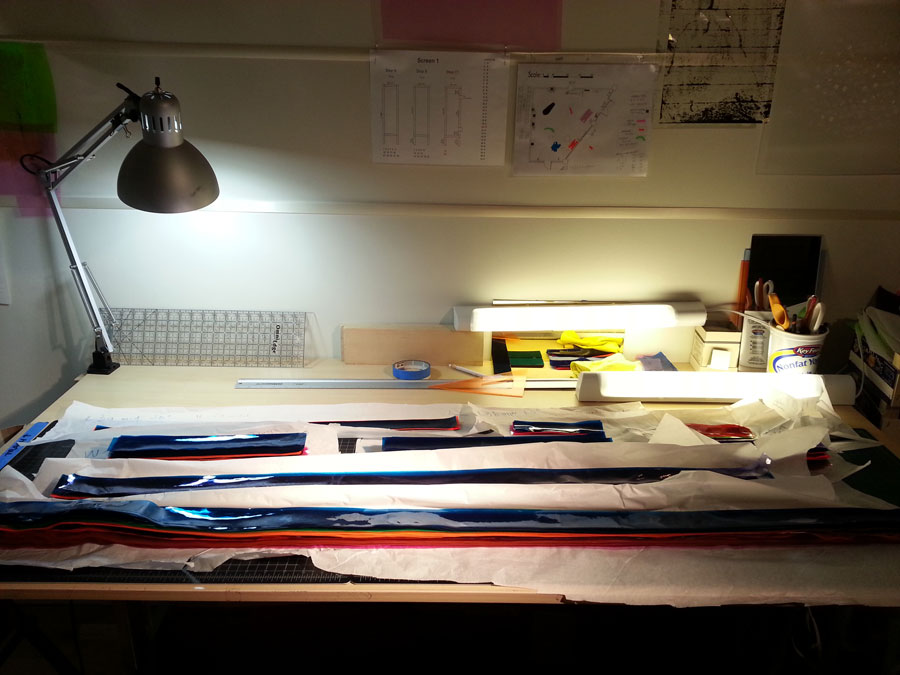
My palette: transparent colored vinyl. For better or worse it's only available in super bright, often fluorescent, colors.

Cut pieces for a prototype/materials test. My palette is determined by transparent colored vinyl. For better or worse, it’s mostly available in super bright (often fluorescent) colors.

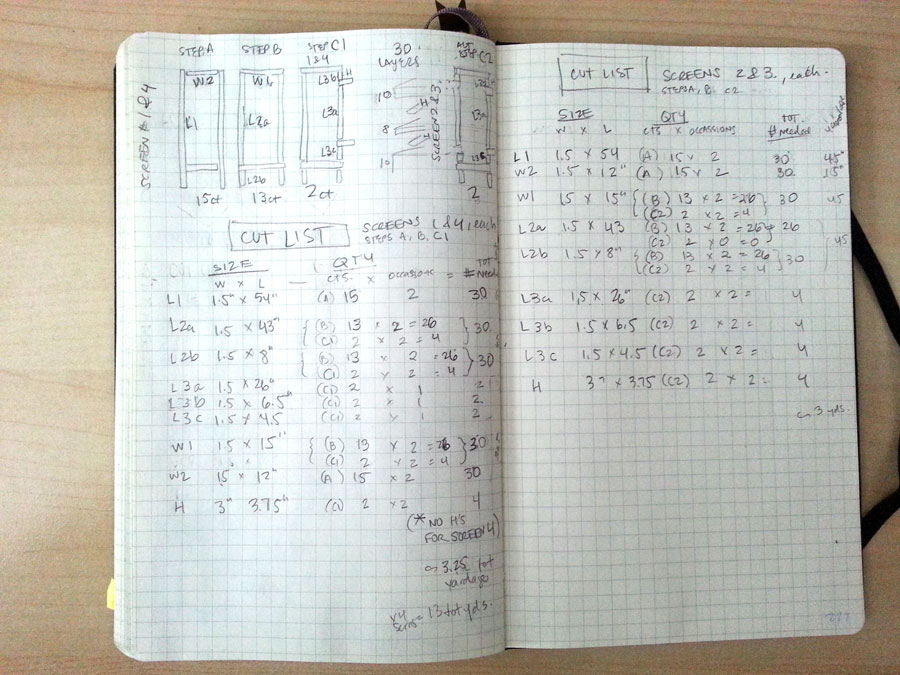
Cut list for a sculpture project. It won't be as heinous as it looks (I hope).

The test worked great so I drafted a cut list for the full scale project. Working with vinyl is a lot like making a sewing pattern, and sewing is a lot like woodwork. You come up with plans and dimensions, then adjust for overlaps.

The sculpture has multiple parts, and is made by layering three different patterns 30 times, so the number of pieces needed to be cut was a lot. Excel and good old tallying came to the rescue.

The sculpture has multiple parts, and is made by layering four different patterns 30 times, so there’s a lot of pieces to be cut. I got them sorted with a spreadsheet and good old tallying.

Whew! After a day of cutting, over 500 pieces are ready for assembly. I'm feeling like I'm nearing the limits on the lifespan of my cutting mats and straight-edge ruler.

Whew! After a day of cutting, over 500 pieces are ready for assembly. My cutting mats and straight-edge ruler are a bit further along on their lifespans after today.

Early exhibition design.

A tentative exhibition design with sculptures represented in vinyl scraps. Even with digital tools, there’s nothing like moving scaled cutouts around a floor plan. (I learned how from my dad, when I was around seven. We were about to move houses, and he had drawn floorplans in ballpoint pen on graph paper, indicating closets with a charming coat hanger icon. We cut out tiny rectangles to stand for pieces of furniture, and tested out arrangements.)

Standard

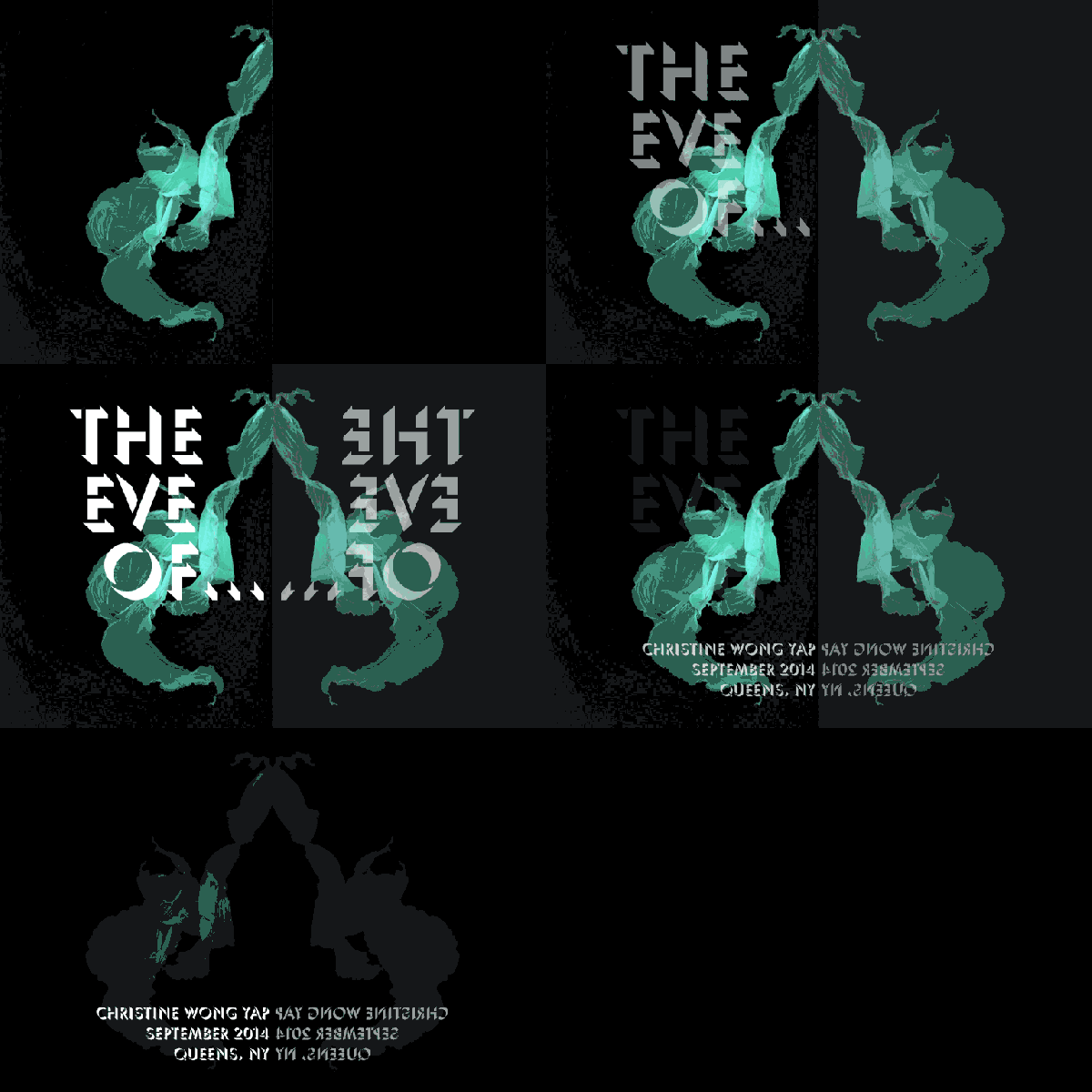
The Eve Of... Christine Wong Yap, September 2014, Queens, NY.

News, The Eve Of...

Coming soon: The Eve Of…

Image
The Eve Of...

While projects in The Eve Of… are about uncertainty, the process is providing many opportunities to expand my limited tolerance of uncertainty.

Researchers have identified ‘intolerance of uncertainty’ as an important cause of anxiety and anxiety disorders.

If you want to reduce rumination, anxious feelings, and avoidance…

Learn to tolerate not knowing the reasons for someone else’s behavior.

Learn to recognize when you’re avoiding doing something … because you can’t be completely certain of a positive outcome…

Learn to recognize when you’re taking too much responsibility for protecting others from possible negative outcomes….”

Alice Boyes, Ph.D., “Seven Tips for Reducing Anxiety, Rumination and Avoidance,” Psychology Today (March 1, 2013)* [Not the most academic source, but at the right time, this list was useful for me.]

The Eve Of… Residency Lesson #1: Tolerating Uncertainty

Quote
The Eve Of...

“Aesthetics, ethics, metaphysics—these matters of value, Wittgenstein agreed, lay in the realm of the unutterable. But it was natural an inevitable that men should speak of them, and much could be learned from the way in which people went about their foredoomed task of trying to say the unsayable. Moreover, it would not be clear where the boundary of sanctioned speech lay until an attempt had been made to cross it and that attempt had failed. Such efforts Wittgenstein regarded with benevolence. He treated them as reconnaissance expeditions, perilous to be sure, but well worth the effort expended on them.”

—H Stuart. Hughes, The Sea Change, as quoted by Laurence Weschler in Seeing is Forgetting the Name of the Thing One Sees (1982).

“Better a live donkey than a dead lion.”

–Ernest Shackleton, South Pole explorer

Rewards, Even in Failure

Quote
Meta-Practice, The Eve Of...

The Lecturers: Cybele Lyle

Just listened to A Conversation, a great series of three short videos by Bay Area-based artist Cybele Lyle. It’s part of The Lecturers, a project by SF/PR artist Pablo Guardiola. As I’m delving into full-time studio work in my residency, hearing Lyle’s thoughts about how artists influence other unconsciously through their studio activities, and verbally beyond the studio walls, was compelling, and made me think of the various communities of studio neighbors I’ve had.

The videos are a nice project. If the name suggests a video recording of an artist’s lecture, from a single camera on a tripod in the back of an auditorium, fear not. It’s produced as a video, with a voiceover and source material and references. None of that off-the-cuff, heh-heh, should-have-been-edited-yet-unedited footage. Recommended.

Standard
The Eve Of...

The Eve Of… Self-Initiated Residency begins

Creating an NYC residency for me.

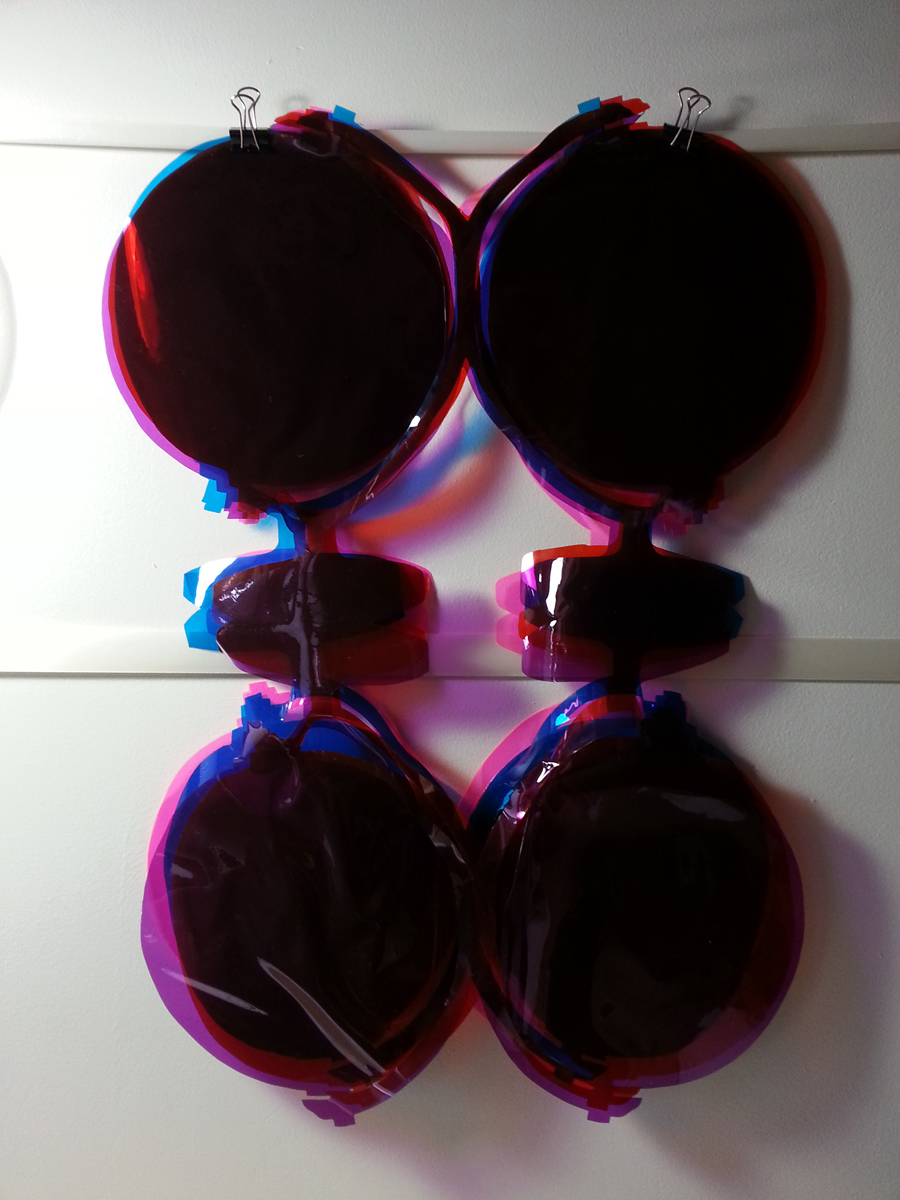
Studio experiment. Layered, colored vinylcuts. Christine Wong Yap, May/June, 2014.

Studio experiment. Layered, colored vinylcuts. Christine Wong Yap, May/June, 2014.

Last year, I realized three things:

  • I’m most productive as an artist when I do residencies with exhibition opportunities.
  • I ought to balance the opportunities I’ve received elsewhere with more opportunities to work as an artist in NYC.
  • NYC competitions are often the most competitive I’ve found anywhere.

With that in mind, I applied to the Queens Council on the Arts (QCA) for an Individual Artist Grant to initiate my own residency, open studio, and public forum. My application, honed with fantastic feedback from SOM and QCA program staff, was selected to receive partial funding.

Thus far, I’ve been preparing for the residency—modifying a budget, conducting research, developing sketches, procuring materials, and developing prototypes in my home studio, all while juggling multiple jobs. Now that it’s August, my employers and clients have graciously acknowledged my need to take a sabbatical. I also hope to share news about a larger studio soon. Then, I’ll have the coming weeks to focus 100% on my project.

The project is called The Eve of…

…a new body of sculptures, assemblages, and installations using color to create darkness and explore mixed emotions… Inspired by the decisive moment after setbacks and before actions, the project explores the disassembled self on the eve of re-organization.

It’s inspired by flux, the feeling of uncertainty, and of not knowing what to do next. This is a departure from recent projects that were more representational or literal, with direct connections to positive psychology research. I’m trying to work more intuitively, and create an installation for viewers that is phenomenological and embodied.

Making such a change isn’t easy. Ironically, I’m experiencing artistic and creative uncertainty at the same time that I’m thinking about making work about uncertainty.

Instead of positive psychology books, I’ve started reading artists’ writings and biographies. It’s been inspiring and confounding, as artists often present challenging questions without clear answers:

The biographies of Irwin (by Weschler) and Ader are especially troubling, as both artists took on lifelong projects grappling with issues of representation/depiction, and the paradox of materializing objects or how images are read, when what they’re after is pure aesthetic experience. This contradiction can become stultifying, as can perfectionist self-pressure.

Yet, persisting in my research, I’ve realized that uncertainty is related to anxiety and failure, and that I can find productive, creative release valves. All art-making includes the risk of failure, and by freeing failure from a limited definition as negative judgment, I can take a prolific, experimental approach and do things the wrong way (or, as KR would kid, the Wong way), and just get on with it. There will be time for editing and criticism later, but it is not my role in the studio—certainly not in the context of a self-initiated residency—to assume that now.

Because it’ll be shared with the public in open studios/an artist-run exhibition, I don’t have to accommodate external criteria or desirable traits like sell-ability, permanence, etc. It’s a luxury to be able to make what I want… even if I’m not 100% sure what that is yet.
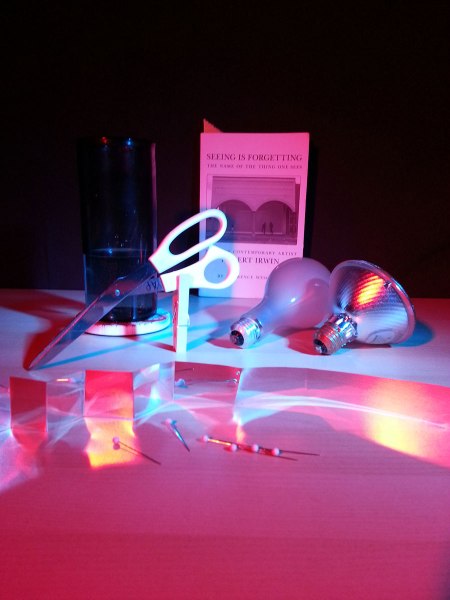
Studio experiment. Christine Wong Yap, July 10, 2014.

Studio experiment. Christine Wong Yap, July 10, 2014.

This project is made possible (in part) by the Queens Council on the Arts with public funds from the New York City Department of Cultural Affairs in partnership with the City Council.

Standard