Impressions, Make Things (Happen), The Eve Of..., Travelogue

c3:initiative Residency Day 12 Update

Some things I’ve done, thought about, and seen in the first 12 days of a 17-day residency in Portland, OR.

On Saturday, I installed two pieces from The Eve Of… in the window project space at PDX Contemporary, with a little help from JZ, DH, Caitlin, and James. It’s viewable 24/7 at the corner of NW Flanders and NW 9th.

It’s a satellite of the larger exhibition at Portland ‘Pataphysical Society (‘Pata), which opens Thursday (First Thursdays) from 6-9pm, at NW Everett and NW 6th.

The exhibition at ‘Pata will include new works—four large pieces of handmade cotton rag paper, which I made with the tutelage of Jenn Woodward at the Pulp and Deckle paper making studio thanks to support from c3:initiative. The paper is created for display in the ‘Pata windows, which will also be viewable 24/7.

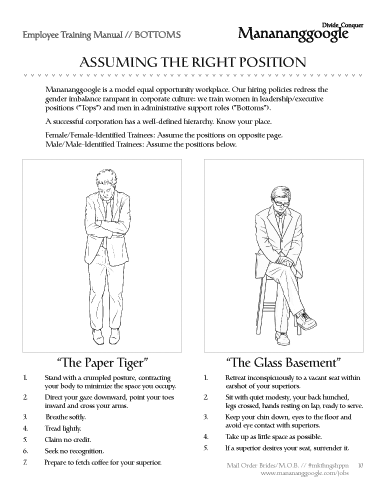
Make Things (Happen) PSU Assembly brochure page. Illustrations of activities by Kari Marboe & Erik Scollon, Piero Passacantando, and Tattfoo Tan.

Make Things (Happen) PSU Assembly brochure page. Illustrations of activities by Kari Marboe & Erik Scollon, Piero Passacantando, and Tattfoo Tan.

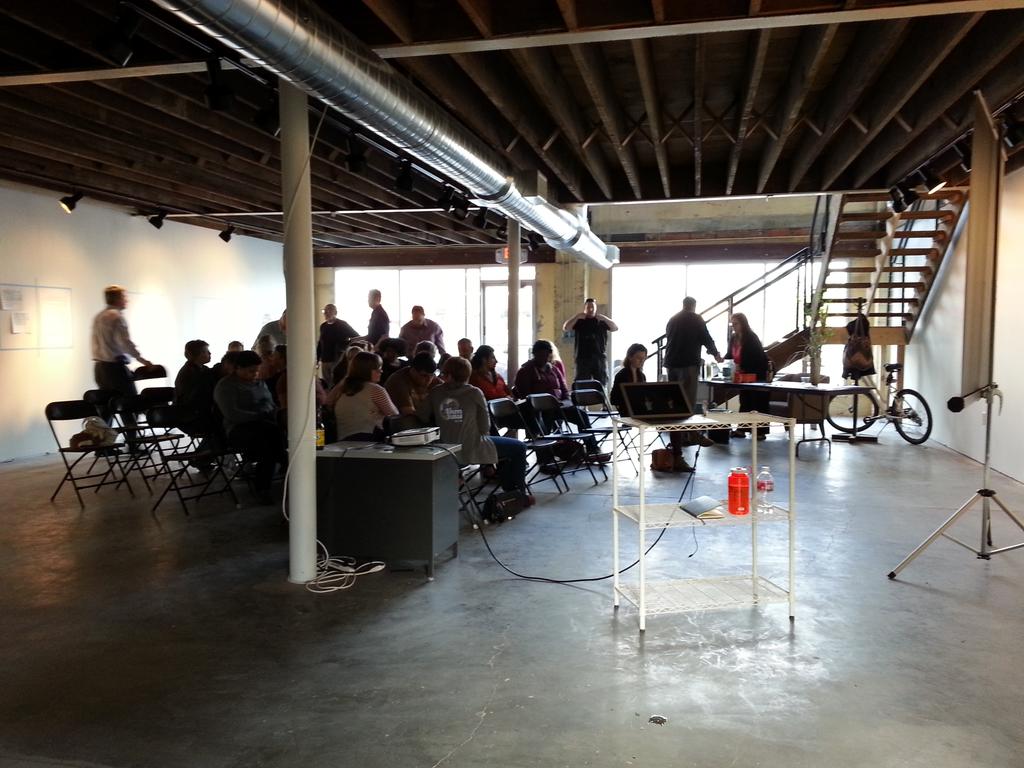
Last Wednesday, I had a chat about Make Things (Happen) in PSU Assembly. It was sponsored by c3:initiative and located at Portland ‘Pataphysical Society. I invited Make Things (Happen) participating artists Lexa Walsh and Julie Perini to present their activity sheets and have a dialogue. Lexa asked me how I felt about shared authorship—I am interested in exploring it, and talked about the creative freedom I tried to offer artists, since I wasn’t able to offer remuneration. This spurred an audience member to ask Lexa and Julie what motivated them to participate. Lexa mentioned that this was a easy extension of an existing project, and Julie explained it’s hard to think of who would fund projects to fight white supremacy.

We also talked about if I’ve met resistance to my work about happiness, and I mentioned how much inspiration I take from Susan O’Malley‘s commitment to make art that is whole-heartedly positive. (At Harvester, I talked about how people can easily underestimate the amount of courage that making art about happiness can require.) Another person asked about where else I’d like to see this project, which reminded me of the last message I got from Susan:

I really think it would be amazing to see this project at the airport or library or DMV or city hall or some kind of public space…..

She was so smart about curation and public space. I should heed her words. These are just one more example of so many bits of wisdom she shared.

Thanks to everyone who attended, and who made it happen: Julie, Lexa, Shir, Erin, Josephine, David, Harrell, and many more.

I made paper before, once, in Nance O’Banion’s Bookmaking class as an undergrad. My memory of it pretty hazy, except for an image of the sheet collapsing as I unsuccessfully tried to “kiss” the wet paper pulp off the mold and onto the drying screen.

A few thoughts about paper making:

It’s technical, but much of it, like in printmaking, is by feel. You screw it up to know where it goes wrong, and then by experience feel when it’s right. For example, you figure out how much retention aid is enough, which you can feel in the softness of the water.

It’s physical. I made four 43×56″ sheets, each comprised of twelve sheets from a ~15×15″ mold. The water’s surface tension provides a good amount of resistance when you pull the mold. You sometimes have to lift and pour big buckets (30-40 pounds). A backache after the first day was all the reminder I needed to use my core and legs on subsequent days.

Oddly, I think having done vinyl signage helps. Though the materials couldn’t be more opposite in many ways—natural vs. plastic, historical or niche vs. ubiquitously modern—the processes share releasing a fragile sheet from one surface to another. It’s about timing and pressure.

It’s pretty magical. There’s no binder. The fibers just stick together. Because it’s very physical and intuitive, it’s a great process for finding flow. Jenn is a great teacher—very knowledgeable, patient, and no-stress. Pulp & Deckle‘s classes and private workshops are affordable. Recommended!

Time management. You might think that artists who are also art handlers will take less time to prepare for and install an exhibition. This is not necessarily true.

1. We can nerd out on details. I built a plinth for a work that usually sits on the ground, and a box for A/V that could just sit a shelf. I’m also sewing light blocks for ‘Pata’s clerestory windows and sheer window coverings to layer behind the paper.

2. It takes time. I underestimated how long it would take me to build boxes and pack my work to ship out here. Yet I work on crews where we do that for several days or weeks at a time. The scale of my work is smaller; but still, in this case, it included two large boxes the sizes of doors.

3. Because you never know when you’ll need to problem-solve. What can go wrong when you’re traveling, using local sources, unfamiliar tools, and new spaces? The patience and generosity of friends and strangers go a long way.


Bathing in the afterglow of the Postcards from America opening at Newspace Center for Photography; it was pretty cool to see dudely big-deals like Alec Soth and Jim Goldberg mixing it up with local subjects (a retiree, a girl named Cherish, a physical therapist who served vets, an advocate for Iraqi refugees) and PSU Social Practice students. The event was part of PSU Assembly. Susan Meiselas‘ project to raise the visibility of VOZ, a worker-led organization to empower immigrant workers is a smart, worthy way to use photography in social practice; limited edition screenprint posters are available to raise funds for printing. It’s super cute and signed by the Portland Postcards from America photogs. I was tempted. I previously thought Magnum was just a hotshot agency, but in a recent talk at Portland Art Museum, they explained that it’s a co-op run by photographers for photographers, and had to find new ways to support the work they want to do.

Yale Union/YU Contemporary‘s new exhibition by Willem Oorebeek. We were only there for a few minutes between engagements, and my largest impressions are of the space (a huge renovated industrial space not unlike Mass MOCA or DIA:Beacon, with beautiful light) and the architect-made exhibition design (2×4 framing on 12″ centers, very selectively sheathed). There were reproductions from magazines, and sheets of glass over rubber flooring with round nubs intended to read as pixels, though I thought of LEDs. There were black-on-black prints (black lithographic prints over a variety of mediums) that had optical or durational effects—you had to stand right in front of them to see them, which was engaging in how it forced an intimate relationship with the image within a massive space.

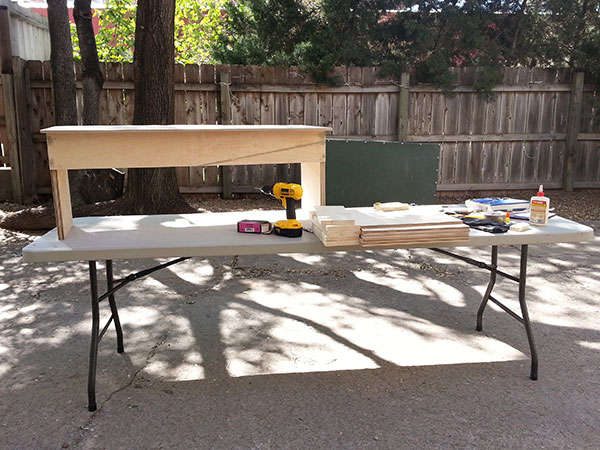
Woodwork. Borrowed tools from a suspension-tree-house maker named Devan. A 12″ compound miter saw, Skil saw, and compressor and nailer (yes!). Nice blades, smooth sailing. I forgot to pick up clamps, though, so I nailed a 1×2 as a guide wherever I needed it. It hit 92ºF and the patio umbrella was a savior.
 

Standard
Make Things (Happen), News, The Eve Of...

Residency and Exhibition of The Eve Of… and a Talk about Make Things (Happen)

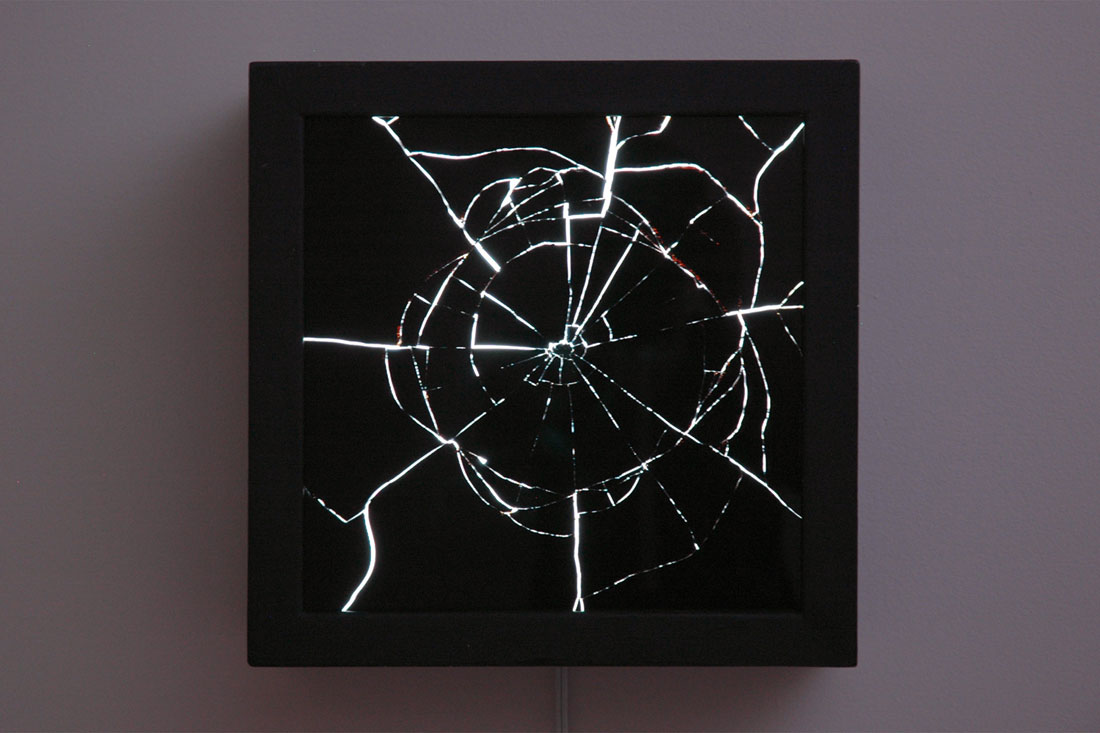
Christine Wong Yap, Mirror #1, 2014, wood, asphalt-based coating, light, acrylic, mirror, 13.625 x 13.625 x 5.5 inches

Christine Wong Yap, Mirror #1, 2014, wood, asphalt-based coating, light, acrylic, mirror, 13.625 x 13.625 x 5.5 inches

I’m in Portland, OR…

…exhibiting The Eve Of… at the Portland ‘Pataphysical Society and in the windows at PDX Contemporary…

…developing new work for the show in a residency at c3:initiative (and using the Pulp and Deckle paper making studio)….

…and talking about Make Things (Happen) with guests Julie Perini and Lexa Walsh in PSU’s Assembly.

Join me!

May 20–June 6, 2015
Residency
c3:initiative

June 4–July 17
Exhibition: The Eve Of…
Portland ’Pataphysical Society (PataPDX)
625 NW Everett St #104

May 30–June 27
Window Project Satellite Exhibition : The Eve Of…
PDX Contemporary Windows, 925 NW Flanders

June 4, 6–8pm
Opening Reception
at both ‘PataPDX and PDX Contemporary

Wednesday, May 27, 8-10 pm
PSU Assembly
A discussion about Make Things (Happen) (in partnership with PSU MFA in Art & Social Practice’s Assembly 2015). Features guest dialogists and Make Things (Happen) participating artists Julie Perini and Lexa Walsh. At Portland ‘Pataphysical Society. Limited seating.

Standard
Projects, Travelogue

Harvester Arts Residency: What, Where, Who, When, How, Why

My Wichita residency wrap-up notes. 

WHAT: I just completed a 2.5-week residency at Harvester Arts in Wichita, KS.

Harvester is a two-year-old arts organization whose residency program encourages artists to experiment and share their process with the community. The results are exhibited, and then two local artists create and present work in response.


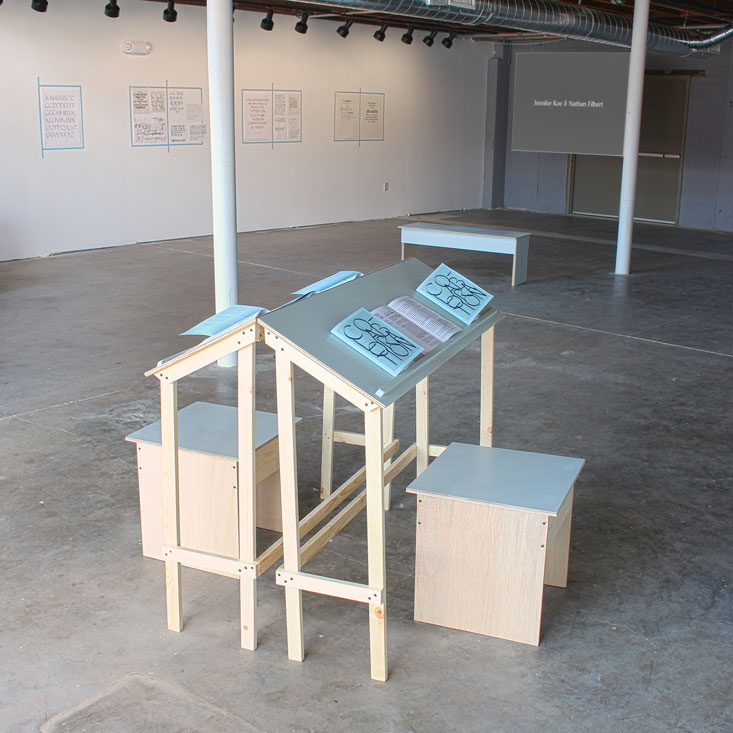
All the Steps in the Process, Installation view at Harvester Arts, 2015. Christine Wong Yap, drawings on walls, zine, furniture. Contributions from artist-collaborators screening on video.

All the Steps in the Process installation view at Harvester Arts, Wichita, KS, 2015. Drawings and furniture by Christine Wong Yap. Zine edited and designed by Yap. Contributions from artist-collaborators screening on video.

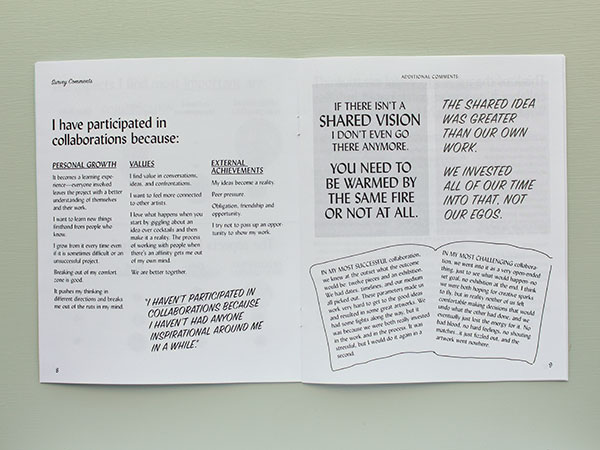
I came up with All the Steps in the Process: a research project on collaboration. I did six interviews with eight artists from the SF Bay Area, New York, and Wichita: Kevin B. Chen, Amanda Curreri, Leeza Meksin and Eleana Anagnos, Armando Minjarez, Elizabeth Travelslight, and Linnebur & Miller. Quotes from these interviews are realized in a series of hand-lettered drawings that line the walls in an exhibition design inspired by publication layouts. I also conducted a survey whose data, along with excerpts of the interviews, comprise CO-LABORATION, a 28-page ‘zine. I designed and built two reading desks and stools especially for reading the ‘zine. I also made a bench for visitors to view a video with examples of collaborative works by local artists: Amanda Pfister & Manda Remmen; Jennifer Koe & Nathan Filbert; Ann Resnick with Bethel Kidrun retirement community residents; Kevin Mullins in response to the work of Anne Schaefer; and Jessica Wasson, Patrick Calvillo, Alex Thomas, Ian Blume, Gray Brand, Bernardo Trevizo, Drew Davis, Jordan Kirtley, Peter James, and Tim Maggard.

CO-LABORATION, detail.

CO-LABORATION, detail.

All the Steps in the Process will be on view through May 17 at Harvester Arts. Wichita-based artists Darren Jones and Anne Resnick will create work in response.

WHERE: This was my first visit to Wichita, and to the state of Kansas.

I wasn’t sure what to expect, and I was pleasantly surprised with how friendly everyone is. I found it so nice to just let my guard down and feel at ease, away from hyper-competitive places like New York or even San Francisco. It’s a fairly safe city to travel in. Sometimes I have to force myself to be social, and it was a lot easier in Kansas because people are just generally more inclined to respond in kind.

Wichita really grew on me—within a few days I felt like it’s normal for me to going about my day at a relatively chill pace, riding a cruiser on the flat, windy streets (or sidewalks, because there’s so few bicyclists and pedestrians). The art scene seems small but cool, with really strong mutual support and interest. I constantly witnessed examples of generosity, from the plenitude of the potluck—Ann Resnick and Kevin Mullins’ Crock Pot of chili and a still-warm pan of cornbread, and Meghan Miller’s triple-decker black velvet cake—Mike Miller’s lending super cool, vintage bucket-phones for the opening after-party, and Marta McKim of Atomic Elbow Massage, who gives Harvester resident artists free massages!

Bucket-phone outfitted PA system lent by Mike Miller.

Bucket-phone outfitted PA system lent by Mike Miller.

I enjoyed the vernacular architecture around Wichita. Even ICT airport has quirky engraved signage. This terminal will be replaced next month and eventually torn down. I loved visiting the main library; it reminded me of places I’d been as a child. This, too, is moving to a new building, though it’s yet to be determined how the existing building will be re-purposed.

Skyway.

Skyway.

Rock wall facade.

Rock wall facade.

Twin spiral garage.

Twin spiral garage.

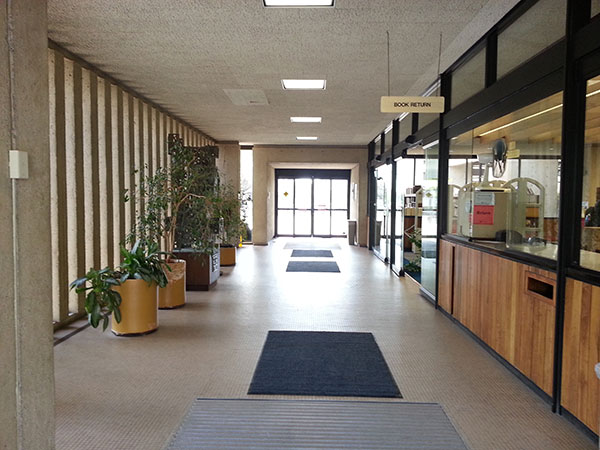
Foyer. Wichita Public Library, Central branch.

Foyer. Wichita Public Library, Central branch.

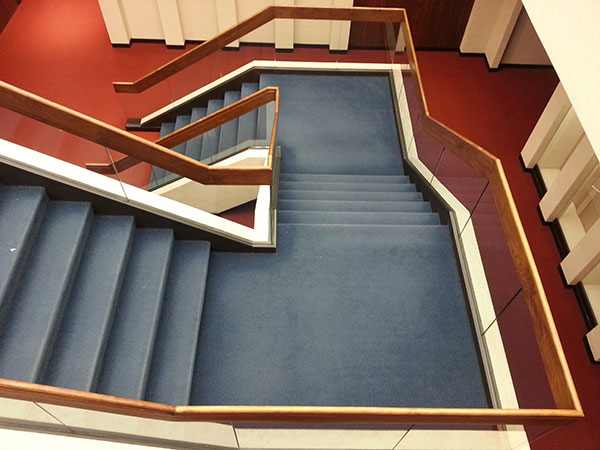
Wichita Public Library, Central branch.

Wichita Public Library, Central branch.


Harvester Arts just relocated to a new, dedicated storefront space in Old Town, an entertainment district with lots of bars and restaurants. (It’s right next to B. Young, a hair salon run by Ben Young and Trace Wilson, an exceptionally neighborly couple who are very supportive of Harvester and its artists. And highly recommended!) A few blocks southeast is City Blueprint, an art store/surveyor’s supplier (waterproof notebooks!), and print center. They printed the ‘zine at fantastic prices and great quality. I didn’t get a chance to go to the Yard, a random parts store that artists love, but knowing my weakness for potentially useful things even if I don’t really need them, it’s probably for the best. Commerce Street, a hub of galleries, is a short bike ride away. (I especially enjoyed Yoonmi Nam’s work currently on view in XX7 at Fishhaus Gallery.)

Harvester Arts’ title sponsor is the Hotel at Waterwalk, where I stayed for my entire visit. Other residents have stayed at the sister hotel, Hotel at Old Town, which is only a block away from Harvester. Being further away made me see more of the city and gave me a chance to shake a leg everyday. But towards the end, when I was pulling long days and late nights, I could see the advantage of proximity (such as when I had an SD card—at the studio—and wasn’t sure if it’d work in my laptop—at the hotel). It’s my first time staying in a hotel for an artist’s residency, and though it was a little odd to make such a transitory space feel like “home,” it was quite conducive—there’s WIFI, laundry, a few cardio machines, free passes to a real gym, and a free shuttle available upon request (though I often walked or biked to operate on my own schedule, or hitched a ride with Kate or Kristin).

Harvester’s space is a two-story storefront: the lower level is the resident’s studio and gallery, and the upper level is the office. The unit is set back from the street and felt private enough. I also enjoyed working in the back patio area, which is shaded from the sun by trees inhabited by vociferous birds.

Panorama of Harvester Arts' ground floor studio/gallery, shortly after I arrived.

Panorama of Harvester Arts’ ground floor studio/gallery, shortly after I arrived.


Making a bench in Harvester's back patio on a sunny day.

Making a bench in Harvester’s back patio on a sunny day.

WHEN: My residency was from April 8–26.

Harvester’s residencies are usually two weeks long, but I wanted more time, and those few extra days were helpful: I got jetlagged! There’s officially only an hour’s time difference from the east coast, but it felt like more.

My residency coincided with lots of art events. The opening fell on the Final Fridays gallery crawl and a big day of giving to the arts. I also judged the WSU spectacle, Project RunAway, a student wearable art runway competition and fundraiser. The weather was pretty great most of the time—in the 50s to 70s, with a few thunderstorms. There was a tornado warning my first night in town, but no actual twister (whew!).

Having 19 days to develop and install a project for a three-week exhibition makes for a very condensed experience. I could have used more time, but I appreciate how the short period forced me to try new things. Working as an art handler helps, as I can more or less plan and execute an installation, but it also makes me extra picky about small details. In the last few days, as I was feeling stretched thin by what I set out to do, I came up with a mantra: Simply. Prioritize. And ask for help. The hardest part was realizing that the flip side of prioritizing is letting go of what’s not important.

WHO: Harvester Arts was co-founded by Kristin Beal, Kate Van Steenhuyse, and Ryan Gates.

I met Kate in grad school; it was a fabulous surprise to receive Kate’s invitation last year. I believe the program is currently by invitation only. They are currently run with their own donated labor, with the help of interns and friends like Calie Shivers and Bernardo Trevizo.

Leading up to my artist's talk.

Leading up to my artist’s talk.


Opening reception.

Opening reception.

Harvester organized three events in conjunction with my residency: an artist’s talk/slide presentation, the aforementioned potluck, and the opening reception (followed by an after-party). My visit was brimming with productivity as well as socializing. It’s helpful to have an artist’s talk early on to introduce and contextualize my practice, and help artists with similar interests self-identify. It meant the potluck and opening were chances to continue conversations.

The communities at Harvester and the art department at Wichita State University—where Kate teaches—overlaps. You could say I began and ended my visit at WSU, attending visiting artist Judy Rushin’s lecture and closing on my second day in town, and the faculty exhibition at the Ulrich on my penultimate day (I really enjoyed Jennifer Ray’s large format photographs of places, and it was great to see  examples of Kate’s paintings and Levente Solyuk’s conceptually-oriented practice).

HOW: Shooting for self-sufficiency and relying heavily on interdependence.

Initially, I’d wondered how to make a project responsive to the site: Should I look into Wichita’s history of aeronautics or at Coleman camping gear? But in the end, interviewing and featuring the work of local artists and collaborators is specific to the site—or rather, a specific slice of a community of artists at this particular moment.

For this trip, I shipped out what’s becoming a basic residency kit: a 14 x 14 x 14” box that I’ve lined with Styrofoam and then shock-absorbing foam and filled with drawing and installation tools; a 36” long tube with a roll of drawing paper and a straight-edge/ruler; and a flat box with two 18 x 24” cutting mats. These three cost about $50 to ship via FedEx Ground each way (I made a minor innovation by printing return labels, and layering them under the shipping labels). It’s really helpful for me to hit the ground running with my own supplies. Being at a residency is an odd mix of empowerment and being somewhat helpless—you’re in an unfamiliar place and given new resources, but cut off from most of your own.

For example, Mark lent Kristin the van so we could get lumber. Kate’s kid was sick, so she would be around, so I could use Ryan’s saws. Home Depot offers the promise of consistency without actual consistency. (Unless you mean that the sheet saw is out of order again… I’m starting to think of their wood selections as a produce store—you can’t assume anything will be in stock, you just have to see what’s there. Fine, I’ll rip-cut my own 1x2s, and buy quarter-sheets at a 150% mark-up, then spend another 10 minutes getting a refund). But in the end, everything worked out. It was a gorgeous, sunny day for doing woodwork in an open garage. I fired up the unfamiliar table saw, and the board sailed through, straight and smooth.

WHY: an intensive, condensed experience of encountering a place and an art community, and being experimental and productive.

Two and a half weeks ago, I had a vague vision of some hand-lettered drawings on the walls, and the rough ideas of a ‘zine and some wood furniture. I knew it would be about collaboration, but I didn’t know what I would find out. What I learned from the process is specific, useful, and optimistic. I would not have done these interviews and surveys, nor met particular Wichita-based artist-subjects and artist-collaborators, were it not for Harvester Arts. All the Steps in the Process directly comes out of Harvester’s particular opportunity to experiment and focus on process. 

My practice involves the study of psychology, but I’m human, flawed and inattentive. For a few weeks, I got to be the center of attention as the visiting artist at Harvester. It’s an ego tightrope—receiving attention makes me want to be deserving of it all, and to work doubly hard. I still get surprised about how my personality manifests. This time, I realized that I’m an overachiever, and I need to work hard to balance the desire for external validation with intrinsic self-worth. When I nerd out on certain details, it can be an imposition of my own values on others helping me.

I’m proud of the exhibition, and in particular, the ‘zine. The interview subjects offered so much advice, experience, and reflexivity. Editing it down to fit the small format was challenging—there were just so many interesting perspectives to consider. I also think the survey worked out really well—huge thanks to all the respondents, and especially to KVS and Calie, who meticulously compiled the data so that I could compare multiple dimensions of the responses. Tacitly, Michael Yap is always an influence in my graphic design development.

Completing a residency and exhibition is bittersweet—I’m filled with gratitude for the opportunity and many people who have supported me and given me their resources, labor, time, attention, kindness, and hospitality. And I’m sad to see the end of a magical period of productivity, chances to see the exhibition in this space again, and, most of all, the particular time and space of many blossoming friendships and a sense of community. Thank you to everyone who made my stay so welcoming. Immense gratitude to Kristin, Kate, and Ryan for making Harvester—and thus, All the Steps in the Process—a reality.


Standard
Projects, Travelogue

Harvester Arts: Welcome to Wichita

Updates from a residency in Kansas.  

I’ve received an exceedingly warm Midwestern welcome to Wichita. I’ve been here 10 12 days so far in my 18-day residency at Harvester Arts, a relatively new arts organization run by artists Kristin Beal and Kate Van Steeenhuyse, and filmmaker Ryan W. Gates. Harvester’s goal is to foster arts dialogues, and they do so by bringing artists to experiment and share their process with the public in short residencies, which culminate in an exhibition—and then local artists are invited to create and show new work in response.

I'm the inaugural resident in Harvester Arts' new location in Old Town. The ground floor is my workspace and will be the gallery for my exhibition. This was shot shortly after  I arrived.

I’m the inaugural resident in Harvester Arts’ new location in Old Town. The ground floor is my workspace and will be the gallery for my exhibition. This was shot shortly after I arrived.

As someone who has spent most of my life on the West and East coasts, the change of location has been a dramatic change of scenery (I am loving the vernacular architecture here; see Instagram) as well as a shift in attitudes. RWG said it’s unpretentious here, but more than the absence of a negative trait, everyone I’ve met has been genuine and proactively friendly. In NYC my first reaction to strangers is an immediate, instinctual suspicion—friend or foe?—”foe” a broad spectrum including anyone who will needlessly waste more than a few seconds of time. Here in Wichita, pretty much everyone I’ve met—including people outside of art contexts—has immediately asked me how I like it here, and are invested in making sure I do.

Before my artist's talk at Harvester Arts.

Before my artist’s talk at Harvester Arts last Tuesday.

I realized that this genuine mutual interest made me feel very safe, and I found myself divulging more about my life and feelings than usual during my artist’s talk last Tuesday. And it was wonderful to be myself, and to talk about personal emotions publicly, and feel completely accepted.

My project for the residency is to research collaboration. I have been conducting interviews with colleagues in the San Francisco Bay Area, New York, and around Wichita. Their insights have been reflective and steadfastly optimistic. It’s been an honor to spend this time mulling the bounties of working with other people. To share their words, I’ve been hand-lettering quotes from the interviews for the exhibition, whose design is inspired by publication layouts. I’ll publish some of the interviews in a ‘zine or online.

Kristin Beal shot this great photo for my forthcoming residency project show. Featuring quotes on collaboration (L-R) by lovely interview subjects Eleanna Anagnos and Elizabeth Travelslight and from a book by Twyla Tharp as recommended by Alicia Eggert and Christian L. Frock. The title of the exhibition,

Kristin Beal shot this great photo for my forthcoming residency project show. Featuring quotes on collaboration (L-R) by lovely interview subjects Eleanna Anagnos and Elizabeth Travelslight and from a book by Twyla Tharp. The title of the exhibition, “All the Steps in the Process” is also inspired by Travelslight’s interview comments.

I also conducted a survey (thanks to everyone who responded!) and will visualize the data (with the help of number-crunching by Kate and Callie).

It’s been a whirlwind of activity—conducting interviews, drawing, meeting local artists, attending and participating in art events, and over the past two days, designing and building furniture that will be in the exhibition. In fact, this two-week residency feels not short but condensed, and I hardly have time to reflect and post here about my experiences in further detail. That can come after the opening. So hope to see you then.

Opening Reception: Final Friday, April 24, 7–10pm

Harvester Arts, 215 North Washington, Old Town, Wichita, KS

Exhibition: April 24–May 17, 2015

Standard
Community, Make Things (Happen)

In Remembrance: Susan O’Malley

It is with immense sadness that I share that Susan O’Malley suddenly passed away.

Susan was an artist, curator, and member of the tight-knit San Francisco Bay Area art community. She was my friend and collaborator. She recently contributed to Make Things (Happen), and I last saw her at the opening reception on February 6. She was pregnant with twin girls, and almost due. Susan was radiant, and as characteristically good-humored as ever.

Susan’s positivity in person and via her artworks left countless people with brighter days. I aspired to be more like her: to embody more compassion, forgiveness, and kindness; to be magnanimous in my relationships and outlook; and to let go of what I can’t control.

I have always admired her work—an enthusiastic blend of relational and text-based practices—for its elegant simplicity, humor, and unabashed enthusiasm. It was borne out of her unshakable faith in optimism. She embraced the risk of being sentimental, trusting that sincerity is a virtue that redeems feeling self-conscious or ridiculous. All of us, Susan insisted, are capable of wisdom and love. She asked us to open our hearts to possibilities.

Many of us defend ourselves from the slings and arrows of everyday life with cynicism. Susan remained unapologetically affirmative, even in sustained grief as her mother endured a lengthy terminal illness. That fact speaks to the courage of her humanity.

I saw this in her work, One Minute Smile, when I was still fresh in the clutch of bereavement of my dad. Exemplifying her generosity of spirit, Susan shared an intensely personal, vulnerable moment with a room full of strangers and friends. As she made eye contact with us, we became more present and mindful. Together, Susan helped us acknowledge: Yes, we are fragile… and yes, we have yet-undiscovered reserves of resilience within us, too.

I’m grateful for Susan for sharing her light with me, and helping me and many others find more of our own. She will be dearly missed.

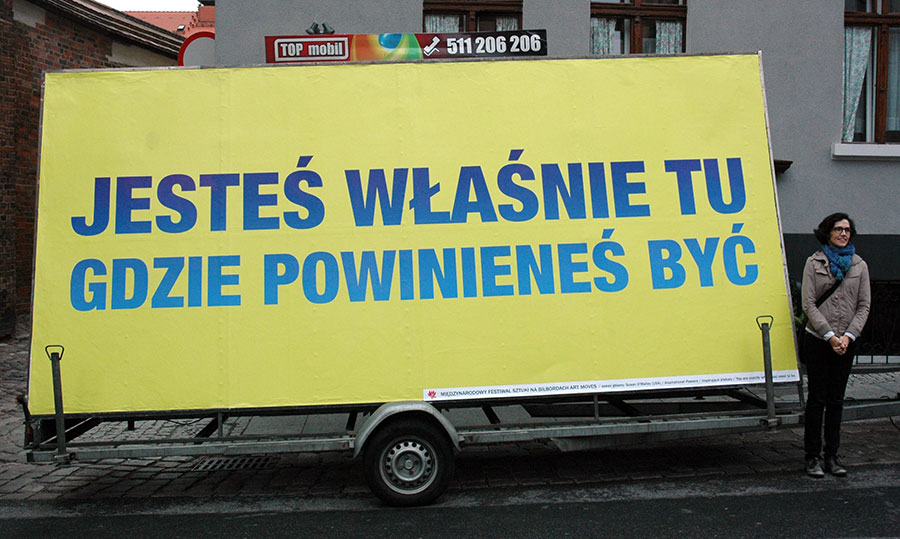
Susan O'Malley with her mobile billboard stating "You Are Exactly Where You Need to Be" in the Art Moves Festival in Torun, Poland, September 2012.

Susan O’Malley with her mobile billboard stating, “You are exactly where you need to be.” Art Moves Festival, Torun, Poland, September 2012.

Romer Young Gallery annoucement
Artforum
Christian L. Frock, “Celebrating the Life of Artist and Curator Susan O’Malley (1976–2015),” KQED

Learn more about public memorials and a memorial fund for the arts: morebeautifulthanyoucouldeverimagine.com

Standard
Make Things (Happen)

To Know and Believe: An Interview with Lauren Marie Taylor

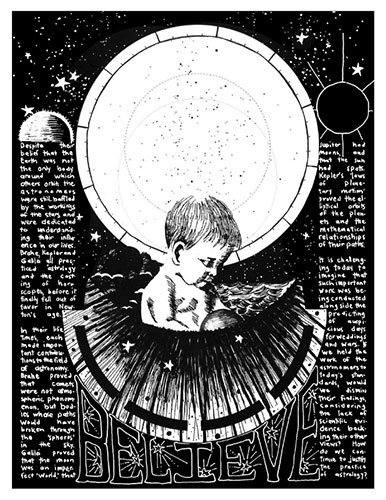
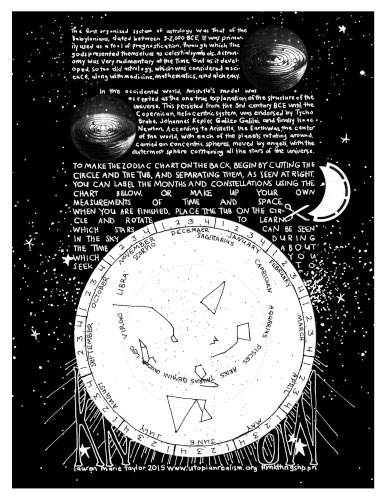
Lauren Marie Taylor’s projects often engage astronomy and social practice towards poetic, personal gestures. The San Francisco-based artist invited the public to probe the twin histories of astronomy and astrology as part of Make Things (Happen), an exhibition of 45 artist-created activity sheets which closes this Sunday, March 1 at Interface Gallery.

I was introduced to Lauren’s work by Make Things (Happen) artist Bean Gilsdorf, and took this opportunity to learn more about how her work is inspired by both science and mysticism.


Lauren Marie Taylor (center) guiding participants through the star chart activity at the opening reception at Interface Gallery.

Lauren Marie Taylor (center) guiding participants through the star chart activity at the opening reception at Interface Gallery.


Christine Wong Yap: During the Make Things (Happen) opening on February 6, you invited the public to make star charts, create new constellations, and officially name and dedicate their own stars. Can you tell me more about how it worked?

Lauren Marie Taylor: Each participant drew a constellation on a blank star map of the Northern Hemisphere. I asked them to consider a shape that better reflected their personality than their zodiac sign. In my experience, there are some ways that my zodiac seems accurate, but I often think about how vague it must be if I and others also feel this way. Then I gave participants the chance to have a star in their new constellation registered on “the most popular star registry on the internet.” This included naming the star and giving it a dedication—a sentence or two—which I registered and wrote on individualized certificates sent to participants.

I was moved by the sincerity with which participants named and dedicated their stars. It was even better than I had hoped. The ability to suspend judgment of the ‘authenticity’ of registering a star, and embrace the activity as a poetic gesture (or whatever framework allowed participants to engage) is really special to me. It says something about the power of our imagination that feels really hopeful, open, and loving.


Caroline Charuk with her Chair Constellation.

Caroline Charuk with her Chair Constellation.


CWY: Your activity sheet for Make Things (Happen), Know and Believe, includes a detailed history of astronomy and astrology. Then it ends on a philosophical note, questioning how we know what we know. There’s a mix of history, science, and the unknown that is very appealing. It feels expansive. The activity calls for reading, reflection, as well as making—three very different experiential modes. In developing projects, what are your considerations for viewers’ receptions and experiences?

LMT: I think of myself as my first audience, and I wanted to make something for myself that inspires the feelings that I want to feel. In this instance, it was about the cosmos, history, and human nature. For me, making is a way of meditating on an idea, and so I always want the making to allow for that. I have a background in teaching, and it is difficult for me to approach any subject in a way that is not didactic, but open to interpretation and chance. So I force myself to consider whether I am giving too much or not enough instruction. I want the participant to have an experience that feels meaningful and personal. I want too much control! And I want to let go as well.

CWY: I can relate! It’s tricky to craft a specific aesthetic experience, yet remain flexible and patient for collaboration or open-endedness… As your art practice is clearly influenced by non-art fields, I wanted to turn the question around: Do you incorporate aesthetics, social practice, or poetics in your role as Bay Area Director of Educator Associates for the American Institute of Aeronautics and Astronautics?

LMT: It has been the greatest blessing to be in this position. It has allowed me to bring my social practice into unexpected institutions. At the California Academy of Sciences, for example, I asked satellite engineers to teach the basics of their work to children. Each child made an edible model satellite; afterward, I asked them, “What will your satellite do?” and documented their responses. I was interested in how children conceive of this technology, where their understanding comes from, and what this says about our culture. They had really funny responses, from “It will lead me to my space home,” to “It will take pictures of criminals.”

I also had the opportunity to work with the Curator of Meteorites and Asteroids at the Vatican Observatory this winter. Many people are surprised to learn that the Vatican has an observatory. It’s one of the oldest institutions to do so. And I also worked with Brother Bob, a Jesuit who takes care of this historic rock collection, to learn more about the intersections between science and faith.

CWY: Do you have any superstitions? Why or why not?

LMT: I am not really a superstitious person, but I do all kinds of silly things anyway. I knock wood, I toss salt. I read my horoscope even though I don’t believe. I don’t believe in god. But I want to leave room for mystery in my life. And I want to be gentle with myself. To perform these superstitious acts, for me, is a way to say, “I need help. I am afraid. I need strength.” And that is okay. I love the work of Chilean filmmaker and mystic Alejandro Jodorowsky. His concept of psychomagic—a type of therapeutic practice involving symbolic action—is very inspirational to me. Belief is a strong force, but not as influential as the action that is based on the belief. You can actually manifest the desire through the action, without believing! In that way, knocking wood is more important than believing that knocking wood has power.

CWY: Your practice spans relational projects as well as education and object-making. Can you talk about the significance of each of these, and how they relate or feed each other?

LMT: I don’t really separate object-making and education from social practice. In my work, I think of all of it as social practice. They are all tools that allow for different modes of engagement with ideas.

Shoot for the stars by making your own constellation with Lauren Marie Taylor’s activity sheet at Interface Gallery through March 1, or online.

Also, look for her forthcoming exhibition at Southern Exposure in late May, along the themes of Walt Disney’s audio-animatronic Lincoln robot, civil rights, and science fiction.

how to participate: take an activity sheet. make things happen. make things. share your results. #mkthngshppn

Standard
Make Things (Happen)

Making Hospitable Democracy Happen: An Interview with Lexa Walsh

On February 7, Oakland-based artist Lexa Walsh brought together twelve individuals for a home-cooked meal and recipe exchange to facilitate conversation and community. Called Meal Ticket, the public event was held in conjunction with Make Things (Happen), an exhibition I organized featuring 45 artist-created activity sheets, which is currently on view at Interface Gallery through March 1. Afterwards, I was inspired to ask Lexa more about her practice.


Participants at Meal Ticket with Lexa Walsh (standing) at Interface Gallery, Oakland, CA. Photo: Amanda Eicher.

Participants at Meal Ticket with Lexa Walsh (standing) at Interface Gallery, Oakland, CA. Photo: Amanda Eicher.


Christine Wong Yap: At the start of Meal Ticket, you mentioned a key concept of your practice. Can you describe “hospitable democracy,” and how it came about?

Lexa Walsh: A few years ago, I took a great class with Havana-born, New York-based artist Tania Bruguera for Portland State University’s (PSU) Art and Social Practice grad program. She insisted we all find key words to describe our practice that would be new word combinations in the end, like her use of  “Useful Art” (Arte Útil). I searched for something that could describe my diverse practice. In the end, I realized most of my projects try to be hospitable and make democratic spaces for participation and collaboration—for amateurs and experts, artists and laypeople—in the form of conversation, songwriting, critique, meal sharing, resource sharing, etc. Voila: Hospitable Democracy.


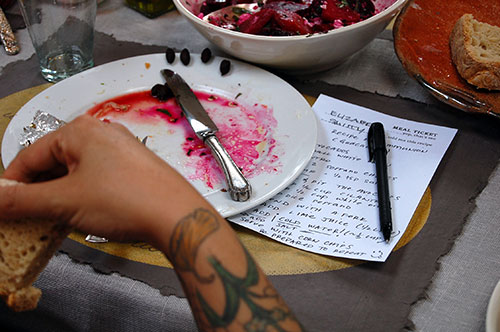
A Meal Ticket recipe card told and recorded by participants Smitty and Elizabeth. Photo: Lexa Walsh.

A Meal Ticket recipe card told and recorded by participants Smitty and Elizabeth. Photo: Lexa Walsh.


CWY: When I think about my experience of Meal Ticket, I realize I came away with three things: beautiful food, an uncommon exchange and dialogue with a stranger, and ephemera (a recipe book and a screen printed placemat). What is the significance of each of these elements to you?

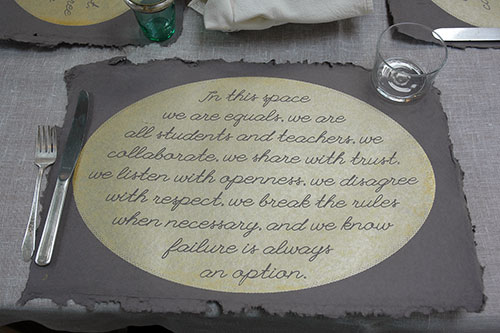
LW: Each Meal Ticket differs depending on the context. In this case, it was pretty simple: the joy and essence of sharing a nice meal, the role of the host as curator of an experience (both sensorially with the food and experientially with the conversation), and then the recipe exchange as a conversation starter. Through the discussion of recipes—a set of instructions—we discuss our cultures, families, and belief systems. I propose we are all equals and become a community in the temporary utopia of a luncheon, and through the cookbook. Community cookbooks have a long legacy as collective memoirs of place and culture that help identify and celebrate communities. They have given voices to voiceless individuals; they published many women for the first and only times in their lives. For Meal Ticket, the cookbook is mainly for the primary audience: the diners. When I do a series of meals, all participants become part of that community.

It gets really interesting where the context is more political, with seating charts and recipes spanning social, cultural, and financial boundaries. Two examples are at Portland Art Museum—a series of 12 meals with all levels of staff sharing meals in the boardroom—and in New Smyrna Beach, FL—12 meals that had to be moved around to accommodate a racially diverse but segregated town. Meal Ticket is most effective in contexts where barriers need to be broken down.

As for the placemats: I am trying to make stuff again after a five-year hiatus from making objects!


Placemat by Lexa Walsh, screen printed as an Artist in Residence at Kala Art Institute. Photo: Christine Wong Yap.

Placemat by Lexa Walsh, screen printed as an Artist in Residence at Kala Art Institute. Photo: Christine Wong Yap.


CWY: You’re currently an Artist in Residence at Kala Art Institute in Berkeley. It was once a fairly traditional printmaking studio; now it welcomes many media and practices. What inspired you to make objects—and specifically, prints—again?

LW: I stopped making objects after an amazing 2009 studio visit with Nashville-based artist Mel Ziegler, who suggested my objects were “accessorizing” the real essence of my work. I have a background in sculpture and performance, so I had no problem challenging myself to a “year without objects.” That turned into five years, until I realized my practice consisted of emails and meetings. I wanted to get back to that feeling of making. Since I’d mostly been outsourcing printed ephemera, I thought it would be fun to get into the craft of making multiples. I’ve been having a really hard time, though! What does it mean to make an image or an object? Why bother? What are the stakes when dealing with craftsmanship? These are questions running through my head now, as I am simultaneously enjoying making objects.


CWY: The placemat bears something like an epigraph for the meal. It ends by affirming that “failure is always an option.” What do you hope to convey?

LW: I love failure! Failure is a place from which to move forward, to learn, to experiment, and to get sidetracked in potentially interesting ways. I have gained a lot from failing. I know a lot of artists and others who fear it, but I think we should embrace it.


CWY: In addition to being an artist, you work as a chef. These skills clearly help with your food-related projects. In what other ways does being a chef parallel artistic activity—say, as a facilitator of socially-related projects? Yet providing food is also related to providing a service, suggesting a different type of relationship to participants. How do you think about these parallels and relationships?

LW: It’s funny because I refused to combine food and art until my second year of graduate school. They just were separate for me. I had a great Graduate Assistantship as Program Caterer. Everyone wondered why I wouldn’t start incorporating food into my practice. The first Meal Ticket was born from that pressure.

It is so true that chef skills are useful, because as a social practitioner, I basically plan events as my practice. It’s good to have skills such as organization, time management, hospitality, etc. Service is always a part of my practice, but so is facilitating and curating.


CWY: You, as well as others, recommended several PSU alum for the expanded version of the project in Oakland: Ariana Jacob, Betty Marín, Hannah Jickling and Helen Reed, for example. I’m curious about what seems like a small world of social practitioners. In what ways is this emergent field establishing conventions? What do you see as the most exciting frontiers?

LW: I’m not sure there’s anything unconventional or new from this ‘emerging’ field—there’s so much tied into both art history and the practices of a variety of fields, into which we dip our hands, such as Allan Kaprow’s Happenings, Mierle Ladermen Ukeles’ Maintenance Works, Adrian Piper’s Calling Cards, Joseph Beuys, Yoko Ono’s Cut Piece, Fluxus, Group Material, Allison Knowles’ Salad, Gordon Matta-Clark’s Food, and the contemporary Erwin Wurm. There are many people I look back to for my own practice, as well as to envision the larger field.

What seems interesting is when or when not to call it art. What are the benefits? What avenues can be traversed by calling it art and vice versa? I think artists are doing great projects in fields like disability/accessibility, museum education, and activism. For example, Vancouver-based Carmen Papalia, another PSU cohort member, addresses accessibility in museums with a tour in which participants describe the work to him (he is visually impaired). Projects by Los Angeles-based collective Machine Project and Portland Art Museum’s Shine a Light program inject the once-unthinkable into museums: scholarly play, dancing, cheers, music, debates, wrestling, sleepovers, plant babysitting, orienteering, celebrating immigrant labor, and more. I think it also gets interesting when artists collaborate with people from other fields. Some of the most exciting artists are those who have worked in other fields before identifying as artists.


Lexa Walsh’s Make Things (Happen) contribution is an activity sheet that describes the Meal Ticket process. You can download it or pick one up at Interface Gallery through March 1.

how to participate: take an activity sheet. make things happen. make things. share your results. #mkthngshppn

Standard
Make Things (Happen), News

Your Turn: Make Things (Happen) This Weekend

Pick up Make Things (Happen) activity sheets at Interface Gallery this weekend! The gallery is open from 11 to 4.

If you’re not in Oakland, you can download them at makethings-happen.christinewongyap.com.

Pavel Romaniko,  Do-It-Yourself Joseph Kosuth “One and Three Chairs” installation

Make your own seminal Conceptual artwork in miniature papercraft form with Pavel Romaniko’s Do-It-Yourself Joseph Kosuth “One and Three Chairs” installation.

Lauren Marie Taylor, Know and Believe

Lauren Marie Taylor, Know and Believe Make your own constellation and consider how you know what you know with Lauren Marie Taylor’s Know and Believe.

And check out what SF Weekly had to say!

Make Things (Happen) includes a great many more participating artists, which means a lot more choices for us. While some of the artists’ instructables can be executed solo, Yap is a great fan of the Venn diagram: Overlapping with others is the real payoff.

Tudor, Silke. “DIY Gallery.” SF Weekly. January 28.

Silke Tudor, DIY Gallery, SF Weekly.

Standard