Meta-Practice, Travelogue

Residency wrap-up: c3:studio residency, c3:initiative, Portland, OR

Looking back at my 17-day residency.

The stunningly picturesque Mt. Hood is visible from many parts of Portland.

The stunningly picturesque Mt. Hood is visible from many parts of Portland.

From May 20 to June 6, I was in residence at c3:initiative’s c3:studio residency, which

“partners with local arts institutions to provide a studio residency for visiting artists… to develop work to be exhibited regionally.”

How it came about. I’d been invited by the Portland ‘Pataphysical Society (“‘Pata,” for short) to exhibit The Eve Of…. I needed to be in Portland to install the large sculptures and installations. With our budget stretched thin by the shipping and transportation costs, ‘Pata contacted c3. I’d heard about c3 from the art collective ERNEST—which is in a long-term, ongoing residency there—and had received updates about Andy Coolquitt’s residency for his Disjecta show. c3 was available and offered not only to let me stay during installation, but to come out earlier for a residency to make new work with a membership to Pulp & Deckle, the onsite papermaking studio they incubate. I said yes.

Getting settled. Founder and Director Shir Ly Grisanti and Program Manager Erin Mallea got in touch and asked me what I needed. They were communicative, prompt, professional, responsive, and happy to triangulate with third parties as needed. They picked me up at the airport; lent a bicycle for getting around town; connected me with a lender of woodworking tools; and hooked me up with advising hours from Jenn Woodward, who runs Pulp & Deckle. Furthermore, they arranged for me to present Make Things (Happen) at PSU’s MFA in Social Practice un-conference, Assembly.
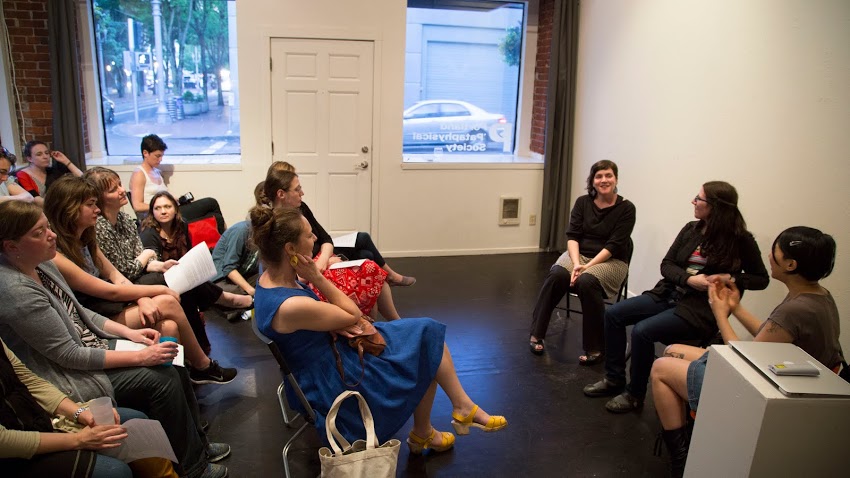
A discussion about Make Things (Happen): Christine Wong Yap with Lexa Walsh and Julie Perini. Presented by c3:initiative and Portland 'Pataphysical Society for Portland State University's Assembly 2015. Photo credit: Joe Greer.

A discussion about Make Things (Happen): Christine Wong Yap with Lexa Walsh and Julie Perini. Presented by c3:initiative and Portland ‘Pataphysical Society for Portland State University’s Assembly 2015. Photo credit: Joe Greer.

c3 occupies a building with a small office, a cozy kitchen, a front room with a glass garage door that was an exhibition space, a larger middle room that I took over as a studio space, a shared bathroom with good-smelling shampoos and lotions, a closet with a large industrial sink and a few hand tools, Pulp and Deckle, and a one-room residence. The residence is sort of a white concrete cube afforded privacy with heavy black curtains. It’s outfitted with low furnishings that lend it a peaceful feeling—a comfy futon, pine credenzas with books and magazines, a lounge chair, and a tri-fold mattress, which turned out to be a nice place to sit cross-legged and work on my laptop. There’s also a large gated yard with patio furniture and plenty of space.

c3 is located in St. John’s, a neighborhood in North Portland. It feels like a small town. Its main street reminded me of Albany, CA, with its little movie theater, many bars, and vintage look. Transportation is pretty easy, with two bus lines that run to the galleries in the Pearl district.

Shir, Erin, and Jenn were incredibly accommodating. They said I was pretty much free to use anything in the office, kitchen, and closet. That meant I could print activity sheets for my Assembly event, had access to basics like olive oil and spices, and could use their washer, dryer and detergent, etc. These things seem small or mundane, but they make a big difference when you’re traveling.

What I did. In the first week, I made paper at Pulp & Deckle. I came to find the process of making paper to be pretty fun. The large sheets I started out with were technically challenging and physically demanding, so when I later made US letter-sized miniature multiples, I couldn’t stop giggling at how easy it was.

Making miniature multiples at Pulp & Deckle.
Making miniature multiples at Pulp & Deckle.

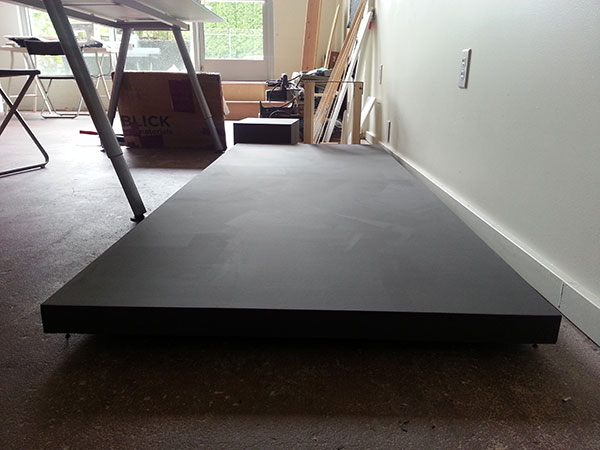
Plinth

Plinth

After that, I turned my attention to sketching, procuring, and making a plinth, A/V box, light blocks to cover ‘Pata’s clerestory windows, and scrims as backdrops for the handmade paper. I tend to work in ways that are very straightforward, and have found that attending to the physical space behooves the viewing experience. This was made possible with the chop saw, compressor, nailer, and Skil saw lent by Devan; Pulp & Deckle’s sewing machine; and a car lent by ‘Pata. I can be a control freak and it can be hard for me to ask for help (and flexible enough to accept it). But I thought about Torreya Cumming’s advice when I interviewed her for an essay for Art Practical:

“The first principle is beg, borrow, or steal. That is, don’t buy something if you need it once or twice, and you know someone who has one, or you can lightly hitch a ride on something that was going to be wasted anyway. This puts one in a complicated social network I call the ‘favor economy.’ Unlike some other barter systems, it relies not on a one-to-one exchange of goods or services, but on vague, consensus-based goodwill and mutual aid.”

I’m very grateful to Shir, Erin, Jenn, and Devan for providing the space, equipment, and knowledge for me to be productive. I feel really lucky to have been the recipient of so much generosity and hospitality. It’s an incredible feeling to know that I have plenty of time and all of the tools—physical, technical, and psychological—for the task at hand.

First Thursdays opening reception, The Eve Of..., Portland 'Pataphysical Society, Portland, OR

First Thursdays opening reception, The Eve Of…, Portland ‘Pataphysical Society, Portland, OR

Results. I’m very happy with how The Eve Of… looks at ‘Pata and also at its satellite location in the PDX Contemporary windows, alongside Ethan Rose’s excellent solo show. I owe huge thanks to Josephine Zarkovich and David Huff at ‘Pata, as well as Caitlin and James at PDX Contemporary. During the openings on First Thursdays, I ran into old classmates who’d moved to Portland recently, collaborators who happened to be driving through town, and even a colleague who I’d recently met in Wichita. Moreover, so many people came in to the galleries—friends, colleagues, supporters, and the curious. It was a very satisfying conclusion.

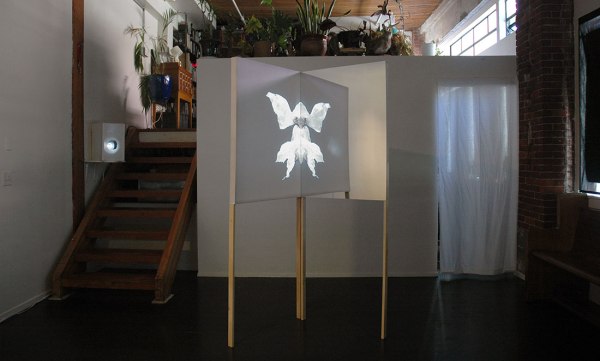
Christine Wong Yap, Projection, 2014, video installation: video, wood, fabric, acrylic, 80 x 32 x 32.125 inches.  Installation view at Portland ‘Pataphysical Society, Portland, OR

Christine Wong Yap, Projection, 2014, video installation: video, wood, fabric, acrylic, 80 x 32 x 32.125 inches. Installation view at Portland ‘Pataphysical Society, Portland, OR

The Eve Of…, including works created in residence at c3:initiative, will be on view through July 18 at the Portland ’Pataphysical Society in Portland, OR. A satellite exhibition is on view until June 27 in the windows project space at PDX Contemporary.

Correction: The link to photographer Joe Greer has been updated.

Standard
Meta-Practice

The simple answer is that you should get paid when someone is profiting from your labor.

…However, providing content or services to a friend without being compensated does not mean that one is being exploited. If the terms of the exchange are mutually agreed upon, and if one person isn’t immediately monetarily profiting from the labor of the other, then it may well be a fair exchange, and one that is part of how solidarity and community are built within the field. W.A.G.E. advocates for equitable compensation, not for the total monetization and commodification of every aspect of our lives; we leave that to neoliberalism.

—W.A.G.E. as quoted by Bean Gilsdorf, Help Desk: Support for Artists, Daily Serving, May 25, 2015


How will I know if I am taking artists’ energy in exchange for an exploitative promise of “exposure”?

Quote
Meta-Practice

Matter Over Mind: Work and the Importance of Rest

The non-art life that makes an art-life possible.

In the past three and a half weeks, I was home in NYC working my various freelance and day jobs. Artists generally don’t like to publicize their day jobs, for fear of seeming less serious or successful as an artist. But perhaps by omitting my jobs on my blog, I’m implying a falsehood that my art is my income. So: I work as an artist assistant, freelance art handler (recently at the Frieze and NADA fairs, and occasionally at the Museum of Arts and Design), and freelance graphic designer. This is how I cobble together an income to live in NYC, make art, and save up for and recover financially from residencies and exhibitions. The multiple streams mean I’m not tied down or dependent on any one employer (say, for fear of losing health insurance). The trade-off is that it’s financially precarious but strategically flexible. As someone at the Center for Cultural Innovation once explained, artists often advance opportunistically, by taking opportunities as they come.

For example, my residency at c3:initiative happened quite by chance: the Portland ‘Pataphysical Society invited me to do a show. I asked them to suggest places to stay. They asked c3. Then we figured out that making new work for the windows at ‘Pata fit c3’s mission. (Thank you Jo, Dave, Shir and Erin!) Luckily, the people I work with get that I’m a worker and an artist; they psychologically support me by tolerating my occasional unavailability. I realize how uncommon this is, especially as workers’ personal time is increasingly infringed upon by work responsibilities like answering emails, etc.

When I look back at the past few weeks, I’ve realized two small lessons:

I need to be intentional about down time. My body has been forcing me to take breaks via jet lag, exhaustion, and back pain. I’ve been working long days and late nights to maximize on art opportunities and income generation, and to reciprocate clients’ and employers’ commitment. It’s been a sprint. Running training plans outline different types of training for each day of the week, including speed, endurance, active recovery, and rest. Skipping the latter two is a recipe for injury. I have to fight the “cult of busyness.” It’s not enough to catch up on sleep, either; I can’t be like a toddler, toggling between ‘overdrive’ and ‘knocked out’—I need to be conscious to decompress. Though I want to be productive this residency, I also need it to recharge me. Period. It’s not about slowing down to serve the creative process. Utility isn’t everything. (E.g, I’m not a corporation craving insights on creativity and happy workers in order to increase revenue and productivity). I need to prioritize the inherent value of rest and recovery.

Follow-up is work. I left the residency at Harvester Arts on the day after my opening. It was emotionally satisfying to do so—I left just after the high point. But there were a few days’ worth of color-correcting, writing captions, blogging, web updates, bookkeeping, etc. that followed. Administrative labor is work. It’s often very gendered labor, which may contribute to why it’s often invisible and undervalued, as ET pointed out. I can’t fall into that trap. I need to acknowledge that a residency project doesn’t always end when the actual residency does. Just as I’d try to schedule out time to prepare for a project, I have to allow the time and energy for post-residency labor.

Standard
Meta-Practice, Research

many artists who are commissioned by producers are already successful gallery based artists, being brought into the public realm with a support team in place.
The speakers acknowledge the need to change institutional structure in order to allow new forms of public art to emerge, and the need for artists, producers and curators to gain skills to make public art work in reality. Another change that might be interesting to explore is how public art could shift hierarchies, and allow artists at different stages of their career to develop projects they have already initiated.

Katy Bienart, “Lighting the touchpaper: Public art as situation or spectacle,” Public Art (Now) blog, April 27, 2015

Katy Bienart on Public Art (Now)

Quote
Meta-Practice

Unsolicited Artists’ Advice: Tips from a Juror

Suggestions for making art competition applications more competitive.

Recently, I was invited to serve as a juror for a residency program. I was able to review submissions at my own pace, so I started taking notes for my own reference in future applications. Then I realized I should post my tips here, because it’s a win-win situation: better applications helps artists put their best foot forward, and helps jurors be more focused and efficient.

Context: Jurying’s a tough job!

It takes a lot of time and offers little to no pay. I spent ~16 hours just looking at artist’s proposals and work samples (65 submissions at 5 to 15 minutes each), and rating and submitting scores. I am not receiving a stipend.

Yet if jurors only get through, say, 12 or less submissions per hour, you can see how quickly they can get crabby, find minor inconveniences disproportionately annoying, and start looking for reasons to eliminate applications from consideration. The lists below include many prohibitions. Don’t be discouraged. Accept that before your application can be seen as competitive, it first has to be free of major flaws. Then get to work!

WORK SAMPLES

Work samples should convey rigor in concept and craft.

There’s an art to making art, and then another art to presenting it. Get good at presenting your art—photographing, color correcting, selecting, sequencing, and contextualizing. Doing so conveys that you’re a professional, and furthermore, that you’re motivated, responsible, and committed—the qualities of someone who will make the most of an opportunity.

Follow directions.

Unfortunately, the obvious must be stated and repeated: never disregard work sample requirements.

Heed limits on work samples!

If you must link to long videos, indicate which segments jurors should watch. Segments should total less than the limit.

If you have the option to link to images, link to them, not to HTML pages with several images or projects on them.

Don’t underestimate how much bending the rules will hurt your application. Your submittal may be screened out in the first pass before jurors even see it. If it isn’t, your score may be diminished, because it’s disrespectful to jurors’ time and unfair to other applicants. It’s taxing for jurors to police when applicants over-submit materials. (See above for the number of hours I invested—and that is just to view the capped samples!)

Make it accessible.

The more time people spend looking for your work samples, the less time and focus they will have for your actual work.

Don’t assume anyone will “tidy up” your submissions, such as download your large files, locate specific images in a link, or cue your videos and cut them off at the 10-minute mark. Jurors may have to navigate this themselves, and if it is an inconvenient process, they will be looking at your work samples in an agitated state. Here are some specific tips:

  • Avoid Flickr. It’s free because ads can appear between slides. Find a different service. If you don’t have a website, get one—it’s never been easier or cheaper—or get a Tumblr, blog, or Google Drive account.
  • If you use Vimeo or YouTube, post brief contextualizing information. Specify if it’s finished work or documentation. And make sure it’s not password-protected.
  • On your own website, if you want jurors to view specific images, link to them directly. Don’t send a link to a portfolio page and then instruct them to scroll to the Nth image. (Unless your site is flash-based, JPGs are assets with their own URLs—on Macs, control-click on an image and select “open image in new tab”. Right-click on PCs for similar options. If you can’t manage that, then try Google Drive.) Do not let your domain registration slip up. Make sure links aren’t broken—load the page in your browser, and then copy the URL from your address window.

Work samples weigh heavily in your scores. Not being able to access them will be a deal-breaker. It’s a waste of everyone’s time—artists’ included.

Use captions intelligently.

Contextualize your work concisely and consistently. This is the first time jurors are viewing your work, so give it a proper introduction.

Don’t assume we can tell what we’re looking at, whether details, installation views, process documentation, photo-documentation of artworks, or fine art photography. Spell it out. Help us construe your role within a collaborative project. Notions of authorship aside, jurors need to know what we are looking at, and what parts you did.

If you’re a visual artist using your work samples to submit a lengthy (100+ words) text or webpage, provide a brief summary (2-3 sentences) in the image caption. If you are a project-based or performance artist, give context and explain what’s going on. What is process, what is product?

WRITING

Be clear, concise, and coherent. 

Articulate and organized applications suggest responsible artists who won’t fritter away an award. Jurors are not tasked with finding decent artists with OK work ethics; we want to award the ones who are ready and eager for primetime.

Sometimes artists take slack, too-cool-for-school attitudes because of a philistine sentiment that “the art can speak for itself.” That makes for texts that are neither competitive or memorable. It seems lazy and can be off-putting in its disregard. Jurors are ethically obligated to take the time to read your words, even the ones written (or copied and pasted) with minimal effort.

Proof-read and edit. Exercise attention to detail in your texts, just as you would in the display of your art.

If your writing could use improvement, ask friends or mentors, take a class, or get reference books. You’ll probably have to write for the rest of your professional life, so you might as well improve those skills—and your chances of making your applications more competitive—sooner rather than later.

Craft a superb artist’s statement.

The best statements outline a unique, specific position, and coheres with the work samples submitted. If you tailor your work samples to a particular application, you may need to modify your statement, too. If you describe a certain media or theme, make sure it’s represented in the work samples. It feels schizophrenic to read about works we don’t see, and see works that don’t jibe with what’s stated.

Take the time to write and re-write. Do not simply list random thoughts about your practice in a paragraph form. Make it compelling. Help jurors understand your work, and get interested in you, your practice, and what you might do.

I often find myself asking one of two questions when reading statements, and neither is positive. The first is “How?” How does the art support or reflect the statement? When those two don’t mesh, it suggests that the artist is unclear about what he or she is doing. Luckily, what reads as a fairly major artistic problem can usually be resolved with the power of re-writing. Also, jurors may be practitioners in different artistic disciplines than your own. Help us understand how you do what you do.

The second question is “Why?” If you state that an idea or media is important to you, explain why. It’s fine to be arbitrary in your own creative process, but help other people care about your work by letting them know about what motivates you.

Write proposals that are specific.

When possible, list specific outcomes and benefits. How will the experience benefit your practice, or advance your work? Why are you interested in this particular program? Link your goals to the program’s unique qualities.

Many other applicants can and will list generalizations (such as about time, day jobs, a change of scenery, their passion from a young age, etc.). Those are off-the-cuff responses and they’re a dime a dozen. Plenty of deserving artists need support; stand out from the crowd. Convince us that you’re a fantastic fit. Make accepting you irresistible.

 —

If this advice sounds persnickety, that’s because it is. Consider accomplished athletes: experts in the rules of their sport, they would never ask for exceptions like more time or another do-over. In practice, they tirelessly hone their abilities and tactics so that in competition, they can execute with precision to score and win. They get that the competitive edge is very thin.

Artists’ applications are our proxies for scrutiny. By attending to every detail, artists can advance further in competitions.

Resilient athletes also set a variety of goals to evaluate improvement. They do not look solely—as so many artists (myself included) do—to the crushing, all-or-nothing, external validation of winning or losing. Break down competition goals into smaller, more manageable parts, such as completing applications, finding appropriate competitions, and getting feedback to improve work sample sets and statements.

Standard
Meta-Practice, News

W.A.G.E. Certification is finally here!

I’d been wishing for a US version of CARFAC for years, and now we finally have one.


WAGE certification screenshot

WAGE certification screenshot


W.A.G.E. has recently released a recommended fee schedule for paying artists!

I’m also fascinated by W.A.G.E.’s list of example galleries and museums. The annual budgets and director salaries are especially intriguing. The pay scale for directors ranges wildly (just as it does for artists).

W.A.G.E. makes this a super exciting time to be talking and thinking about artists, ethics, and art world transparency. Please contribute to W.A.G.E.’s fundraising campaign!


Christian L. Frock has rounds up initiatives exploring artists and payment for KQED. She kindly includes a mention my blog post of an artist’s decision tree.

Standard
Citizenship, Meta-Practice

More on the Power of “No”

Artists, where is your line? How do you know you’ve crossed it? Are you prepared to do what’s necessary after you’ve crossed your line?

Artist Steve Lambert pledges to give away any prize money received from a right-wing, anti-civil rights family whose fortunes are made in pyramid schemes and the military industrial complex.

So today I pledged, if I win I will not keep any of the money. I will hand over all my award money to the LGBT Fund of Grand Rapids. I will also volunteer to come back to Grand Rapids with the Center for Artistic Activism to work with LGBT to fight for equality.

The reason I became an artist is because I believe it helps create free human beings. It can show us other ways of looking at the world, other ways the world can be. It makes us more empathetic, more understanding, and more open. It helps us grow. I think the money behind ArtPrize is working against, what I see as, the spirit of art itself.

http://visitsteve.com/news/no-thanks-artprize/

Standard

The Making of The Eve Of... Self-initiated Residency and Exhibition, a timeline flow chart after Alfred H. Barr, Jr.

Christine Wong Yap, The Making of The Eve Of… Self-initiated Residency and Exhibition, 2014. A timeline flow chart after Alfred H. Barr, Jr. [PDF]

Produced for the Open City/Art City panel, SOS ARTISTS: Strategies of Survival, curated and moderated by Christian L. Frock, and held at YBCA on October 4, 2014.

Meta-Practice, The Eve Of...

The Making of The Eve Of… Self-initiated Residency and Exhibition, a timeline flow chart

Image