Meta-Practice

NYC artists: Creative Capital’s Professional Development Intensive, free!

Artists: I keep harping about professional development and won’t stop, certainly not without sharing this incredible opportunity. OK, so it’s a lottery, and it’s one more application you might get rejected from. So what? It’s free and normally would cost a LOT—and be worth every penny—so apply yo’self!

Creative Capital Professional Development Program: Artists Summer Institute in New York

The Artists Summer Institute (ASI), a free five-day professional development intensive, returns May 9-13! Offered through a partnership between Creative Capital and Lower Manhattan Cultural Council (LMCC), ASI is open to 55 New York City artists working in the fields of visual, media, performing and literary arts. The participating artists will be chosen through a lottery process; only online registrations from NYC residents received before the March 30 deadline will be considered.

This is a unique opportunity for New York City artists to step outside their daily routine and focus on developing professional skills and artistic goals in a community setting. Designed to help artists build a path to greater sustainability and self-sufficiency, ASI combines the best of Creative Capital’s Professional Development Program (PDP) and LMCC’s Basic Finance for Artists program to provide a comprehensive range of training, tools and resources for working artists.

The program is intended for artists who seek arts-focused professional training in the areas of business and strategic planning, verbal communications, financial management, marketing, promotion and effective Internet strategies.

CLICK HERE TO REGISTER NOW!

DATES, TIMES AND LOCATION
Wednesday, May 9 – Sunday, May 13, 2012
9:00am – 5:00pm
80 Broad Street, New York, NY
LMCC’s new artist studio and rehearsal space in lower Manhattan

REGISTRATION AND SELECTION
Register by 11:59pm, Friday, March 30, 2012
ASI can accommodate 55 artists. Due to high demand, eligible participants will be selected through a lottery process. In order to be included in the lottery, artists must complete the online registration form.

For complete program details and to register, including eligibility requirements and access to the registration form, click here.<

NOT A NYC RESIDENT?
Attend one of our upcoming webinars for artists!
Learn more about PDP’s Online Learning Program

Standard
Impressions

An Art Fair, Positively Materialistic

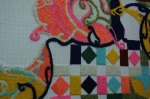
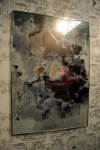
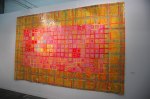
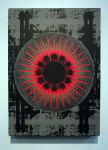
Last week I researched a lot of art materials, so when I attended the Armory Art Fair it seemed like the thing that attracted me the most were materials.

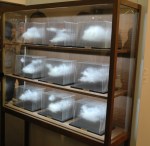
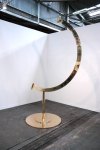
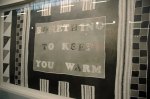
Spared from crowds and achey feet, you’ll have to excuse the poor-quality snapshots.

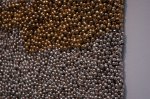
First, some novel materials or presentation styles I found attractive, interesting, or fun. Followed by some examples of exuberance/knickknackery, good ideas, nice techniques, and one lone example of an interest in psychology.

I did attend VOLTA, but my battery promptly quit. On my camera, that is. View a catalog. I loved Patrick Jacob‘s miniature vistas as seen through a miniature domestic set (The Pool, NYC). Also nice to see Ed Pien‘s work at Pierre-François Ouelette Art Contemporain, Montreal. Neat retroreflective paper cut.

Standard
Research

Everyday objects: Vessels for sentiments and memories

Prized possessions: What do they mean to their owners? How do they accomplish this? Where does our subjectivity end, and the thing’s objecthood begin?

I’ve been interested in this since starting graduate school, when I tried to change my practice from making art that represented an idea, to making art that embodied it. This quote from a Fluxus artist sums up the paradox beautifully.

We are all fetishists snared by the object…. The object is the vehicle of the affections… until they reach the flea markets of the world, where these objects continually pile up stripped of their magic and cut off from the memory of their history… All that remains of these preserves is the container the artists made for the time, the “can” the preserves came in…. The container will never interest me as much as the contained, but where would I pour my wine without a glass?

—Daniel Spoerri, The Mythological Travels, 1970.

I’ve been interested in how possessions act as vessels, and it keeps coming up in different ways. In Irrational Exuberance (Asst. Colors), discount store goods triggered questions of value and taste. In reading Mihaly Csikszentmihalyi’s Flow and Creativity, I zeroed in on the psychological benefits of a symbolic ecology of the home for Positive Signs drawings.

This idea seems to be coming up more frequently from outside sources as well. Perhaps I’m noticing it more, or possibly a zeitgeist is coalescing…. Here are my notes from the field:

The Floating Lab Collective: Re-Museum
March 20 – April 27, 2012
5×5 public art installations, various sites in Washington DC

The Re-Museum … mirror[s] the process of collecting, displaying, attributing value to, and commodifying art objects by the institution.

Recognizing that souvenirs play a familiar role in the reinforcement of national ideologies, beliefs and rituals, The Re-Museum is selecting an array of souvenirs drawn from and representing issues and aesthetics embedded in our local communities. Through a variety of workshops and conversations created in partnership with local community centers we will select significant objects, sites, narratives and images from various DC communities to be housed in the Re-Museum.

The Re-Museum wil be making weekly stops at locations ranging from the Corcoran Museum to outdoor parking lots in Colombia Heights and Recreation Centers in Deanwood.

(Via Coro/Raquel de Anda)

A life full of things – of personal relationships with the inanimate – only seems possible through the mediation of art, and so I prefer theidea of things, rather than the thing itself.

Isla Leaver-Yap, curator*

(*Yap clan in contemporary art!)

It Chooses You, Miranda July

It Chooses You 
Miranda July 
McSweeney’s, 2011

July interviewed subjects who were selling possessions in the Pennysaver in LA. She asks them to talk about their items, and notes how they decorate their houses. The characters tend to be rather marginalized, so the stories are imbued with pathos.

Read excerpts on NewYorker.com.

Listen to Miranda July and actors read excerpts on WNYC’s Selected Shorts. Recommended. The idea of July’s work strikes me as self-consciously quirky, uncomfortably over-sharing, twee indie like Michael Cera, but when I actually give it a chance, it is always sincere and affecting. This reading is quite long, but very moving towards the end.

Animism: exhibition and conference
16 March–6 May 2012
Haus der Kulturen der Welt, Berlin

In the habituated scheme of modernity, objects are conceived as the passive stuff on which human action leaves its imprint or trace. Whenever this passive/active nexus between objects and subject, humans and the non-human is disturbed or even reversed—as in the coming-to-life of seemingly dead matter, or the becoming autonomous of inert things—we inevitably step into the territory of animism: that non-modern worldview that conceives of things as animated and possessing agency. Is it possible to de-colonize the imaginary manifest in the modern conception of the animist “other”, by bringing into view the practices that both make and transgress the distinctions and boundaries in question?

(Via e-flux)

Vibrant Matter: A Political Ecology of Things, Jane Bennett

Vibrant Matter
Jane Bennett
Duke University Press, 2010

Lecture: Powers of the Hoard: Artistry and Agency in a World of Vibrant Matter

How do objects sometimes act as vibrant things, with an effectivity of their own, a degree of independence from the words, images, and feelings they provoke in humans? Political theorist Jane Bennett delivers the inaugural lecture as the Vera List Center for Art and Politics embarks on a two-year exploration of the material world. In the face of virtual realities, social media and disembodied existences, the center will focus on the material conditions of our lives and examine “thingness,” the nature of matter.

Renowned for her work on nature and ethics, Bennett investigates the power of things, which sometimes manifests as the strange allure that even useless, ugly, or meaningless items can have for us. Her latest book Vibrant Matter: A Political Ecology of Things (Duke, 2010) asks how our political world would approach public problems were we to seriously consider not just our human experience of things, but the capacity of things themselves. How is it that things can elide their status as possessions, tools, or aesthetic objects to manifest traces of independence and vitality? Following the tangled threads linking vibrant materialities, human selves, and the agentic assemblages they form, Bennett examines what hoarders – people preternaturally attuned to things – might have to teach us about the workings of agency, causality, and artistry in a world overflowing with stuff.

Finally, a call for prized possessions for exhibition:

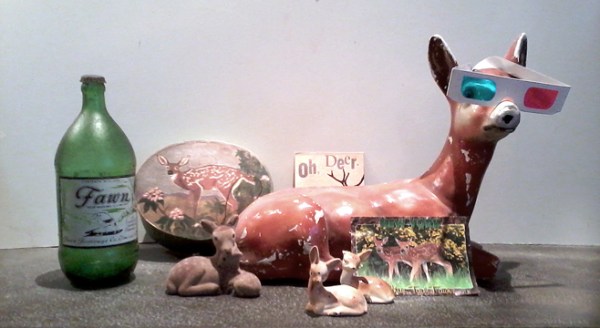
Fawn's collection of fawns. Source: Greene County Art Council.

Fawn's collection of fawns. Source: Greene County Art Council.

The People’s Collection
Greene County
Arts Council, Masters on Main Street project
in collaboration with  Occupy with Art
Friday, April 13 – May 31, 2012

Wall Street to Main Street is pleased to announce an open call to all residents of Catskill and the Hudson Valley to share things you love in your home with your community in a beautiful common space. We ask that you bring one object that has inspired you and gives meaning to your life to be shown with your neighbor’s loved-things in a surprise exhibition located on Main Street.

Not to mention The People’s Biennial, curated by Jenns Hoffman and Harrell Fletcher.

Also, did you know that there are institutions named “The People’s Gallery” in San Francisco, California as well as Riverside, California;  Derry, North Ireland; Cork, Ireland; and Cheshire, UK. It was also the name of a 19th-century African American photographer’s studio in St. Paul, Minnesota, as well as the name of this year’s civic exhibition in Austin, Texas.

Standard
Meta-Practice

Dear Inner Broke Art Student

We’ve had some good times, haven’t we? We’ve found great deals and explored odd lots, and gone on adventures in re-use and recycling.

I’ve learned a lot from you. But I think it’s time we part ways.

It’s not you.

Well, to be honest, it is you.

According to Creative Capital, artists would be well-advised to systematize least liked activities, making more time to savor favorite ones. Sourcing materials can be a drag sometimes. My materials can be wide-ranging, which means it’s necessarily unsystematic; I have to experience learning curves to reconcile my needs with various industries’ consumer products.

Still, your ‘broke’ mentality hasn’t helped.

We’ve been indulging frugality and it’s been costing too much time. Our susceptibility to sticker shock and our refusal to be price-gouged has no immediate impacts except in only prolonging our procurement sagas. And, Inner Broke Art Student, you extend our stays in retail hell by calculating and re-calculating price comparisons, and compulsively trimming the fat from our shopping basket at the last minute.

You also refuse to accept the entropic nature of schlepping. Boards get scuffed, pristine papers get crinkled. Like the universe, elbows on the subway are indifferent to our petty human dramas. Getting a back-up won’t kill us.

Lastly, your distaste for shipping charges is costing us hours, and if you let us pay ourselves even just minimum wage for our time running errands, you’d see that we’re only saving pennies. Yes, I’m going to get more things shipped, even when it costs money. Don’t give me that carbon footprint line—we spewed more exhaust as Californians driving everywhere.

I know: I’ve changed. Call me a New Yorker, I can take it. That’s the difference between you and me: I don’t think we can go on like this, being our own free interns forever.

I’ve been working on my next project, and I gave myself the permission to experiment, play, and think big. That means being OK with throwing money at materials. I’m sorry to break the news: without your ‘broke’ mentality, it’s been liberating.

Standard
Sights

see: Cindy Sherman @ MoMA

If you’re in New York this weekend, you’re probably going to the fairs (Armory, Scope, Volta, Independent, etc), but if you can, do yourself a favor and get to the MoMA for the Cindy Sherman retrospective.

Cindy Sherman. Untitled #466. 2008. Chromogenic color print, 8' 1 1/8 x 63 15/16" (246.7 x 162.4 cm). The Museum of Modern Art, New York. Acquired through the generosity of Robert B. Menschel in honor of Jerry I. Speyer. © 2011 Cindy Sherman. Source:MoMA.org.

Cindy Sherman. Untitled #466. 2008. Chromogenic color print, 8' 1 1/8 x 63 15/16" (246.7 x 162.4 cm). The Museum of Modern Art, New York. Acquired through the generosity of Robert B. Menschel in honor of Jerry I. Speyer. © 2011 Cindy Sherman. Source:MoMA.org.

I liked Sherman’s work before, though I always thought of her in the context of the Pictures Generation. Now, after seeing this world-class exhibition of her work, I’m convinced about her unique position in 21st-century contemporary art. There are many bodies of works in the exhibition, and a few—Untitled Film Stills, the history paintings, and the more recent grand dames—alone would make fantastic accomplishments for one artist’s lifetime. Some little-seen works really add to the visit, too. Sherman is an incredible photographer and artist, and I left feeling very inspired to be prolific, think big, and take risks.

(For example, I’ve been daydreaming about a forthcoming series of large collage/posters, envisioning a series of 10. Sherman’s Untitled Film Stills knocked my socks off—all 69 of them. Time to up the scale of my ambition, and do work!)

(Also, female self-portraitists, cliché of art schools: Bring it or quit it! Sherman’s A-game comes at risk to her, and the viewers benefit with immense rewards. Making vulnerable self-portraits in a very general way about “the gaze” can be like working on your punching form by hitting the air. It’s how you start, but sooner or later, you either step into the ring, or move on to Zumba.)

Cindy Sherman is on view at the MoMA through June 26. If you can’t make it, there’s a nicely organized exhibition website, though it’s just a sampling of the pictures and details you’d see in the exhibition. (Typography nerds will appreciate the fluctuating typefaces for this identity-upending show.)

Standard
Community

11 days left: Art Practical’s Mail Art

Four years ago, the state of art criticism in the San Francisco Bay Area was dire.

Artweek folded. Shotgun Review and Stretcher were inconsistent volunteer efforts. Alan Bamberger diligently documented openings with minimum critique. A few local critics contributed to national monthlies, but they could anoint only one artist from a rapidly expanding fray.

Artists’ and curators’ best hopes for critical reviews were the local dailies and weeklies. But ambitious exhibitions far outnumbered the paltry column inches.

Enter Art Practical.

Art Practical is a different kind of volunteer effort—one with a professional editorial process and a strict publishing schedule. Posted semi-monthly, each free issue includes in-depth features, contributors’ reviews of local and national exhibitions, as well as shorter Shotgun reviews.

Contributors include current MFAs as well as established curators and critics. Grassroots Bay Area art initiatives can be art-school-partisans, but AP’s contributor base is wide enough to constantly expose me to new artists, spaces, and thinkers. I’m a contributor, so I may be biased, but I think it’s not an overstatement to say that Art Practical has significantly increased quality critical reviews, as well as the diversity of critical voices, in the Bay Area.

Further, Art Practical builds bridges. It started by partnering with Shotgun, Happenstand and Talking Cure Quarterly, and later with Bad at Sports, Daily Serving, KQED Arts and The Bay Citizen, which has a relationship with the New York Times. By multiplying critical outlets, the audience for Bay Area art expands.

For me, Art Practical has become a trusted, central source for staying informed about Bay Area art, in addition to a valuable training camp for advancing my critical thinking and writing. If you can, please consider supporting them. Now, with their new Mail Art Subscription, you’ll receive limited edition art in addition to the satisfaction of supporting this valuable resource.

In conjunction with our 50th issue, “Printed Matter,” Art Practical is producing a Mail Art Subscription [featuring] a piece of correspondence from each of six artists, starting in March 2012. Participating artists include … Martha Rosler, as well as local favorites Anthony Discenza and 2010 SECA awardee Colter Jacobsen.

Subscribers will receive a limited-edition print, a copy of the original Art Practical article, and a return postcard once a month for six months (March to August 2012) for a total of six installments of Mail Art. Subscriptions can be purchased for $150; proceeds from this project will support Art Practical as the publication embarks on its next fifty issues.

To subscribe and for more information, please visit: http://www.artpractical.com/products/mail_art/.

The subscription offer closes March 15, 2012.


Standard
Citizenship

empathetic perspectives

Via podcasts, I heard pertinent reminders about how our lives are subtly and not-so-subtlely shaped by bias. The speakers work within the entertainment industry, but seem to operate as formidable intellects and commentators on their own.

Field Negro Guide to Arts & Culture
Hosted by W. Kamau Bell and Vernon Reid, with producer Alex Thornton
Segment on Jeremy Lin/Linsanity and Asian American race and representation.
Episode 32, “Too Many Turnovers,” 2/20/12, 1:00:13-1:17:47

It should be obvious that the casual, semi-oblivious racism surrounding Linsanity, such as ESPN’s “Chink in the Armor” headline, is unacceptable. But Linsanity might be remembered more for people going temporarily insane—not for a point guard—but with race itself. In the recent hubbub, I encountered classic examples of blaming the victim, in which Asian Americans who objected to racist speech were called “sensitive” “pansies.” Bell and Reid help set the record straight.

W. Kamau Bell: It’s a referendum on how racist is our society, because there’s been all these stories of racism around Jeremy Lin, even people supporting him… The Knicks threw up some thing in Madison Square Garden the other night, where it was Lin’s head coming out of a fortune cookie.

Vernon Reid: Oh, no, they didn’t! … Why would— Who would— That’s just— That’s, like, the worst shit ever. What!?

VR [Commenting on a Black sports commentator’s racist tweet]: Anytime you have a group who dominates in a particular thing, if that dominance is threatened, the ugly comes out…. We [Black people] dominate in the NFL… and the NBA. But … now, a Jeremy Lin shows up, and all of the really, really unfortunate, baiting, racist, outsider stuff starts to come out…

WKB: …It’s people who don’t know. That’s how screwed up we are in America. People who are trying to celebrate him end up being racist.

WKB: …the headline was “Chink in the Armor.”

VR: You’re fucking kidding me!

WKB: …The thing is, they don’t think they’re being— …It’s like they just don’t even see it.

VR: …That’s just— That’s just— …for real? … It’s just appalling. Appalling, appalling, appalling.

Considering Reid’s typically judicious and erudite commentary on all matters political and social, his disbelief says it all for me.

Meryl Streep: The Fresh Air  Interview 
2/6/12

This is a great interview, with many poignant moments. Streep is such a composed, accomplished actor, it was shocking to hear her reveal that she made herself more appealing to dates as a teen by withholding opinions. She also described finding her personality by attending a women’s college in the 1970s (I think we are all better for it). Echoing Bell’s comments above, there’s a litmus quality to Streep’s reflections—that it reveals something about progress—and the unreached potentials that remain.

Terry Gross quoted Streep’s commencement speech at Barnard in 2010:

The hardest thing in the world is to persuade a straight male audience to identify with a woman character. It’s easier for women, because we were brought up identifying with male characters in literature. It’s hard for straight boys to identify with Juliet or Wendy in Peter Pan. Whereas girls identify with Romeo or Peter Pan.

Meryl Streep: It became obvious to me that men don’t live through female characters.

Terry Gross: Do you think that women have that double consciousness?

MS: I think it has to do with very deep things. It might be that imagining yourself as a girl is a diminishment.

Heartbreaking. Streep goes on and says that she made movies for 30 years before ever hearing a man say, “I know how you felt.” More often, men’s favorite characters of Streep’s ouvre were of

a particular kind of very feminine, recessive kind of personality…. So they fell in love with her, but they didn’t feel the story through her body. It took, until The Devil Wears Prada, to play someone tough, who had to make hard decisions, who was running an organization,… for a certain kind of man to— empathize. That’s the word. Empathize.

This made me lament first, for my female actor friends, and second, for the diminished stories available to us all.

Standard
Research

Happy Happy Joy Joy

A few questions about the intersection of art, design, and psychology.

Do you like your data:
[ ] Cheeky?
[ ] Data-rich?

Do you like your psychology:
[ ] Positive
[ ] Negative
[ ] Empirical
[ ] Practical
[ ] Experimental
[ ] Applied

Do you like your holiday cards:
[ ] Amusing
[ ] Informative

Do you want your ideas to:
[ ] Reinforce your brand
[ ] Enhance understanding
[ ] Enrich experience

GOOD and OPEN's Mean Happiness data visualization.

GOOD and OPEN's Mean Happiness data visualization. April 6, 2010.

“Today I’m Feeling Turquoise,' Pentagram's holiday cards.

“Today I’m Feeling Turquoise,' Pentagram's holiday cards, pairing colors with moods.

Standard