Art Competition Odds

Art Competition Odds: Blue Mountain Center Residency Program

This year, the Blue Mountain Center received over 330 applications for 42 residency spaces.

///////////////////////////////////////////////////////////////////////////
///////////////////////////////////////////////////////////////////////////
///////////////////////////////////////////////////////////////////////////
///////////////////////////////////////////////////////////////////////////
/////////////////////////////+

or ~1:8, or ~13%

See all Art Competition Odds.

Standard
Meta-Practice

Here’s to Doing Things the Wong Way

There’s a printmaking technique named after me.

It’s called, “The Wong Way.” The pun is intentional.

In undergrad, I was an eager student of woodcut printmaking, but not of color registration. Ken Rignall demonstrated a system involving metal buttons at the California College of the Arts, but he warned against leaving the buttons in the press. That would destroy expensive blankets and thus incur the wrath of fellow printmakers. To this day, I’ve never left the buttons in the press, because I’ve been too afraid to use them.

Either due to early twenties overconfidence or mechanic’s daughter ingenuity, I thought, if all you’re trying to do is line the block up with the paper consistently, why can’t you just jam them both into a corner? I made a 90º angle out of wood and tried it out on a block with a margin carved out. If your block or paper is less than square, you pick an edge to line them up with, and, Presto!

It wasn’t the most precise, but it was the most idiot-proof. (If there is an essence to the Wong Way, that might be it.)

Ken caught wind of this method and admired it. He coined the name and taught the technique in subsequent semesters. The pun in the name suggests that this is not how you should do it, but this is how you can do it.

I finally bought some sewing reference books—six years after buying my sewing machine, and experimenting with many combinations of needles, threads, and fabrics, not to mention patterns of my own devising. I’d been rambling between states of unconscious and conscious incompetence—sometimes completely unaware of incorrect thread tension, sometimes painfully aware that the bias in the fabric was exacting a toll for my poor cutting.

The reference books point out the sheer volume of fundamentals I’ve skipped over.

You might be thinking that I’m kicking myself for putting the wagon before the horse, but actually, I’m grateful and elated to learn these fundamentals now. I know WHY I need to acquire this knowledge, and am able to ground it in prior experience. I appreciate it so much more.

My Dad taught me to problem solve fearlessly. He’d take broken things—from toys to toaster ovens—down to his garage tool bench, rattle around in his toolboxes, crack the thing open, and have a look-see. Sometimes he repaired it, sometimes he didn’t, but he always gave it a try. Dad went to automotive school, but he learned a lot by doing. No one taught him how to re-roof our house or make a kid’s play structure from an old barrel and a car rotor. He just figured it out. He showed me that I too could figure things out, and that there’s no reason to shy away from trying.

Here’s to jumping in with both feet. To the confident leap into the unknown, that the things around us are not too complicated, that fear can be rather useless, and that curiosity is intertwined with survival.

Standard
News

The Dark Would: a new language art anthology

I’m thrilled to have my work included in this forthcoming anthology to launch at Whitechapel Gallery.

The Dark Would, ed. Philip Davenport

The Dark Would, ed. Philip Davenport

THE DARK WOULD language art anthology
Edited by Philip Davenport

This is a moment in time when poets and many artists share the same primary material: language. Conceptual art, vispo, text art, outsider art, conceptual poetry, flarf, concrete poetry, live art, L=A=N=G=U=A=G=E, sound scores… THE DARK WOULD is a compelling document of now, alchemising text into art into text.

THE DARK WOULD gathers work by over 100 contributors including some of the most noted artists and poets alive today: Richard Long, Mike Chavez-Dawson, Jenny Holzer, Fiona Banner, Maggie O’ Sullivan, Tacita Dean, Tom Phillips, Tom Raworth, Nja Mahdaoui, Lawrence Weiner, Susan Hiller, Tsang Kin-Wah, Charles Bernstein and many, many more.

THE DARK WOULD comes in two volumes, one paper and one virtual, sold both together for £29.99, published by Apple Pie Editions. The book will retail at £29.99 for both paper and electronic volumes together and will be available from Amazon, Apple Pie Editions website (distributed by KFS) the Tate and LMAKprojects in New York.

LAUNCHES APRIL 11 AT WHITECHAPEL GALLERY:

Join us at Whitechapel Gallery in London for the launch of a pioneering anthology of text artists and poets, with talks/readings by artist Simon Patterson and poets Caroline Bergvall and Tony Lopez.

Contributors include:

Jerry Rothenberg, Rosemarie Waldrop, Tom Phillips, Nja Mahdaoui, Tom Raworth, Paula Claire, Susan Hiller, Robert Grenier, Ed Baker, Lawrence Weiner, John M Bennett, Kay Rosen, Allen Fisher, Richard Long, Ron Silliman, Richard Wentworth, Kevin Austin, Maria Chevska, Alan Halsey, Ken Edwards, Mike Basinski, Charles Bernstein, Jenny Holzer, Hainer Wörmann, Tony Lopez, Fiona Templeton, Maggie O’Sullivan, Geraldine Monk, Marton Koppany, David Annwn, John Plowman, Jesse Glass, Jurgen Olbrich, Liz Collini, Robert Sheppard, Patricia Farrell, Fernando Aguiar, Shirin Neshat, Penelope Umbrico, Gregory Vincent St Thomasino, Steve Waling, Robert Fitterman, Michalis Pichler, David Austen, Keiichi Nakamura, Shaun Pickard, Geof Huth, Tony Trehy, Wayne Clements, Peter Jaeger, Elena Rivera, Kenny Goldsmith, Harald Stoffers, Erica Baum, Nick Blinko, Philip Terry, Caroline Bergvall, Carol Watts, George Widener, Philip Davenport, Nico Vassilakis, Monica Biagioli, Tacita Dean, Jeff Hilson, Alec Finlay, Christian Bok, Fiona Banner , Nigel Wood, Satu Kaikkonen, Simon Patterson, Dave Griffiths, Nayda Collazo Llorens, Vanessa Place, Peter Manson, Andrew Nightingale, Matt Dalby, Steve Miller, Christoph Illing, Sean Burn, Doug Fishbone, arthur+martha, Hung Keung, the gingerbread tree, Brian Reed, Laurence Lane, Tomomo Adachi , Tom Jenks, David Oprava, Scott Thurston, Julian Montague, Derek Beaulieu, Wang Jun, Mike Chavez-Dawson, Alec Newman, Rick Myers, Andrea Brady, Eric Zboya, Linus Slug, Jeff Grant, Richard Barrett, Christopher Fox, Linus Raudsepp, Carolyn Thompson, Tsang Kin-Wah, Stephen Emmerson, Andrew Topel, Anatol Knotek, Ola Stahl, Roman Pyrih, Christine Wong Yap, Sarah Sanders, Ying Kwok, Catherine Street, Michael Leong, Sam Winston, Angela Rawlings, James Davies, Rachel Lois Clapham, Steve Giasson, Amelia Crouch, Aysegul Torzeren, Jeremy Balius, Emily Crichley, Amaranth Borsuk, Ben Gwilliam , Imri Sandstrom, Sam le Witt, Michael Nardone, Tamarin Norwood, Lucy Harvest Clark, Jessica Pujol Duran, Holly Pester, Rebecca Cremin, Ryan Ormonde, Nick Thurston, j/j hastain, Bruno Neiva, SJ Fowler, Alex Davies, Helen Hajnoczky, Samantha Y Huang, Anna frew, Nat Raha, Jo Langton, Ekaterina Samigulina, Emma King, Leanne Bridgewater and more.

Standard
Impressions

Armory Art Fair fly-by

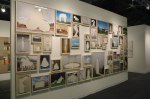
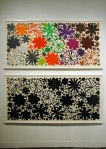
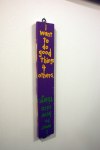
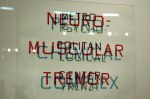
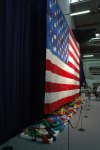
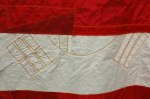
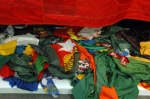
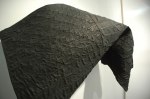
I visited the Armory Art Fair yesterday, thanks to the largesse of HWT (general admission, $30). I was glad I went—I saw some work I liked, some materials that might be useful to know about, and got to see what galleries are participating. Of Bay Area galleries, Wendi Norris moved from the Modern pier to the Contemporary pier; Silverman Gallery had a nice booth with staff smartly suited and booted; Haines had nearly the same location and similar works as last year. I liked the conceptually-oriented galleries Ingleby, Sies & Höke, Max Wigram and Tanya Leighton (European, no suprise). I also noticed that there were quite a few works related to flags; whether this is a trend or a result of finding what I’m seeking is hard to say.

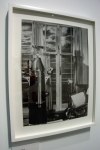
In no particular order, some hasty snapshots of artworks that caught my eye.

Standard
Meta-Practice

the dreaminess of unrestricted grants

Unrestricted grants sound dreamy. St. Louis, MO has just announce that its Regional Arts Commission will disperse ten unrestricted grants of $20,000 each to individual artists.

The grants will come with no strings attached, said Jill McGuire, executive director. A visual artist need not stage an exhibit at the end of the fellowship….

The grants come in response to the Artists Count study, conducted last year. The study’s chief finding is that about one-third of artists work multiple jobs. It also found 46 percent earn less than $25,000 annually.

“Artists say their No. 1 need is time,” McGuire said. “For them, time is money. So by giving them money, we give them the freedom to maybe work one less job and have that time to create.”

This is a big deal. As I’ve found in my own experience, it’s much easier to get funding for art education projects than for art:

Not many public arts agencies give money directly to artists. After conservatives threatened to abolish the National Endowment for the Arts in the 1980s, the NEA and many state and local arts commissions focused on funding programs that reached the underserved — classical concerts in inner-city parks, dance workshops for rural students, writing programs for prisoners.

Recently, however, some arts commissions have started to offer artist fellowships.

Not surprisingly, arts commissions in Minnesota, Chicago, Portland and Seattle all offer large grants.

But so does Cleveland — 20 grants of $20,000 annually….

“When we started there weren’t a lot of models for funding individual artists,” said Cleveland program manager Susan dePasquale.

“After the culture wars at the National Endowment of the Arts, a lot of those grants stopped, but slowly they’ve been picking up. Most of those grants are smaller. But after looking at other programs and hearing directly from the artists themselves, we settled on a very generous and forward-thinking program that really is an investment in our artists. We have a very vibrant, creative community here, and we wanted to support that.”

What would I do with an unrestricted grant? The same thing that I’d hope to do with my applications to residency and project opportunities—make more ambitious art and develop exhibitions—only in my own city, my own studio, and with all my tools at hand. I could get a bigger studio, have more space for bigger projects and  comfortable studio visits, and spend more focused time in my local world-class exhibitions and research institutions. I could let ideas marinate a little more, to block off time for advancing my skills with the reference books I’ve accumulated and the classes that I haven’t yet made time for. It would be a residency of my own making: time and space to focus.

Standard
Art Competition Odds

art competition odds: Art Omi International Artists Residency

In 2013, Art Omi’s International Artists Residency received around 700 applications for 30 residency spots in different disciplines.

///////////////////////////////////////////////////////////////////////////
///////////////////////////////////////////////////////////////////////////
///////////////////////////////////////////////////////////////////////////
///////////////////////////////////////////////////////////////////////////
///////////////////////////////////////////////////////////////////////////
///////////////////////////////////////////////////////////////////////////
///////////////////////////////////////////////////////////////////////////
///////////////////////////////////////////////////////////////////////////
///////////////////////////////////////////////////////////////////////////
/////////////////////////~

or about 1:23, or 4%.

See all Art Competition Odds.

Standard