Meta-Practice

Living and Sustaining a Creative Life

Practical advice from artists. I share my favorite quotes from Living and Sustaining a Creative Life about time management, navigating inside and outside of the market, how artists shape the art worlds we would like to participate in, optimism, and gratitude.

Sharon Louden, Living and Sustaining a Creative Life (University of Chicago Press, 2013)

Sharon Louden, Living and Sustaining a Creative Life (University of Chicago Press, 2013)

I recommend Sharon Louden’s Living and Sustaining a Creative Life (University of Chicago, 2013) to artists.* It’s a conversational, engaging read with 40 short essays or interviews with visual artists on the practical matters of being an artist.

Common topics are:

  • time management; notably, many artists are parents and talk frankly about juggling family responsibilities
  • gallery relationships, roles, responsibilities
  • acknowledging assistants and vendors (something that is nearly invisible in the art world)
  • day jobs—many contributors are working as teachers; others are art handlers or artists’ assistants, or as as Sean Mellyn describes, “the post-art school, low-wage worker force—artists that make the art world run”
  • studio time: how to use it wisely, and not taking it for granted

The book is full of useful insights, but it doesn’t include one-size-fits-all secrets to success. Rather, readers learn about the diversity of artists’ lives and strategies.

There are as many ways to run an artist’s studio as there are ways to make art.

—Brian Tolle

in the same way that you’re in your studio coming up with a very individual body of work … your career should be the same way. …no two careers look exactly the same.

—Bill Carroll

Resources

I’ve struggled a lot with managing time and space since moving to New York. It feels like a catch-22: you work more to afford a space, leaving little time to use your space. This seems like a nearly universal challenge, and artists use numerous strategies. One I’ve started exploring is waking up early.

Time

Finding time… is the most valuable commodity.

—Blane de St. Croix

everything is made little by little… process is key.

—Annette Lawrence

There are never enough hours in the day. [After having a child] I’ve pretty much stopped procrastinating; I just don’t have the time.

—Ellen Harvey

my work is so incredibly labor-intensive that time is more precious than space.

—Michael Waugh, on subletting studio space instead of keeping a day job

Scheduling Studio Time

at least several times a month, I will wake up … 4:00 or 5:00 a.m. … The amount I’ve accomplished over the years in these pre-dawn hours has been significant.

—Richard Klein

As teachers, [my husband and I] are both designated atypical work structures…. This flexibility provides for bursts of creative output throughout the year. The downside … is inconsistency. We are in a regular state of building a graceless schedule…. with the exception of an early 4:30 a.m. routine that gives my studio practice its resolute rhythm.

—Michelle Grabner

I … get up at 5:30 a.m. … to work.

—Austin Thomas

I maximize my time—I usually work seven days a week.

—Blane de St. Croix

…during the academic school year I spend three days a week at my teaching job, and three days a week in my studio.

—Carson Fox

A day of rest.

Being self-employed, I am susceptible to the impulse to work every day. To avoid burning out, I take one day off every week… on Sunday. The double benefit … is [looking] forward to Sundays [as well as] Mondays, eager to begin working again.

—George Stoll

Setting Boundaries to Protect Studio Time

For me, the studio is for working: painting, drawing, developing ideas. I try to allocate three to four studio days a week. …this means nothing else is scheduled on those days.

—Julie Langsam

on days that I am not teaching [I] regulate all non-creative tasks … to the morning so I can be an unfettered artist in the afternoon and evening. At least one late night in the studio every week helps tremendously.

—David Humphrey

Nothing is more critical to my process than time…. [after having kids] There is no room for waste. I try not to schedule meetings/appointments during studio time, and to keep clear lines around work and play, which requires a great deal of discipline.

—Amy Pleasant

I manage and try to keep up a reasonable balance between studio and home. I … have rules … only working during daylight hours and very rarely on weekends … based on aesthetics… making my professional life comfortable naturally leads to that life being sustainable.

—Justin Quinn

I needed to harmonize the ecology of studio life with life in the world. The necessities and imperatives of one don’t always support the other. … Paying bills, maintaining jobs and relationships persistently threatened to pop [the studio’s] protective bubble of productive dissociation, while success itself created tasks and responsibilities that also encroached on the time necessary to sustain the very process that produced it.

—David Humphrey

A note of self-forgiveness.

It’s impossible to do all things right at all times, and so in deciding to be an artist, I finally put my practice above all….

—Melissa Potter

Sacrificing Relationships

The biggest struggle throughout my life as an artist has been to put my studio time first. This doesn’t always sit so well with the people in my life, but after 25 years I have managed to surround myself with those who accept this as a given in our relationship.

—Julie Langsam

Nourishing Relationships

Family time and time spent away from art-making allow my studio experience to be more focused, essential, and creative. … life has to be nourished first. Creativity follows sustenance.

—Justin Quinn

Having Flexible Space

I maintain a smaller live/work studio, and get larger space when big projects require it. This helps me maintain my overhead.

—Blane de St. Croix

What previous tenants had used for a living room, I use for a studio … I’ve been able to tame my freely spreading work space by renting storage nearby.

—George Stoll

Maintaining Proximity

My studio is in my home, so I don’t waste any time commuting.

—Ellen Harvey

With the studio door about 18 steps from the bedroom…, I’m able to get up and immediately go to work.

—Richard Klein

Home, university and studio are all within walking distance from each other.

—Justin Quinn, who lives in a small city in Minnesota

Having my studio, [home and job] in close proximity … is very important in order that I spend as much time as I can working on my artwork.

—Brian Novatny

Money

Space and time need to be purchased and it converts many artists into responsible money-makers.

—David Humphrey

20% for savings, 30% for taxes. This leaves 50% for me to live on.

—George Stoll

Find Your Own Way

Working Within the Market

[Living from sales] means I sometimes live well and at other times marginally.

—George Stoll

Just because you’re showing, you’re not making, necessarily, enough money to pay the bills. And … it’s just very up and down. That’s the thing all artists have to contend with.

—Will Cotton

The sales from my work support my family.… a situation I tried hard to avoid…, because I didn’t want to be beholden to the marketplace.

—Beth Lipman (who formerly worked as an arts administrator, which left 8 hours/week to make art)

The Market’s Myths

…many artists with apparently thriving careers and gallery representation still had day jobs. …the art world is at least 50% smoke and mirrors. … tons of brilliant and well known-artists (and curators, and critics and art dealers) are utterly broke, working full-fledged outside jobs [and/or] relying on money from their families.

—Jennifer Dalton

Working Outside the Market

the work I love to do best involves interactivity, community action, and … political topics…. A huge part of my success has been in coming to this realization early, because I think artists can get very mired in success models that are really not applicable to a particular life.

—Melissa Potter

I refuse to be depressed about what happens in the art market, and I am always willing to act, to take risks against the status quo, and to create the kind of work that I want to do.

—Jenny Marketou

Opposition to the Market

[the 1% is] the way the art market works: a hierarchical structure in which only a limited number of artists achieve any lasting recognition, usually with their work acquiring tremendous value, while other less recognized art workers exist at the margins. … [There is] inadequate support available to most contemporary practitioners, including not just monetary compensation, but all the factors that contribute to the legitimization of an artist.

—Maureen Connor

my practice … has remained oppositional to the gallery system. And rather than hide behind the false idealism, I am forced to find alternative ways to make my living and support my studio and art practice. I have decided to engage myself in … projects which engage new audiences outside of the art world—and which can be sponsored and commissioned by alternative art economies and shown by museums, festivals, foundations….

—Jenny Marketou

Working with Galleries

Sometimes that it’s what’s in [galleries’] best interest that is their top priority. To them it’s not personal, it’s business. But for an artist, everything about their work is usually personal….

—Julie Blackmon

I don’t have time for the drama of dealing with galleries that don’t pay their artists.

—Ellen Harvey

The one deal-breaker for me is non-payment without negotiation.

—Peter Drake

I have taken a sabbatical from showing with commercial galleries….

—Brian Novatny

that is a very dangerous myth…: that somehow a gallery is an artist’s parent…. I think an artist should want to be an equal player in their career…. There should not be this infantilization of the artist.

—Bill Carroll

Seeking Out Alternative Institutions

It has been a conscious decision to keep my work unimpeded by seeking non-profit project spaces, institutions and museums that would fund my … projects and research.

—Blane de St. Croix

I’ve been working independently for some years now. …I don’t have a main gallery representing me…. I often work directly with clients and institutions.

—Peter Newman

It does not make sense to get invited to show in an institution where everybody enjoys professional working conditions but the artist. …an artist fee is obligatory….

—Thomas Kilpper

Growth

Maintaining the Integrity of Your Process

The important problem … was to establish and sustain a routine in which study and learning could be braided into the activity of making artworks….

—David Humphrey

Efficiency in my practice means that I engage in willful awareness that my work is not simply a product of consciously directed, linear intellectual work….

—Laurie Hogin

Keeping a healthy balance between my art practice, the market, and demands of a career by buffering myself financially has been beneficial…. The pace and progress of the work are determined internally, rooted in process…

—Annette Lawrence (who holds a university teaching job)

…I heard Chuck Close on Charlie Rose saying, “Inspiration is for amateurs, the rest of us show up and get to work.” …I always have to remind myself, while … searching … resolution to one problem or another, that showing up and doing the work will get me there. And so it always has.

—Timothy Nolan

I’ve always admired those artists whose careers went through … creative transformations challenging what they know about themselves.

—Brian Novatny

Luck

Serendipity is underrated.

—Brian Tolle

Strategies

So much of my growth is strictly about visibility, so I am continually looking for opportunities to keep my work out in the world, whether it is through my website or exhibitions.

—Amy Pleasant

Artists frequently feel forgotten … so it helps to curate a show with yourself in it or have people come to your studio.

—David Humphrey

Cultivate Community: Contributing and Crit Groups

Real artists buy other artists’ work. … From working in the arts, to running a gallery space, to curating shows…, and [reading] art criticism, I have become part of a community where I help people and in turn be helped.—Austin Thomas

…the last aspect of my life that … has been crucial … my community of artist and arti-involved friends. [Our] crit group … forced each of us to keep making our work when no one else cared whether we did or not.

—Jennifer Dalton

…I’ve been in several artist groups where we … give each other unstinting critiques, with a real commitment to honesty …. I’ve learned from teaching that we almost have to pay to get truly honest critiques.

—Julie Heffernan

I enjoy [professional commitments such as lecturing, being a selection committee panelest, etc.] very much. …they also reinforce my interest in serving as an active citizen in the arts community…. Undoubtedly one of the most sustaining activities of my life as an artist.

—Timothy Nolan

Collaboration

Collaboration is grueling and incredible. I highly recommend it for getting out of our own headspace, which we can all start to privilege a lot more than it warrants.

—Jennifer Dalton

Engagement: Shaping the World/Art World We Want to See

[My project’s] call is meant to challenge artists to think about what it means to be active citizens, and how their critical and creative tools might work to create humane alternatives to all those bestial acts that keep the 1% alive at the expense of the rest.

—Maureen Connor

[I started my artist-run space to investigate] What direction of contemporary art production do we want to see flourish?

—Thomas Kilpper

Motivation

Day-to-Day Motivation

I like to work but don’t always like to start, so I make it as easy to begin as possible.

—George Stoll

Everyday I create a problem for myself to solve, a battle that within my four walls is the only battle in the world.

—Amy Pleasant

Since my work is labor- and time-intensive, I set doable goals that insure progress from day to day. … Typically an extended body of work will take two to three years to complete.

—Annette Lawrence

Fear is a tool—it is more frightening to think of not evolving within my practice than not selling the work.

—Beth Lipman

Lifelong Motivation

I like the challenge of making art and my primary motivation is curiosity. I really do want to know what something will be like if I make it. The most satisfying aspect of being an artist, for me, is to spend most of my time working out ideas.

—George Stoll

in the end it is the everyday-ness of the studio practice that yields work that has significance and a life that has meaning.

—Julie Langsam

I have come to realize the sacrifices I have to make on a daily basis… things… a social life… people… [but as] my painting professor, Stanley Whitney, said, “Even if you had every day for the rest of your life to paint, it still wouldn’t be enough.” And that wakes me up each day.

—Amy Pleasant

Attitudes

Respect, flexibility, and honesty

Respect is also a key part of my business. … In a profession ruled by deadlines, shifting priorities and unforeseen challenges, the ability to work well with others and to adapt quickly to changing circumstances is essential.

—Brian Tolle

the best professional relationships that I have had have been open and honest. The art world is an extremely anxious and subjective world; the last thing that you need is to be second-guessing your work or your relationship to your dealer.

—Peter Drake

Being Optimistic

a sense of humor really helps…. And by that I mean a sense of perspective. I think that artists who come into this with a very specific idea of what’s supposed to happen [in their careers] are setting themselves up for disappointment.

—Bill Carroll

I believe that [artists] will always find creative ways to overcome obstacles and support ourselves… and I am proud to belong to such a dedicated, hard-working lot.

—Amanda Church

I continue to be inspired and challenged by the smart people around me, who make me always want to be a better artist.

—Jennifer Dalton

Ultimately, the key to running my studio relatively successfully has been my ability to interweave all these realms of art; to be nimble, to recognize the strengths and talents of the people working with and for me, and never associate myself with those who say that something cannot be done.

—Brian Tolle

Being Grateful

Every day, I feel so fortunate to be able to go into my studio and make art.

—Beth Lipman

Despite … leaving New York…, I make more art and am happier than I’ve ever been. … I’m creatively stimulated almost all the time, which is an amazing place to be.

—Melissa Potter

I am living exactly the life I wanted to live…. I feel very lucky to be part of this community….

—Erik Hanson

[Working seven days a week] is not a sacrifice. I enjoy my artist life and need and want to be in the studio. It is a reward not a task.

—Blane de St. Croix

being in your studio should be its own reward. And if it’s not, then you might want to reconsider what your goals are. If it is, you’re going to be happy no matter what happens to you.

—Ed Winkleman

*Cynics may wonder what practical advice the Yale-MFA-owning, NYC-based author can offer. But I found the NYC-based essays counterweighted with non-NYC contributions that frankly covered the advantages and non-impacts of their locations. MFAs were a non-issue; practical concerns like making ends meet, were dedicated more attention.

Standard
Community

New Rules of Public Art

I love Public Art Now’s latest post, New Rules of Public Art.

Public art is complicated, from the politics to the logistics. There are concerns about its appeal, offensiveness, safety. There’s the convention of permanent monuments. There’s the instrumentalization to serve bureaucratic civic outcomes or constituencies or corporate sponsors. All these things add up to can’t’s and shouldn’t’s about what public art can be.  

These new rules are great, because they’re interesting and enthusiastic. They embrace and celebrate the risk-taking inherent to public art. I love the optimistic, energetic attitude. I dare you not to be inspired.

Standard
Community

2014 StudioWorks applications available

I had an awesome residency experience this past summer at the Tides Institute and Museum of Art. You can read and see pics here.

I’m happy to share that applications 2014 StudioWorks residency are now open!

Review the info here: http://www.tidesinstitute.org/tides/printshop/artistresidency.html

Deadline: February 15, 2014

Go for it, buddies!

Standard
Values

Julia Bryan-Wilson on artists’ privilege and power

About a month ago, scholar and critic Julia Bryan-Wilson delivered a short, affirmative, and electrifying speech about artists’ professionalization, political capacities, and privilege. It is beautiful in its erudition and alacrity.

She presented the talk in a recent conference, “Institutions By Artists—Debate 2: Should Artists Professionalize?”on Vimeo (Bryan-Wilson’s talk starts at 38:40). A segment has found its way onto YouTube as “Julia Bryan-Wilson is totally badass.” I didn’t click on the cheap meme title until only recently, and I can’t help but mull over her points, especially in relation to other references. Here’s are some excerpts of her talk:

First, on ethical behavior and relations:

If there is a space for art outside of the state and market…, it is … the space of embodiment that is separate from the total administration of everyday life. It’s within this space that it makes sense to redefine professionalism so that it does not denote walking lockstep to the beat of the neoliberal, entrepreneurial drum, but rather, managing yourself, practicing an ethics of care when you engage with others. We might call this ‘minding your business,’ and I don’t mean ‘business’ in the white-collar sense, but the inter-relational ways in which we move through the world….

[I’m all for art world ethics.]

Then, meeting realism with artists’ wiliness:

[The question of ‘Should artists professionalize?’ is, rather,] “How do you want to acknowledge your own production within a highly compromised economy? Let’s be strategic about how we contribute to those structures and be tactical about how we might interrupt or stall its ruthless logic….

[Earlier today, our book club reading Martha Rosler’s Culture Class discussed whether artists should make political art or take to the streets. Rosler concluded that artists don’t have to choose. And even though works of art may be eventually rewritten (co-opted), the process takes time, an in that gap, critical art works can efficaciously speak to present conditions. I love that note of optimism, the quick-footed juking out of false dichotomies.]

Instead of, ‘Should artists professionalize?’ we should ask, ‘How should artists profess?’ Profess, of course, has many meanings. One of them is to declare oneself skilled or expert—to assert knowledge. But it also means to lay claim to something falsely, insincerely, or deceptively. I think artists should profess, by accepting their expertise as well as their wily ways. I call for the professing of professionalism, ironizing and making strange professionalization, turning it upside down to curdle it, to estrange it from itself….

She concludes with this powerful embrace of paradoxes inherent to discussions about artists’ political agency:

Let’s reframe the question:

Should artists and critics profess what they believe in? Be more transparent about the stakes of their making and how they support themselves? Yes.

Should artists and critics be self-aware of their own circulation within frameworks of power, of their own implication in larger systems of financialization and self-management? Yes.

Should artists advocate for themselves, and for social justice more broadly, with an understanding that their fights might have some surprising resonance with other questions of inequity? Yes.

Should artists also organize with an awareness that they have certain class privileges, due to cultural capital, even if that cultural capital does not always easily translate into actual political power or long-term financial security? Yes.

[Ben Davis’ 9.5 Theses outlines that artists’ autonomy means that we’re more like middle class workers than the lower class we may feel like.]

Should artists fictionalize rather than financialize? Make shit up? Falsify? Infiltrate? Yes.

Should artists with art school educations realize that just because they are underpaid does not mean they are underclass? Yes.

[This is a huge point. On the one hand, I sympathize with art school grads with huge debts, who are struggling to make ends meet in expensive cities like San Francisco and NYC. On the other hand, I also know what it’s like to come from a working class background, and can’t help but feel that calls for, for example, art school debt forgiveness are myopic and entitled.]

Should art historians and critics acknowledge our profound privilege as tastemakers? Yes.

Should we all take more risks, but all the time acknowledge that the risks we take are not equivalent to many other people’s and the risks they live? Yes.

Bascially, JBW brings some perspective: that the art world is not the world, indeed, the world is much bigger than the art world, and yet artists can contribute positively, cannily, to both. Fantastic.

Standard
Sights

get excited: cool things everywhere

Being an artist involves so many activities, I’ve fallen behind on seeing art. But there’s lots out there to be excited about!

 Amanda Curreri, Under the Socialist Sun with Interference, Monoprint with screenprint, 15 x 11 inches, 2013; Llewelynn Fletcher, Standing Sound Costume: Lion, 2010, basswood, mahogany, low frequency sound, bass-shaker speakers, 3.5'W X 3.5'L X 7'H. // Source: c3initiative.org.

Amanda Curreri, Under the Socialist Sun with Interference, Monoprint with screenprint, 15 x 11 inches, 2013; Llewelynn Fletcher, Standing Sound Costume: Lion, 2010, basswood, mahogany, low frequency sound, bass-shaker speakers, 3.5’W X 3.5’L X 7’H. // Source: c3initiative.org.

Cool artists getting a cool residency in Portland, OR

ERNEST Introductions (Amanda Curreri & Llewellyn Fletcher)
c3 initiative, Portland, OR
Dec 7, 2013 – Feb 15, 2014
Opening: Sat, Dec 7, 6-9pm
Launching ERNEST’s collaborative two-year public project and partnership with Portland’s c3 initiative.

Installation view of The Shadows Took Shape. // Source: StudioMuseum.org // Photo: Adam Reich

Installation view of The Shadows Took Shape. // Source: StudioMuseum.org // Photo: Adam Reich

Afrofuturist aesthetics @ the Studio Museum
Including a collaborative project by Nyeema Morgan
Plus a great portrait of the artists in the New Yorker Magazine

The Shadows Took Shape
November 14–March 9, 2014
Studio Museum
NYC

Artists of The Shadows Took Shape in the New Yorker Magazine. Photograph by Christaan Felber.

Artists of The Shadows Took Shape in the New Yorker Magazine. Photograph by Christaan Felber.

I don’t think female artists of color have enough visibility; this is a lovely move in a good direction.

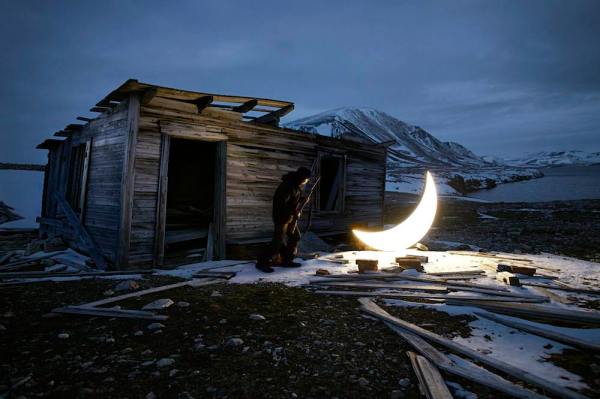
Leonid Tishkov, Private Moon. // Source: ArtsCatalyst.org.

Leonid Tishkov, Private Moon. // Source: ArtsCatalyst.org.

A wonderfully speculative, lunar-themed exhibition in London

The preview images look so cool.

January 10-February 2, 2014
The Art Catalyst’s Republic of the Moon
Bargehouse, Oxo Tower Wharf, South Bank, London

Vacuum/plenum (the Cotard delusion, invisibility, and other gravities), 2009, mirror, two-way plexiglass mirror, aluminum, steel, casters, Dimensions variable, mirrored box is 4x4x7 ft. // Source: SeldonYuan.com

Vacuum/plenum (the Cotard delusion, invisibility, and other gravities), 2009, mirror, two-way plexiglass mirror, aluminum, steel, casters, Dimensions variable, mirrored box is 4x4x7 ft. // Source: SeldonYuan.com

Vacuum/plenum (the Cotard delusion, invisibility, and other gravities), by Seldon Yuan

I came across this NYC artist when I received a rejection letter and he was listed as one of the winners. But when I viewed his site, and this project in particular, the selection committee’s wisdom became apparent to me. The sting of rejection is a mitigated by intrigue of this work. I wish this project was my own. It’s brilliant.

Personal Goal Setting Advice for Artists

Love this Personal Goal Setting advice from  Creative Capital’s Internet for Artists Handbook. I came across this a while ago but keep recommending it to folks. Really useful!

(I just noticed it’s written by Blithe Riley, an artist involved in interesting, radical visual art programming at Interference Archive in Gowanus in Brooklyn. Coming up this week: neat programming around Asian American struggle.)

Your turn: These Calls for Entry

Signal Fire’s spring exhibition in the New Mexico wilderness
Spring applications due December 31

Interface Gallery’s call for participatory projects
Oakland, CA
Stipends available. Applications due January 1, 2014.


Standard
Art Competition Odds

art competition odds: Center for Book Arts’ Artist-in-Residence Workspace Program

The Center for Book ArtsArtist-in-Residence Workspace Program received approximately 150 applications for 5 AIRs in 2014.

///////////////////////////////////////////////////////////////////////////
/////////////////////////////////////////////////////////////////////////// +/-

Participants comprise about 1:30, or 3.3% of applicants.

See all Art Competition Odds.

Standard
Meta-Practice, Techniques

Artist’s Website Advice

Unsolicited advice and unapologetic opinions for creating or updating your artist’s website.

I’ve been thinking about this lately, as I will be taking advantage of the holiday season to make headway on a new website design. The notes are based on working as a graphic designer, designing and coding HTML/CSS sites, being married to an interface designer and noticing sites I like or don’t, and informally polling curators and artists.

Preparation, preparation, preparation.

A lot of artists are overwhelmed by the process of creating a site. It’s a lot of work, so take it step by step. The first step is to prepare a site map and wireframe. This way, you’ll document what content you want to feature. Artists are so close to their art, it’s helpful to consider the audiences’ perspective in how the art is presented. Should the work be organized by year or theme? Creating a site map will help you decide what content you’ll need, which you’ll prepare next.

Edit text content, such as a statement, CV and captions, in Word or Google docs. Ask a friend to copyedit. It’s much easier to do this in a word processing app and import quality content, than fiddle around later after you’ve uploaded it. By the time your content is online, you should be focusing on making sure the site works, not what the dimensions of this piece was, or what the name of that review author was, etc.

Re-touch and color-correct your images. Again, doing this all at once, instead of piecemeal as you’re trying to populate your site, is much less headache-inducing. Compile and save them using good file management practices.

Notice graphic and interface design.

Before you determine what you want your site to look like, visit a lot of web pages—artists’ and non-art related.

Pay attention to typefaces, colors, and layouts—but don’t forget to consider user experience. A lot of artists mistake great design for visual panache, but it’s not just about catching the eye with cute elements or a fancy logo. Great design is also—if not more—about functionality. When the design functions in an intuitive way, users don’t notice it, and that’s a good thing; the point is to showcase your art!

Notice what works and what doesn’t. Is it hard to navigate? Or is it intuitive, and the experience flows effortlessly from page to page? Which ones are hard to read? Which ones aren’t? Which artists’ websites encourage you to stay and click around? Which ones don’t? Why?

Look at sites on your desktop or laptop. Then look at them again on a mobile device. What makes a responsive (mobile-adaptive) site easy to navigate, read and view?

Bookmark great sites with your browser or Delicious. Write a list of criteria you want in a design. Refer back to this list and your inspiration sites when you start browsing content management system (CMS) templates, so you can stay true to your vision.

K.I.S.S.

Gallery directors, curators, and critics are short on time. They just want to see your images and get information. Don’t make it hard for them with splash pages, games, or too much rigamarole. Keep it direct and simple.

A note about typography: Less is more. Generally, the less design experience you have, the crazier the font you tend to choose. Some artists are afraid that a boring design equals a boring website. If your work is interesting, there’s no need to jazz up typefaces, for the same reason you wouldn’t put 15 colored mats on a good drawing. Imbalanced, too-splashy logos achieve nothing. When in doubt, err in favor of simple and classic. Typefaces that have been used for hundreds of years or several decades have survived because they’re well designed, highly legible workhorses. One-off novelty fonts are harder to use well. Remember that you want to keep your art front and center. 

Research Content Management Systems (CMS).

In the past, I felt that artists could manage their own sites with a little bit of HTML and Dreamweaver, but these days, it’s important to have a responsive site, which is much trickier to code. Recent CMSes offer beautiful, responsive templates, so I’ll review some options.

A note about selecting a CMS: Don’t be cheap! You get what you pay for. Think about it this way: most artists will spend 10–50 hours preparing content and creating a website, and 0–3 hours/month updating it for a few years. Relative to the amount of time you’ll invest, and the amount of visibility and utility you want from the site (it showcases your work, conveys your professionalism, and can help garner opportunities), the actual cost of the CMS ($8-16/month) is modest.

Cargo Collective and Squarespace. I think these are the best bets [still do, as of 12/23/14]. These are recent, visually-oriented portfolio sites with attractive, responsive templates. Cargo Collective is free or $9/month; Squarespace is $8–16/month, depending on the features. Click around their templates, as you’ll start to recognize them on other artist’s sites. Get a free trial and start uploading test content—gauge the learning curve and template limitations.

[Updated 12/23/14] Other People’s Pixels. This was great when it came out, about seven years ago. Given the recent competition, this option is less appealing. I dislike the textual navigation, where you click on a project name or year, then sometimes another sub-menu, before getting to the images. These function like doors you can’t see through; it’s clunky. Though they’ve added responsiveness and changed the tiny “previous/next” text to slightly larger arrows anchored to the base of the viewport, I still find it a bit pinched. And I don’t love that the CV is a PDF.

Indexhibit. This was also a very good option for many years. I like the minimal design, but I’m favoring more visually-oriented templates now.

[Updated 12/23/14] icompendium. Some artists vouch for the ease of use of icompendium. It’s now responsive. There are exceptions, but many of the featured example sites use a left column with text I find too small/light.

WordPress. A great, flexible platform (this blog is a WP site). WP has endless amounts of templates and options for customization, many of them fee-based. So though a WP site can be free, the upgrades (such as preventing WP from including ads on your site, or domain mapping, so you can use your own URL) can start to add up. It’s primarily a blogging platform, so you’ll have to disable commenting features left and right. Use it if you’re familiar with the interface and feel like you can hammer it into a shape you want; if not, consider the first two options.

Me? I’m going to build my new site with Bootstrap and PHP with help from a friend. I’m taking design cues from Squarespace (I love how their sites behave on mobile devices) and Cargo Collective (I love the main project image stream at the end of project pages; you don’t have to go back to the home page, only ever forward), but I need more flexibility. I want a site with a few more interstitial project index pages, and to be able to use narrower column widths on text pages.

Building a site expands your abilities, so it can be painful. Without a plan that breaks up the labor into manageable parts, artists can get overwhelmed, procrastinating for years on their websites. The key is to be prepared, systematic, patient, and realistic about time management. You’ll make a lot of progress if you work in small, organized chunks, dedicating a few hours or one day/week for 2–3 months. I know that sounds like a lot, but if you’re thorough, you’ll end up with a site that will serve you for years.

Standard