Citizenship

Color, happiness, and symbols of resistance

People paint rainbow-colored stairs on August 31, 2013 in Istanbul. Stairs in the Cihangir and Findikli neighborhoods, which attracted attention after being painted in rainbow colors by a local man on August 27, were all painted grey on the night of August 29, and following comments on social media, the municipality of Beyoglu immediately painted them again in rainbow colors. // Source: Ozan Kose / AFP / Getty Images. From Huffington Post.

People paint rainbow-colored stairs on August 31, 2013 in Istanbul. Stairs in the Cihangir and Findikli neighborhoods, which attracted attention after being painted in rainbow colors by a local man on August 27, were all painted grey on the night of August 29, and following comments on social media, the municipality of Beyoglu immediately painted them again in rainbow colors. // Source: Ozan Kose / AFP / Getty Images. From Huffington Post.

A set of public stairs in Turkey has arguably been the site of:

  • guerilla art (when a local resident painted them in rainbow stripes),
  • a populist happiness gesture (he wanted “to make people smile”),
  • censorship (Turkish officials covertly re-painted the stairs grey), and
  • resistance (locals were outraged, and the city re-painted the stairs in bright colors).

It goes to show how using vibrant colors and promoting happiness may seem like simple gestures, but they can be powerful and meaningful actions for people and cities too.


Standard
Citizenship, Meta-Practice

A Declaration of Principles (for artists, cultural workers and supporters thereof)

By Justin Langlois:

By posting this page, we submit that we are an artist, cultural worker, or a supporter thereof and declare the following: we are no longer interested in participating in consultancies, asset maps, or activities that offer us “promotional opportunities” in absence of clear financial or strategic gain. We will not support the exploitation of artists or other cultural workers or their works for the sole purpose of further municipal or economic planning, fundraising, or marketing. We refuse to acknowledge the existence of the politically-invented term, creative economy, which lumps together practicing artists with video cassette duplication services. We can no longer participate in activities that knowingly disadvantage artists with less experience and we vow to make accessible opportunities that we have to these same artists. We hereby decide to stop playing prescribed games and to start making it up for ourselves. Henceforth, we will support one another by adhering to this declaration.

By posting this page, we submit that we are an artist, cultural worker, or a supporter thereof and declare the following: we are no longer interested in participating in consultancies, asset maps, or activities that offer us “promotional opportunities” in absence of clear financial or strategic gain. We will not support the exploitation of artists or other cultural workers or their works for the sole purpose of further municipal or economic planning, fundraising, or marketing. We refuse to acknowledge the existence of the politically-invented term, creative economy, which lumps together practicing artists with video cassette duplication services. We can no longer participate in activities that knowingly disadvantage artists with less experience and we vow to make accessible opportunities that we have to these same artists. We hereby decide to stop playing prescribed games and to start making it up for ourselves. Henceforth, we will support one another by adhering to this declaration.

Standard
Citizenship, Meta-Practice

art sales scams

Amazingly, internet scammers have found a way to become even lower low-lifes, now targeting artists with sales. Just received this email:

Hi,

I’m Betty Hammond from California. I was going through your works and my eyes caught this particular piece,I want to purchase it as I am moving to a new apartment next month. Kindly let me know if you still have the piece available and also let me know it’s final price and more information about it. I will be waiting to read from you.

Regards,

Betty.

Luckily, when I googled “Betty Hammond California,” this post by this fellow artist and anti-scam blogger showed up, exposing the scam. Basically, they get your mailing address and send a check in an amount way over the sale price, then ask you to forward the balance to a fictitious shipper. When the check turns out to be fraudulent, your money and possibly your art are gone.

The sad part about this is that authentic collectors may contact artists via email, and they may have different language abilities, making screening out fraudsters trickier. A commenter at the above blog post recommended only accepting payments via Paypal as one method for avoiding this scam.

Standard
Citizenship

sense-making, with a little help

In follow up to my prior post, have a look at “PTSD Nation: Our Nation Suffers from PTSD after Homegrown Terrorist Acts,” recently post on Psychology Today on December 16, 2012 by social psychologists Rosemary K.M. Sword and Philip Zimbardo:

Let’s call upon the hero in each of us and focus on being brave by not allowing people to control us by fear. Let’s conceive of ways to stay safe in a rapidly changing world. Let’s make our decisions based on where we want to go as a nation rather than on past negative traumas – and move toward the light of a brighter future.

And for a little bit of heart-warming, check out BuzzFeed’s 26 Moments that Restored Our Faith in Humanity This Year.

In this same vein, I’ve experienced loss this year, but I will try not to forget all the good things that happened too. I’m thinking about what a personal Top 10 of 2012: moments of joy, accomplishment, and new experiences. What would it look like for you?

Standard
Citizenship

Sense-making, self-making

Like so many Americans, I am horrified and saddened by the loss of innocent lives in Newton, Connecticut. I humbly offer my condolences—mere words, and still, deeply felt sentiment—to the families of the victims.

This act of violence was senseless, yet the urge to make sense of such tragedy arises nonetheless. How we explain it to ourselves touches the very core of who we are and what we believe. How we cope emotionally, and how we react politically, shape our futures.

In pondering this sense-making, I’ve also reflected on the NYC man who killed another man by pushing him onto subway tracks in front of an oncoming train last week. I do not intend to equalize these events—they are uniquely heinous, and the loss of especially young lives is especially pathological.

Both of these events, however, made me ask Why did this happen? and What could have been done? In the case of the subway pushing, where strangers apparently stood frozen while the victim struggled to lift himself to the safety of the platform, I wondered, What would I have done?

I know that this reaction may seem like self-absorbed, inward fantasizing, instead of the shared sympathy and solidarity so needed at times like these. But these are two forms of coping, and need not supplant one another. In my grasping for meaning I recalled Philip Zimbardo’s research on evil, contexts, and bystanders. Discussing his book The Lucifer Effect, Zimbardo argues

it is vital for every society to have its institutions teach heroism, building into such teachings the importance of mentally rehearsing taking heroic action—thus to be ready to act when called to service for a moral cause or just to help a victim in distress.

Zimbardo’s Heroic Imagination Project aims to redefine

the notion of heroism not as something reserved for those rare individuals who do or achieve something extraordinary, but as a mindset or behavior possible for anyone who is capable of doing an extraordinary deed. We seek to redefine heroism and make it more relevant for a 21st century world in which heroism is no longer the exclusive province of the physically brave, but it is also embodied by any individual with firmly held ethics and the courage to act on them.

The heroic imagination is the antithesis to the ‘hostile imagination’ that fuels a psychology of enmity.

Moving forward, I hope we as a country can minimize enmity across political differences, so that we can take courageous steps and take hard looks at current gun laws and mental health care.


Standard
Citizenship, Travelogue, Values

Points of Reference: Utah

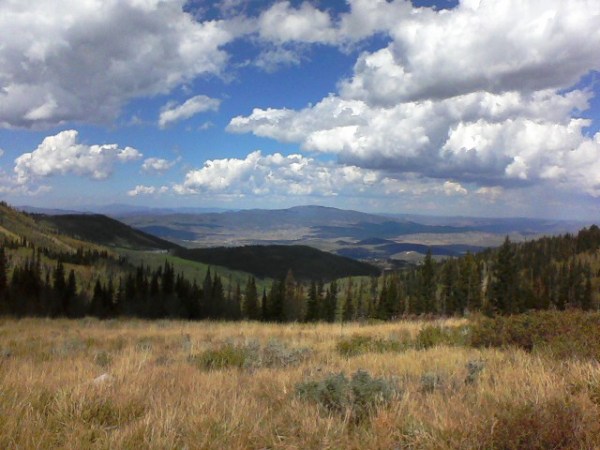
View from a summit outside of Park City, UT.

I just visited Utah for the first time on a collectively-organized art retreat. N invited us to share work, get feedback, talk shop, explore new landscapes and art experiences, re-connect with distant colleagues, and generally re-set. I feel blessed to have come along for the journey with such worthy shipmates and epic landscapes.

Utah’s natural landscape is an unending source of wonder and discovery. Dolomite-like mountains, luminous calcite caverns, pristine waters, dense starry skies, fat moons, salt flats—it was all stunningly beautiful, with nice people and fascinating historical sites. Here are a few highlights.

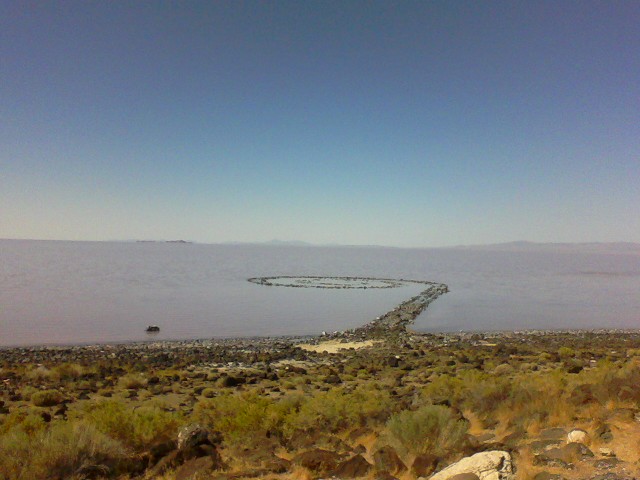
Robert Smithon's Spiral Jetty.

Robert Smithon’s Spiral Jetty.

Robert Smithson’s Spiral Jetty
Completed 1970, 1,500′ long coil 

We made an art pilgrimage. After a period of submersion, Smithson’s famous work of Land Art has partially resurfaced, and we waded out on it. It sits on a surreally pinkish part of the Great Salt Lake, with a few cartoon blots of raw oil. It’s huge, very impressive, and literally immersive. In imagining Smithson tackling this monumental work, he cuts an even larger than life historical figure.

Golden Spike National Historic Site
Transcontinental rails joined in 1869, creating rail lines 742 to 1,032 miles long

Spiral Jetty is just past the Golden Spike National Historic Site, where the Transcontinental Railroad was finished. Since Salt Lake City is synonymous with Mormons, it was eye-opening to situate the histories of other Americans, such as the Chinese and Irish immigrants who built the railroads, here too. (We also learned that we were a few hours away from the Topaz War Relocation Center, the huge internment camp that processed 11,000 Japanese Americans in WWII.)

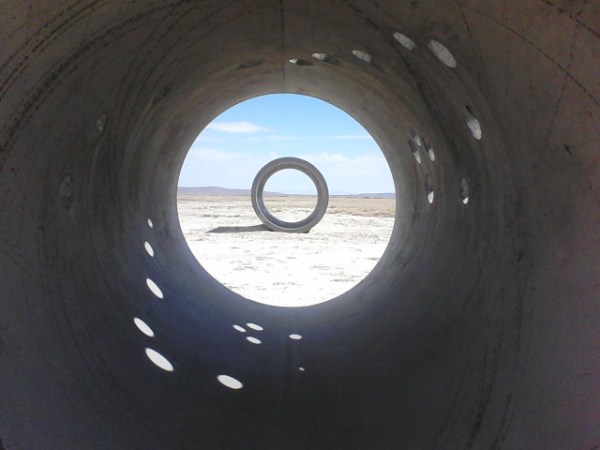
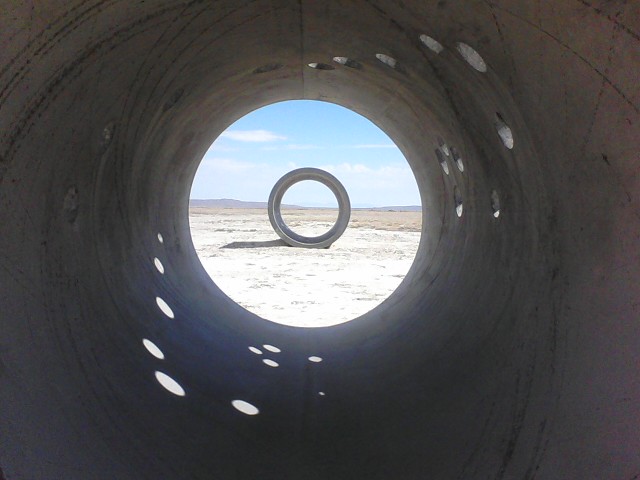
Nancy Holt's Sun Tunnels.

Nancy Holt’s Sun Tunnels.

Nancy Holt’s Sun Tunnels
Completed 1976, each tunnel 9′ diameter x 18′ length

Like a rare earth magnet, Nancy Holt’s Sun Tunnels drew us clear across the state to a remote swath of BLM land near the Nevada border. It is a really powerful, iconic work by one of the few women Land Artists. Four concrete tunnels are arranged as two intersecting lines that frame the sun on the summer and winter solstices. Each tunnel bears holes corresponding to constellations. It’s an elegant intervention in the landscape, with varied viewing and sensate experiences—even for a day visitor (imagine visiting the site at night, or on the solstices, or under snow). At the Jetty, I looked at the lake, but mostly at the jetty. At Sun Tunnels, I looked at the concrete tubes, but also considered how it framed the landscape, and how the landscape framed it. I noticed mountain ridges near and far. It made me see gaps between ridges, where salt flats lay beyond view, and horizons were too distant to see through the atmosphere. The clarity of the sky and sunlight seemed to come into focus with the tunnels. I think Sun Tunnels is worth the trek. The detour’s not small, and this recommendation not insubstantial, when you consider the four anxious hours we were stranded without cell phone service after the shale-specked roads shredded two of our tires.

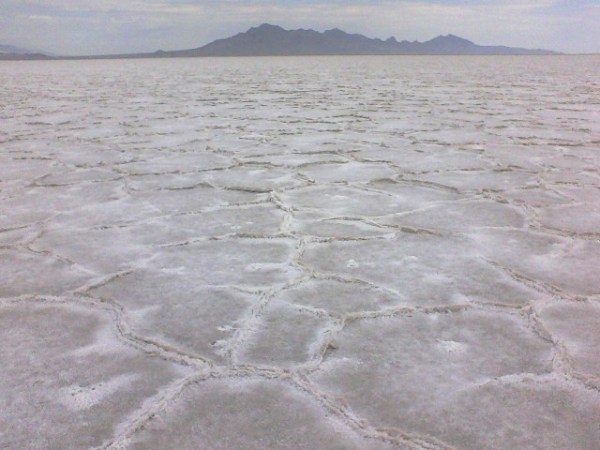
Bonneville Salt Flats.

Bonneville Salt Flats.

Bonneville Salt Flats
The remains from 17,000 year old Lake Bonneville; ~12 miles long and 5 miles wide

Just over the ridge from the Sun Tunnels was this landscape marvel and heart-fluttering mecca for motor sports enthusiasts. The crunchy, crystalized earth stretched into the distance, making for a surreal aural space as well.

Anaglyph Map of the Bingham Canyon Mine and Vicinity, Utah, on display at the Center for Land Use Interpretation's Wendover Complex, Orientation Building.

Anaglyph Map of the Bingham Canyon Mine and Vicinity, Utah, on display at the Center for Land Use Interpretation’s Wendover Complex, Orientation Building.

Center of Land Use Interpretation
Founded in 1994, with field offices in six states

Nearby, the strange historical and industrial sites around Wendover, Utah, are nicely presented by the CLUI’s Orientation Building. To get there, you follow specious directions to an seemingly abandoned military base, and then punch a code into a door. There is a 3-D map of one of the largest mines in the world, an archive of notable military sites that are terrifying (the Enola Gay hangar, replica German houses for munitions tests) and odd (a cavern that servicemen outfitted with a jukebox), and notes on unimaginable environmental degradation (moving tons of earth for a few pounds of ore). You can access much of this archive online at CLUI’s Land Use Database, but I felt very grateful and honored to visit this site guarded only by a sense of commons.

Bison. Antelope Island State Park.

Bison. Antelope Island State Park.

Antelope Island State Park
Initial park creation in 1969; 15 miles long by 7 miles wide

This testament to the importance of preservation sits in the Great Salt Lake, and is home to 500 bison and numerous antelope, coyotes, jackrabbits, and birds. It was a peek into a past wildlife-filled America that will never exist again. I could not really comprehend the bison that ambled on to the road near us. It was so massive, and so unlike any other animal I’d ever laid eyes on.

Timpanagos Cave.

Hansen Cave, Timpanagos Cave National Monument.

Timpanagos Cave National Monument
65 million year old caves, ‘discovered’ 1887, National Park in 1933.

Like Antelope Island, this site in the Uinta National Forest filled me with gratitude for the visionaries who preserved such wonders for future generations. Three large caverns stoked my geology interest with their ethereal, translucent calcite formations. The area, shot through with craggy Dolomite-like peaks, evinces the drama of the Continental Drift, with oceanic matter in this high-altitude, land-locked state.

Go Parks! Leave No TraceTread Lightly.

Standard
Citizenship

Ai Wei Wei: Never Sorry

Courage is envisioning and articulating freedom that is yet to be actualized. Angela Davis talks about this—imagining change is the first step of making change. One year after his release following months of detainment without due process, Ai Weiwei wrote:

I often ask myself if I am afraid of being detained again. My inner voice says I am not. I love freedom, like anybody; maybe more than most people. But it is such a tragedy if you live your life in fear. That’s worse than actually losing your freedom.

…none of us have been dealt with through fair play, open trials and open discussion. China has not established the rule of law and if there is a power above the law there is no social justice. Everybody can be subjected to harm…

Stupidity can win for a moment, but it can never really succeed because the nature of humans is to seek freedom. They can delay that freedom but they can’t stop it.

(“Ai Weiwei: to live your life in fear is worse than losing your freedom,” Guardian, June 21, 2012):

Further, even as a known target of one of the world’s most secretive and repressive governments, Ai remains an optimist:

What I gained from the experience is a much stronger sense of responsibility, and an understanding of what the problems are and how one can understand what’s happening and remain a positive force. You have to see your own position from the other side. At the same time you have to maintain a passion for what you are doing. You have to have sensitivity and joy. If you don’t have that, you will be like a fish on the beach, drying up on the sand….

Standard
Citizenship

Repair Cafes

Love this idea, from the New York Times (“An Effort to Bury a Throwaway Culture One Repair at a Time,” May 8, 2012):

At Amsterdam’s first Repair Cafe, an event originally held in a theater’s foyer, then in a rented room in a former hotel and now in a community center a couple of times a month, people can bring in whatever they want to have repaired, at no cost, by volunteers who just like to fix things….

“I had the feeling I wanted to do something, not just write about it,” [Martine Postma, repair cafe founder] said. But she was troubled by the question: “How do you try to do this as a normal person in your daily life?”…

“The value of the Repair Cafe is that people are going back into a relationship with the material things around them,” [architect William] McDonough said.

Standard