Uncategorized

Galleon Trade: Ship Launch Auction Items

Here’s what I’m donating to the auction.

Again, the funds will go towards helping the artists go to Manila for the exhibition at artist-run spaces, and of course for exchanges (such as salons, artist’s talks, etc.)

This is my first time going on an international exchange exhibition and my first visit to the Philippines! Hope you can share the excitement at Galleon Trade : Ship Launch on June 30th! Click here for details.

Untitled (Drawing for Stacked Orange Present), 2007, 13x17”, graphite on paper
Untitled (Drawing for Stacked Orange Present), 2007, 13×17”, graphite on paper

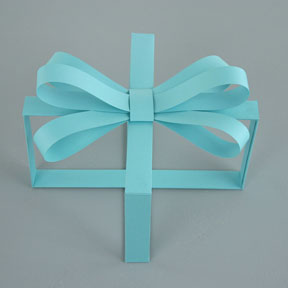
Aqua Present, 9” x 9” x 6”, paper, balsa wood

Standard
Art & Development, Community

GALLEON TRADE: SHIP LAUNCH!

I’m very excited to participate in Galleon Trade, an artist-initiated exchange project that’s heading out to Manila in July. I feel really lucky to show my work alongside that of artists like Mike Arcega, Stephanie Syjuco, Gina Osterloh, Megan Wilson, Enrique Chagoya, and many talented others. So far, we’ve received couple of small grants, but we are waiting on one more–which means I may be unable to fulfill the “exchange” part of “exchange exhibition.” Please show your support and join the party!

GALLEON TRADE: SHIP LAUNCH!
Saturday, June 30 2007. 6 – 10pm
Downtown Oakland, CA

Please join all manner of pirates, bootleggers and scurvy knaves for Galleon Trade: Ship Launch!, one hell of a land-locked fund-raising party and art auction.

Galleon Trade is out to make the Pacific Ocean seem smaller, by creating a sustainable template for innovative new kinds of grassroots arts exchange. We’re starting by forging new relationships between California, the Philippines and Mexico. You’re starting by coming to our party, and having some good clean fun, dancing, eating things, drinking things, enjoying and bidding on art. Cones will be even be set out for the roller-skating elite.

When and Where’s the Ship Launch?
Event: 6:00-10:00PM
Silent Auction: 6:00-9:00 PM

Location:
The former Oakland Tribune Building
12th and Franklin
Oakland CA

What’s going to happen there?
Oh, goodness. All manner of fun, including

• Food and Drinks (featuring a number of Filipino dishes, as well as The Galleon, a brand-new East Bay cocktail!):

• DJs and plenty of other entertainment to keep you occupied on a warm, sweet East Bay summer evening! There will likely be some dancing to be done. Rollerdisco encouraged, but not expected.

• A silent art auction featuring affordable work by many of the Galleon Trade artists and their high-powered artist friends!

• The opportunity to experience the massive, historic Wonderbread Warehouse before it undergoes renovation!

How much is all of this fabulous fun?
A mere $10. More, if you’re feeling generous. Less, if you’re in a tight spot.
Food’s on the house, drinks by donation.

What if I can’t attend?
Galleon Trade accepts web donations via Paypal. Our fiscal sponsor is the Luggage Store.
For the Art auction, early bidding/proxy bidding by email/phone also welcomed:
Details and online gallery to follow shortly at http://galleontrade.org/news/

Where do my pesos go?
All proceeds support the multi-year Galleon Trade project, which is building new templates for grassroots, international, trans-pacific arts exchange. Phase 1 of the project brings 12 California artists to Manila, Philippines this July!

For details and participants, please visit:
http://www.galleontrade.org

+++

Questions? Or to donate* or volunteer:
Email me at info (at) christinewongyap.com

*ARTISTS! Interested in donating work to support your fellow artists in an artist-initiated project? We’re seeking donations of small works on paper, prints or multiples for sale in the art auction. Your work will be featured online, with a link to your contact info. I haven’t been this excited about grassroots Oakland arts events in a while — please join the fun.

Standard
Art & Development

Media Center Co-op

One of the many great things about being in school is access to facilities and equipment. I’m sorely missing the Media Center’s array of A/V equipment, especially the high-end digital cameras, tripods and light kits.

Over the past two years, I shot photos of my work with a digital Canon Rebel EOS. I own the 35 mm version of that same camera, but shooting digitally was like taking light-year leaps in efficiency. I could see the images on my laptop, right there on the copystand, and make corrections on the spot. And there are always corrections…

The digital SLR’s professional features–a manual focus ring, lots of control in manual exposure mode, custom white balance, and a viewfinder (so key!)–made it perfect for shooting crisp, clear, large digital photos of my work.

Unfortunately, the professional features come with a hefty pricetag: $800-900.

Having great images of one’s work is key. A professional photographer would make my work samples perfect, but how could I afford that every 4-6 months, much less during those narrow windows between finishing work and delivering it for exhibition?

So I have an idea: Artist’s Media Center Co-op. It’d be a low-monthly membership place where artists can shoot slides. There’d be a copy stand for small 2D work and maybe some seamless rolls and a light kit or two for large 2D work or 3D work…

Like the idea? Take it. It’s yours. Free. Just let me use the copystand and camera once in a while…

Standard
Citizenship

A brilliant way to fund CA state arts again

Not a new tax, but a CA state Assembly bill to earmark 20% of taxes on art sales to go towards art. Sounds so simple and smart you wonder how it ever got to the Assembly… Act now to help make it into law. Or read it yourself.

Friends & Colleagues:

I urge you all to ACT TODAY! and spread the message widely:

A bill is currently making its way through the Legislature, that would create a stable funding stream for state support of the arts and programs to guarantee access for all. The bill, AB 1365, has already made it through two committees, and with strategic support, stands a real chance of becoming law.
Four years ago, the Legislature slashed support for the arts by 97%, eliminating programs that opened doors to the arts for people across the state. Today, California spends less than any other state on support for the arts–just six cents per person, compared to the national average of one dollar per capita.

AB 1365 would change that. The bill proposes to shift 20% of the sales tax collected on works of art to the California Arts Council. This isn’t a new tax but merely a designation for the spending of dollars the state is already collecting.

The initial analysis by the Board of Equalization (BOE) estimates that the 4.75% rate of sales and use tax on works of art amounts to $166 million per year. AB 1365 would transfer 20% of this amount, or $33.2 million from the state’s General Fund to the California Arts Council. Further, the BOE writes, “This bill would not be problematic to administer,” with the first transfer of funds occurring 6 months following the effective date of the bill.

The bill was authored by Assemblywoman Betty Karnette of Long Beach and is currently pending on the Suspense calendar in the Assembly Appropriations Committee (chaired by SF Assemblyman Mark Leno). The Suspense calendar will be taken up early next week . Assemblyman Leno (a great arts supporter) and Speaker Nunez of Los Angeles will be critical to moving the bill off Suspense.

If the bill moves off Suspense it then goes to a vote on the assembly floor prior to June 8th. At that time we expect to push for statewide communications to Assembly members through meetings, letters, and emails. If we can get the bill through the Assembly then it will move to the Senate.

What we need TODAY is for all of us to contact Mark Leno and his office, expressing your support for the bill and urging him, as the Committee Chair, to move the bill forward.

Calling Mr. Leno’s’s office in Sacramento to register your support is a good idea. The number is: Phone (916) 319-2013.

Emailing works too. Mr. Leno’s email address is: mailto:assemblymember.leno@assembly.ca.gov

Faxing Mr. Leno a letter, is best of all, since he can literally carry these letters with him into the chamber. Fax number: (916) 319-2113 .

Sample language for your email or faxed letter is posted below.

SAMPLE LETTER OR EMAIL

June 1, 2007

The Honorable Mark Leno
Member of the California State Legislature
State Capitol Building
Sacramento, CA 95814 Location: Assembly Appropriations Committee

Re: Assembly Bill 1365:
California Arts Council Funding
Position: SUPPORT

Dear Assembly Member Leno:

I am writing to thank you for your long support of the arts in this state and to urge you, as Chair of the Appropriations Committee, to move AB 1365 off the Suspense calendar, and I respectfully urge you to support this bill in every way possible.

As you know, passage of AB 1365 would require that 20% of state sales and use tax revenues derived from the sales of art dealers, art auctioneers, and certain other business entities be deposited in the State Treasury for allocation to the California Art Council.

The California Board of Equalization (BOE) estimates that the 4.75% rate of sales and use tax on works of art amounts to $166 million per year. AB 1365 would transfer 20% of this amount, or $32 million from the state’s General Fund to the California Arts Council. Further, the BOE writes, “This bill would not be problematic to administer,” with the first transfer of funds occurring 6 months following the effective date of the bill.

This is not a new tax; it is merely a designation for the spending of dollars the state is already collecting.

California is now in its fourth year of severe spending cuts to programs that used to help ensure access to the arts to all the people of our state. Indeed, California continues spend mere pennies per person on access to the arts, while the national median is one dollar.

AB 1365 would provide a stable funding stream to help ensure ALL the people of California have access to the rich cultural resources of our state. The arts are critical to fostering creativity, giving voice to diverse communities, building tolerance and empathy, attracting tourists, and enriching the imaginations and lives of all Californians.

The arts are vital to our culture of innovation we are so very proud of as Californians. With AB 1365 supporting new, sustained funding for the California Arts Council and its programs, the arts can continue to be a significant contributor to California’s economic recovery through tourism, jobs, social services and educational outreach. AB 1365 proposes a sound investment for California.

Thank you for your faithful commitment to a better, more equitable California.

Sincerely,

At last, adequate support for the arts – at almost one dollar per person, the national median – might just be within reach, helping us ensure that in California we can guarantee — Art for All! Not for Some!
ACT NOW!

Standard
Research, Values

Values and Everyday Heroism, via Movie Review

A minute for a movie review. A+ for writing, and interesting morsels on values and everyday heroism.

Pre-justification #1: The focus of this blog is art, but artists, curators and critics can be concerned with culture at large.

Pre-justification #2: Movie reviews can be useful examples of beautifully concise, insightful writing. See David Denby of the New Yorker Magazine.

I don’t know which offense is more pervasive and exasperating: the issue of the portrayal of women and men in movies, or our age of irony and immaturity. Below, A.O. Scott elegantly sums up big ideas in a few sentences, in a movie review of “Knocked Up.”

“…The absence of a credible model of male adulthood is clearly one of the forces trapping Ben and his friends in their state of blithe immaturity.
Mr. Apatow’s critique of contemporary mores is easy to miss — it is obscured as much by geniality as by profanity — but it is nonetheless severe and directed at the young men who make up the core of this film’s likely audience. The culture of sexual entitlement and compulsive consumption encourages men to remain boys, for whom women serve as bedmates and babysitters. Resistance requires the kind of quixotic heroism Steve Carell showed in “The 40-Year-Old Virgin” or a life-changing accident, like Alison’s serendipitous pregnancy….”

Bye-Bye, Bong. Hello, Baby.
By A. O. SCOTT
June 1, 2007
New York Times

I have always resented how male bonding often privileges dumbed-down culture, and the permission that males seem to have in associating women with growing up, the loss of innocence and by extension, evil. Look closely and you’ll find many examples in popular culture–music (including rap and rock), movies, comics, etc. One can find similar attitudes in contemporary art — art by men-boys for men-boys, and the women who don’t mind.

Standard
Art & Development, Community, Values

SFAI Graduate Exhibition

I may not be objective about the work of students at a so-called rival school, but a recent visit to the San Francisco Art Institute’s MFA exhibition provided a useful point of reference for my own experiences.

Like CCA’s graduate exhibition, the SFAI show opened with a bang and closed after only a brief week. Eight-day exhibitions seem freakishly short; on the morning of my de-installation, I smothered a petulant whine: “I don’t wanna take it down!” SFAI students enjoyed the benefit of a printed catalog; CCA’s online catalog seemed like an ecological and economical, though under-utilized, alternative.

Understandable criticisms of the CCA show were that the number of artists was overwhelming, and the space was too difficult to navigate. I can see how a show of CCA’s 50 MFAs could be daunting–and I could relate to the sentiment when I attempted to view the work of SFAI’s 98 artists.

The exhibition was held at the Herbst Pavilion at Fort Mason. The gallery set-up was provisional: clamp lights snaked across the tops of false walls held up by makeshift shims. At times I found the installation earnest (The numerous artists were accommodated in a huge space, so what more could you ask for?), but more often, I found installation decisions baffling and distracting. In one extreme case, decent landscape paintings about environmental destruction were hung above horrendous pumpkin-orange floor molding. Later, I enjoyed some confident paintings and a video about the sea, however, a borrowed wooden pier and taxidermied sea gull impinged on the physical space and seemed like clunky, redundant buttresses to ideas that stood on their own. Finally, confident works by two artists with gay male perspectives were adjacent, but the pairing was formally disadvantageous and curatorially marginalizing.

OK, enough with the nitpicking. My subjective highlights:

Whitney Lynn‘s bunker of canvas cushions was the only work that directly addressed the Herbst Pavilion’s military history. This site-specific work was unassuming, and it was my favorite piece in the sprawling show. Employing only a small pencil drawing and a sculpture of uncolored fabric and soft texture, the artist pulled off a political statement that was more evocative than the agitprop at the front of the exhibition.

Michele Carollo makes room-sized installations that look like modernist paintings. Photos of the installations appear to be expressive two-dimensional works, but in reality the installations are a little bit goofy, reminiscent of a funhouse. Her investigation seems original and fun, and I’m excited to see where it goes.

Jana Rumberger’s birdcages made of calendar pages and cellophane tape were pretty and poetic.

J. Kristen Van Patten exhibited a well-executed wall-based installation composed of wires, abstracted prosthetics and tiny magnets. It was reminiscent of Miro and Calder, but less whimsical and more formal.

Alan Disparte’s paintings verge a little too close to Clayton Brothers cuteness for me, but the one-minute video was a refreshing, if bite-sized, take on graphic design and nostalgia.

(On another note, I’ve been thinking about cuteness a lot lately, picturing a parent’s warning that misbehavior is “not cute.” Cuteness seems indicative of novelty and bemused consumption, and its widespread adoration seems dangerous or at least dismal, signalling relationships built upon simplistic visual appeal. In place of cuteness, what about that old-fashioned value of character? Strength and morality may not be hip or ironic, but that’s the point.)

Standard
Art & Development

Why are artists poor? How to support artists.

I hope, dear readers, that you don’t suspect that artists are busy drinking cappuccinos and adjusting their berets, too self-absorbed to get a real job. Rather, the costs of being an artist are high; financial rewards are speculative. For emerging artists, renumeration is nominal and rare.

Like Thoreau in Walden Pond, I’d like to tell you about my expenses. But unlike the Romantic recluse, I can advocate a downscaled lifestyle in theory, but not in practice. Being an artist requires that I “think big,” and that means that I “make big.”

I have to struggle against my penny-pinching instincts when it comes to art materials, because being too cheap is terrible for artmaking. Inadequate materials will undermine a work before it even gets off the ground.

To give you a sense of what being an artist costs, here are some figures I’ve tallied:

A recent project, an edition of 170 Miniature Multiples, cost over $200, or $1.35 per Miniature, in supplies alone:

$75 paper
$26 tape*
$9 glue
$60 paper cutter, blades*
$30 printing/paper
$30 stamps

*Of the purchased supplies, the paper cutter, a tape dispenser and some double-stick tape are the only leftover supplies I’ll have for future use — everything else has been depleted.

But the cost of making art can pale in comparison to the expense of showing art. Preparing for a recent show, I spent well over over $400. (This figure is actually modest—think of photographers who make large prints, video artists who utilize digital projectors, etc.) Here’s where the money went:

$138 frames, plexi, museum board**
$155 installation materials and tools: drywall, lumber, painting supplies, drywall tools
$20 cleaning supplies
$24 shelf & brackets
$26 respirator for re-sanding during de-installation

**The cost of assembling five low-cost, ready-made frames is barely equal to the cost of one professional frame.

Yet these supply expenses are relatively small compared with the cost of labor, education, and other self employed overhead (such as health insurance).

So why even bother?

I decided to be an optimist because I believe optimism is necessary for maintaining a life as an artist. I’m confident that the rewards of being an artist–which are personal, but potentially also professional–are worth the costs.

How to Support Artists.

1. Show up. Go to the shows. Look at the work.
2. Tell them when they’re doing something neat.
3. Tell others when they’re doing something really neat.
4. Buy stuff. If you hire artists, compensate them for their time, training and overhead, as you would accordingly for any other profession. You can’t pay rent with exposure.

Standard