On optimism, how we respond to setbacks, and contacting elected officials.
Kathryn Schulz’ “What Calling Congress Achieves,” (New Yorker, March 3, 2017) is an interesting, timely look at contacting representatives.
Some congressional staffers have said that calls are more effective than mail. Schulz argues otherwise:
Contrary to popular opinion, … written communications are an effective way of communicating with Congress…. “Everything is read, every call and voice mail is listened to,” Isaiah Akin, the deputy legislative director for Oregon’s Senator Ron Wyden, told me.
…According to a 2015 [Congressional Management Foundation] survey of almost two hundred senior congressional staffers, when it comes to influencing a lawmaker’s opinion, personalized e-mails, personalized letters, and editorials in local newspapers all beat out the telephone.
Im the same article, Schulz framed sustaining resistance and taking action without guaranteed results.
The deluge of constituent pressure, by contrast, is a viable long-term strategy, but only if it is a long-term strategy—that is, only if those doing it choose to sustain it. That would mean persevering in the face of both short-term defeats and the potentially energy-sapping influence of time itself.
Such perseverance is by no means impossible; here, too, political causality is complex. Setbacks can as easily stoke as sap, movements may grow as well as wither, and every critical mass has, of necessity, been built from a subcritical one. Moreover, and luckily for democracy, none of us requires a guaranteed outcome in order to act. We all do plenty of things without knowing if or when or how or how much they will work: we say prayers, take multivitamins, give money to someone on Second Avenue who looks like she needs it. So, too, with calling and e-mailing and writing and showing up in congressional offices: it would be good to know that these actions will succeed, but it suffices to know that they could.
How we respond to setbacks is what distinguishes optimists, according to positive psychologist Martin Seligman. A few drawings in my Positive Signs series are about Seligman’s “explanatory style” concept.
-

- Christine Wong Yap, Positive Sign #11, 2011, gel pen on vellum, 8.5 × 11 inches.
-
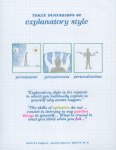
- Christine Wong Yap, Positive Sign #14, 2011, gel pen on vellum, 8.5 × 11 inches.
-

- Christine Wong Yap, Positive Sign #16, 2011, gel pen with hot foil on vellum, 8.5 × 11 inches.
-

- Christine Wong Yap, Positive Sign #17, 2011, gel pen with hot foil on vellum, 8.5 × 11 inches.
-

- Christine Wong Yap, Positive Sign #18, 2011, gel pen with hot foil on vellum, 8.5 × 11 inches.
-
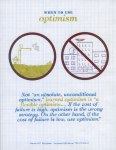
- Christine Wong Yap, Positive Sign #19, 2011, gel pen with hot foil on vellum, 8.5 × 11 inches.
-

- Christine Wong Yap, Positive Sign #21, 2011, gel pen on vellum, 8.5 × 11 inches.
-

- Christine Wong Yap, Positive Sign #22, 2011, gel pen on vellum, 8.5 × 11 inches.
What this means, to me, is this: This political regression is not permanent. Take a long view—we’re at a moment in time in a long tradition of resistance. It’s our turn to continue fighting a hard-won, oft-defended march towards full equality and enfranchisement. This political chaos is not pervasive. DJT, his administration, and his white nationalist supporters are anomalies. They can continue to repeat their lies until they’re blue in the face, but most aren’t buying it. We have to continue to see the good in people—other Americans, our legislators who are resisting, immigrants, refugees, and so on. However, when it comes to personalization, I think we should manage what, how, when, and why we personalize things. We can’t internalize hate and outrage and let it immobilize us. But we must take it personally when one of us—our allies, and the most vulnerable—are attacked, to fight back while we are strong, and call upon others when we need it.
Rather than consume news and be overwhelmed, it’s empowering to focus on what we can do. Schulz underscores the relevance of exercising our agency and our Constitutional right to contact legislators.
And at this particular moment, when our First Amendment freedoms are existentially threatened—when the President himself has, among other things, sought to curb press access and to discredit dissent—we also act on them to insist that we can.
Probably only tangentially-related side note: I loved this compelling, long essay about letters written to Obama and White House mail system that handled them:
 R+D
R+D 