Research, Values

Kerry James Marshall on artists becoming agents in their own lives

From Kerry James Marshall lecture at SFAI (via podcast)

This article [in Modern Painters] called “School is Out” which… is a conversation between John Baldessari and the British teacher, Michael Craig Martin…. The principle notion [Baldessari] was operating on was … one cannot teach art. That art is somehow, this sort of strange and alien phenomenon that happens to people… He said, it’s like all the planets around you have to line up in the right way, with the right students, and the right time, and the right faculty and the right city. So everything’s got to be just right, you got to have the right kinda people and all that stuff. And that’s precisely the kind of ideas and attitudes that everything I do is fundamentally opposed to. The sort of rightness of a kind of person who is privileged enough to … be invited into this circle of people who are artists….

This [painting called The Lost Boys] was the pivotal painting for me…. This was the painting I had always imagined myself being able to make…. Everything I was doing was leading me to that place where I could make that painting…. And once I made these paintings everything about the way I operated as an artist changed…. from that moment I understood… what I had to do in order to make the kinds of images that I need to make. And I can say I never … stumbled again after that…. I was sure of myself; of what I could do and needed to be done. That was a profoundly empowering moment for me….

[As a youth] I used to hang out [at LACMA]… and [getting my work] in there with one of those artists was a goal that I set for myself. And that painting…, the first big painting that I made, it was the first major museum purchase that was ever made of my work and it was purchased by LACMA. And then to be in there amongst all those people I had admired, I had arrived, I had succeeded in everything I had set out to achieve,… from that moment I felt free to do anything I wanted to do.

Now, I can sort of go for the next thing. And for me,… it’s a question is whether one finds a very secure place in the historical narrative of art so that whenever that story is told, it cannot be told without the presence of either me or somebody like me there….

On some levels, I have already…. There are books in which my work is represented…. But I’m not in everybody’s book…. I want people to stumble on me, like I stumbled on everybody else… Jackson Pollack or Jasper Johns or Willem de Koonig or Mark Rothko or Ad Reinhardt—those people, there are no books being written on the history of art in which those people are not being represented. And as far as I’m concerned, if you don’t achieve that level of recognition and representation in the history, then you still don’t really exist. Because your presence there is conditional… on a sympathetic writer, critic or historian who is willing to place you there. But that kind of placement can be contested. And I’m looking for an un-contestable position in the historical narrative…. This is how I think. I’m purpose-driven. I have a mission. And I’m all about knowing what I need to know, and having the requisite skills that I need to have in order to manufacture this position that I think I need to occupy…. And, well, people laugh at that kind of conceit. But the truth be told: I don’t know any artists of consequence that didn’t have that kind of conceit. And if it’s acceptable for other artists who are already there to think and speak like that, how come it’s not acceptable for somebody else to think and speak like that? And if we’re not thinking and speaking like that, what’s wrong with us? I mean, really? If you take this seriously…. These institutional structures that we kneel and bow and defer to are not inviolate institutional structures…. They’re not entitled to exist without challenge…. So you have to put yourself in a position where you are capable of knocking them off the position they occupy, because we are not bound to defer to anything that exists. Everything is available for critique—and also displacement….

Your development as an artist is a fluid occupation. Wherever you are at any given moment doesn’t mean anything about where you can be or might go. But when you take control, when you take charge of your development as an artist, you make those kind of decisions because you’re trying to get to a very particular kind of place, and so you should be driving your development in a particular direction, and you should know what the destination is. It’s the only way you can know whether you’ve succeeded at the challenges you set for yourself or not, because if you are not sure what you are doing,… you are at the mercy of forces outside of yourself.

And as far as I’m concerned the stakes of this sort of enterprise are way too high to relinquish that kind of control to people…. who you can always bet don’t have your best interest at heart. It’s the only way you can avoid that situation [where Baldessari can say that art requires the right people, the right situation]. This rightness of people thing, I mean… To be honest, that’s the white racist, white supremacist basis on which the United States was organized. And we cannot have that kind of foolishness anymore.

Standard
Citizenship, Values

a happy day for you (if you’re the kind of person who likes civil liberties)

Gays and lesbians have a constitutional right to marry in California, the state Supreme Court said today in a historic ruling that could be repudiated by the voters in November.

In a 4-3 decision, the justices said the state’s ban on same-sex marriage violates the “fundamental constitutional right to form a family relationship.”

“State Supreme Court says same-sex couples have right to marry” SFGate.com, May 15, 2008

This issue may go to the state ballot in November. Hopefully, the voters of California, unlike those in 26 states that have banned same-sex marriage, will take a stand against discrimination. The way I see it, all you need is some historical perspective to understand that banning gay marriage in favor of domestic partnerships is painfully similar to “separate but equal” Jim Crow laws. Let’s not forget anti-miscegenation laws (most states explicitly barred interracial marriages well into the 20th century; Alabama’s anti-miscegenation law was not taken off the books until November 2000!). I wonder if any whites (the Voting Rights Act passed in 1965) voted to bar interracial marriages on the premise that interracial marriage threatened the “institution of marriage” — because they had the traditional view that marriage was a privilege that belonged to white people, just like some straight people are irrationally attached to the idea that the only marriage is hetero marriage.

Standard
Art & Development, Values

all my base are belong to yours

sudden downturn

As much as I know I’m a producer of culture, in most quantifiable, economic measures, I’m a consumer: for the studio, I buy art materials. To promote my art, I buy office supplies, web hosting services, pay utilities, postage. I’m paying off my education (for which I am a consumer of loans). Even in the non-profit sector, I contribute with studio rent or donations (which is turned into capital at auctions). And even when I receive grants, the funds mostly circulate through me to art stores, hardware stores, printers, service providers, consultants, and to those previously mentioned lenders, and so on.

The Fed’s Stimulus Package is premised on the hopes that recipients will spend their rebates. Liquidity is good, as shown by the Moniac (the Monetary National Income Automatic Computer), a device designed by economist Bill Phillips and re-created by artist Michael Stevenson.

Liquidity is good. But let’s start with solvency. Most artists I know are working as teachers, designers, installers or baristas. I’m pretty sure artists would love to have the confidence to finance new projects, buy health insurance, maybe go on vacation!

Artists assume more risks than others, and often live with lower returns on their investments. But the choice is pretty obvious between keeping the monetary flow going on principle, and paying off credit card debt, chipping away at student loans, or re-stocking that rainy day fund.

One side effect—positive or negative, depending—is that the cost of participating in art opportunities that pay in “exposure” might finally start outweighing the benefits.

Standard
Art & Development, Values

Professional Development for Artists

This past week, in addition to wrapping up some freelance graphic design projects, I’ve been busy with professional development courtesy of the Creative Capital Foundation In 2006, I was nominated by the wonderful people at the alternative art space, Intersection for the Arts, to participate in a Creative Capital Professional Development workshop, which covered everything from fine-tuning one’s self-promotion and grant-writing skills, to interpersonal communications skill building, to improving one’s attitude about money, to planning one’s life in the arts strategically. It did wonders for my attitude and professional skills — it even influenced my art (I decided to become an optimist!).

Creative Capital hasn’t offered the workshop locally since, but they partnered with Intersection again to offer a one-day communication workshop with Kirby Tepper. It fine-tuned my skills, and gave me new skills that I hope to carry out in the coming week.

I’m a Creative Capital enthusiast. They are building a model from the ground up — their trainers are successful artists and business world pros. I hope to reciprocate the support I’ve received from Intersection and Creative Capital one day.

It’s too bad there is such a need for professional development among artists, but few artists every have the opportunity to participate in trainings that are truly supportive. Sadly, cynicism, co-miseration and resignation to suffering for one’s art or the unfairness in the art world are dominant modes of discourse among artists. But what good does that do to anyone? While it helps to be realistic — having a life in the arts is challenging — it certainly doesn’t support artists or improve their success when one can’t imagine that having a life in the arts is compatible with success and happiness.

So I wanted to plug the Center for Cultural Innovation’s new book, The Business of Art: The Artist’s Guide to Profitable Self-Employment. I haven’t gotten my hands on it yet, but knowing CCI’s work is rooted in data gathered directly from practicing artists, I’m sure that it will be practical and useful.

Standard
Values

Revenge of the nerds

In “Dumb and Dumber: Are Americans Hostile to Knowledge?” (nytimes.com, 2/14/008) Patricia Cohen profiles Susan Jacoby, author of “The Age of American Unreason.” Jacoby laments the “generalized hostility to knowledge” in American culture today.

On a similar note, I think common wisdom can be anti-intellectual and cynical. I’ve been wondering about impact of such pervasive pessimism.

Have you noticed that everyday conversations, especially with acquaintances, slide easily into expressions of co-miseration? It’s more common to express stress (about jobs, bills, or among lefties, the latest political outrage) than it is to express beauty, joy and gratitude.* People bond by co-miserating; they find affinity through “other-“ing.

Similarly, groups form their identities by distinguishing themselves from others. So working classes disdain the values of intellectual classes. But the don’t-be-too-smart attitude seems to pervade American culture—you might as well be uncouth or snobby.

As a kid, I figured that my peers would grow out of the too-cool-for-school mentality. But the peer pressure to not appear too earnest about learning hasn’t disappeared entirely. Even in graduate school, and especially among artists and professional development, enthusiasm for knowledge can be suspect.

But here’s what I can’t reconcile: Working-class culture and the American spirit—the high esteem of hard work, skill and fairness—are intimately tied. So how did rugged individualism—so optimistic: Pulling oneself up by the bootstraps! The dream of equal opportunity!—beget cynicism and materialism?

In the article, Cohen casts Jacoby as a curmudgeon. And while Jacoby is going against the grain by speaking out about a theme that pervades our culture, I think Cohen could be considered curmudgeonly. Her journalist’s skepticism seems to convey the sentiment that the mere discussion of intellectualism is too self-aware, too critical, too… nerdy.

*Why is it that “beauty, joy and gratitude” sounds so cheesy? The phrase “the good things in life” might be more common, or sound cooler, but it’s vague.

Standard
Values

They just don’t make things like they used to…

Pessimistic and curmudgeonly as this sounds, I wish that more things were built to last, like in the old days.

I’ve never had a portable cassette player that was as indestructible as my first one, a hand-me-down Panasonic. It was heavy and bulky, and it lasted, to my embarrassed pre-teen dismay, for years. But after tearing through a few cheapie cassette players, I realized I didn’t know what I had and quality like that was gone, existentially, into the dustbin of history.

Among the many tools I’ve inadvertently pilfered from my dad’s garage over the years, is an ancient Black and Decker jigsaw. It’s the only electric saw that feels right in my hand. The only problem was that the 20-year-old saw screamed like a pack of hellhounds. I hoped to replace it with one I might give to my future kids.

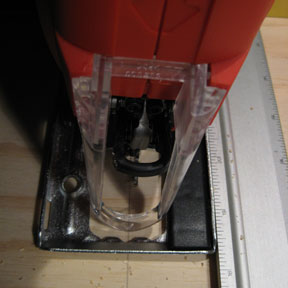
Too bad the new model suffers from a fatal design flaw: a spring-loaded lever secures the blade (and allows for quick blade changes) front to back, not side to side. The result is that the blade rests askew a few degrees, and within a few inches into a cut, the blade has traveled about 1/8″ to the left, even with clamps and a rip cut guide.

jigsaw

The old model secured the blade with a rock-solid flat-head machine bolt. Changing blades took one minute, tops. What was Black and Decker thinking? What potential jigsaw buyer doesn’t already own a screwdriver? Sacrificing basic function for a dispensable design feature is bad design. And when a tool shows signs of planned obsolescence, it’s a terrible sign of the times.

Like all shitty manufactured goods at the mercy of global trade agreements, Walmart and an insatiable consumer culture, this jigsaw was built to last for about one or two seasons, not one or two generations. Jigsaw for 2008, landfill for eternity.

Standard
Citizenship, Values

So You’re Planning an Art Auction: Do’s and Don’t’s

If you’re thinking about organizing an art auction, be aware of what makes an auction effective, and what is attractive to artist-donors. The Bay Area has a thriving arts scene, wonderful progressive culture and vibrant non-profit community, but with so many good causes to support, artists have to consider where their contributions will be most effective.

These are the criteria I use when I receive invitations to donate art:

Values: Is the cause worthy?
I want to help groups whose values match my own, especially those with under-served and under-funded constituencies. The need should be identifiable. Groups with a commitment to the the arts (and not just via “exposure” in your art auction) especially appeal to me.

Track record: Is the organization worthy?
I want to see evidence of an effective track record. Ideal groups make miracles on a shoestring, but are not so broke as to cultivate a culture of scarcity, crisis and turnover. Interest groups and collectives should demonstrate real capacity; initial enthusiasm to start a pet project is rarely convincing alone. Also, be transparent about your non-profit 501(c)3 status.

Art and Auction Experience: Will the auction be effective?
An art auction is only successful when the organizer sells the art. I look for groups with the ability to attract art-loving audiences and create bid-friendly environments. Having proven curators or installers on board tells me that (1) you’ve got the know-how to handle and install art, and (2) you are more likely to value my time and labor. Big red flags: You’ve never organized an art auction or installed art before. You don’t have a sense of what price range is reasonable at your event. Your publicity strategy involves hoping that my name on a flyer will be enough to attract an art-buying audience (wish it was, but it’s not… yet).

Exposure: To whom? For what? Under what conditions?
Most artists don’t just want any exposure. If you were an artist, what kind of exposure would you want: your work hung in a narrow hallway, bumped by drunk party-goers and sold for a low price? Or hung in a tasteful gallery populated by engaged viewers and interested bidders? I want useful exposure, such as sharing my work with collectors, curators and critics, to get positive responses about the work, under advantageous conditions — the best possible presentation, where the work is not undervalued.

Presentation: To complement or diminish my profile?
Publicity materials should be attractive and professional. If they are not, artists will not send them out to their own lists, and art buyers will not attend. Mail a stack of postcards to the artists well ahead of the event date. Ensure the venue will be appropriate for an art exhibit. Publicize the artists’ names on your press releases and web site. After all, artists are donors as much as anyone else.

—–

What to Do

• Use a lender form.
• Agree on the terms of the auction.
• If possible, insure the art in your possession.
• Help struggling artists offset shipping and/or framing costs.
• Invite the artist to the auction (sounds obvious, but you’d be surprised). Put them on the comp list if there is an admission fee.
• Hang the art properly. Don’t damage it.
• During and after the event, deal with the buyers. Do not expect the artists to sell their own work, or deliver the work to the collectors after you collect the funds.
• Pack unsold art properly. Don’t damage it.
• Return unsold art and send tax letters and checks promptly.
• If, in addition, you ask for artists’ time, be courteous.

—–

What Not to Do: A Case Study

I’ve learned the above lessons through good and bad experiences donating art. Here’s one story that taught me to donate with caution.

I was asked to show up three hours in advance of the auction to talk to the media — but the media were not expected to arrive until an hour before the auction. My two hour wait, it seems, was intended to allow the communications officer 10 minutes to go over his talking points with me. I was happy to be a mouthpiece for a worthy cause, but the long wait was a huge waste of time. In the end, I didn’t see one press person. My patience ran out 30 minutes before the auction. I slipped out because I was so annoyed that I wouldn’t be able to enjoy the auction, nor help others enjoy it.

My art sold, but it was delivered back to me — damaged. I spent months having the work re-framed and scheduling pick-up dates with the buyer.

Perhaps most egregiously, the organization was inconsistent about the logistics of the monetary transaction. The buyer paid the organization at the event, but I was told to ask him for a check. In my opinion, an organization should never put me (a donor) and the buyer (another donor) in the awkward position of trying to collect money from each other.

Not everything was awful: the volunteer curator was delightful and professional to work with. Cheap Pete’s replaced the frames free of charge. And I still believe that this particular organization fulfills a necessary role.

But I would think twice before entering any agreement that asked so much of donating artists, especially organizations with whom I have little to no relationship before and after the auction.

Standard
Community, Values

Finishing the Game: a movie, but not just a movie

Finishing the Game (2007, dir. Justin Lin, dist. IFC Films) is an indie mock-umentary of the re-casting of Bruce Lee’s unfinished film after his death in the 1970s. The auditions bring out Asians of all stripes — suave professionals, dreamers and actors of integrity — throwing kicks and emitting feline howls. It’s a light-hearted movie with lots of big hair, but in the subtexts are plentiful jabs at the movie industry’s racism and money-grubbing values.

Go see it!

I really liked the film. It’s funny and irreverent, and inherently Asian without being limited to Asian-ness, yet it touches on serious issues of race and representation. Plus there’s a token white guy! Come on! That’s hilarious! I hear the subtext, and it sounds like: You know where you can stick those quirky sidekick / comedic relief roles?!!

Finishing the Game just opened in the Bay Area. Haven’t heard of it? That’s because they don’t have a marketing budget.

But the upswing is that since the cast is involved in grassroots promotions, I caught a really eye-opening Q&A with some of the actors and producers. The discussion (which provided a classic example of who feels entitled to speak) kept coming back to the clash between representation and the movie industry, or art and business. I knew that Justin Lin’s first big feature film, Better Luck Tomorrow, was a “credit card film.” Talk about self-subsidizing (think six figures!) Its success was a miracle story. But actor Roger Fan (who stars in both films) explained that the popularity of BLT provided Hollywood studios with the hard evidence to take on movies with APA leads, and the result was that MTV became BLT’s distributor, and Harold and Kumar was green-lighted.

But here’s the sad news. Actor Sung Kang shared a maxim: people make indie films because they have to. The irony is that Lin originally wanted a Hollywood studio behind BLT at the start — and he had his chance — he was offered $2m to make BLT as long as the cast was not APA. So three cheers to Lin and BLT producers Julie Asato and Curtis Choy (yeah, the Curtis Choy who made The Fall of the I-Hotel. Uh huh!) for sticking to their guns. You can cite their integrity for the recent improvements in APA representation in American cinema. Cheers!

But Kang also pointed out that he’s just an actor: all he can do is be the best actor he can. What talks to studio execs is dollars, so, as cheesy as it sounds, support your independantly-produced APA film! Your ticket really means something.

http://www.youoffendmeyouoffendmyfamily.com/

Standard